Pierre Cardin — Ophelie
Essence
Ophelie is Pierre Cardin’s 1995 floral-aldehyde for women: a rare, discontinued French bouquet built around jasmine, rose, ylang-ylang, aldehydes, and dry woods. It is interesting less because it changed perfume history than because the few surviving wear reports describe unusually rich floral material in a release that nearly vanished from public memory.
Scent Profile
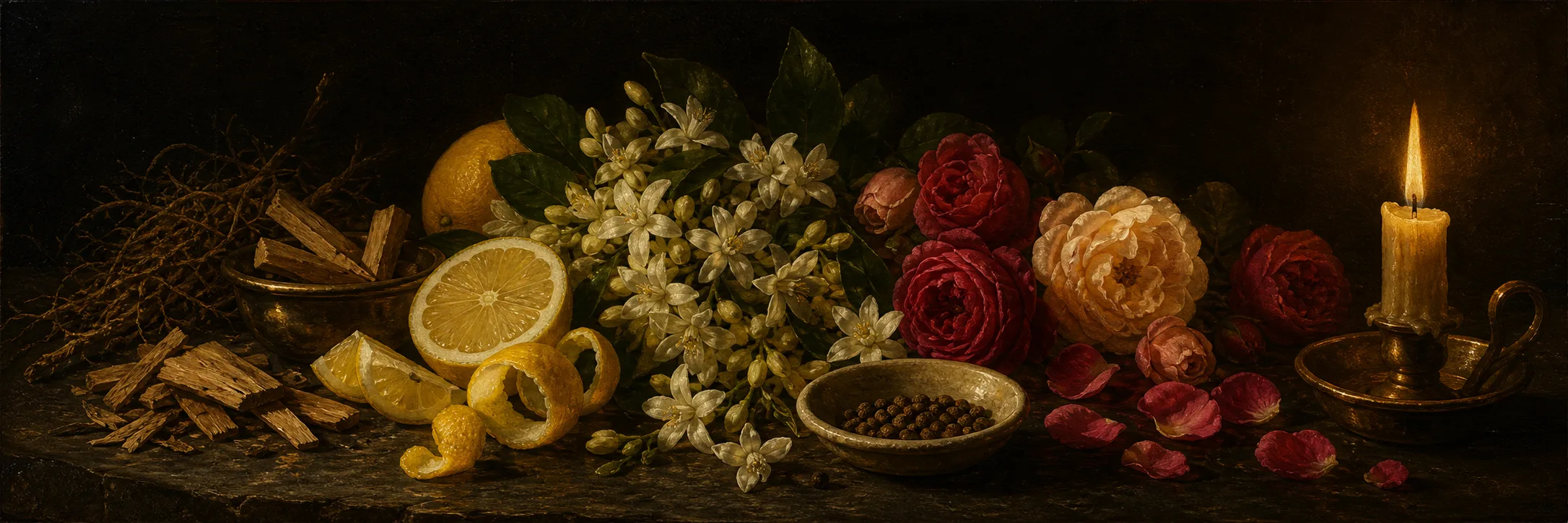
The catalog pyramid is classic and densely floral: orange blossom, lily-of-the-valley, narcissus, and gardenia up top; rose, jasmine, ylang-ylang, rosewood, and osmanthus through the heart; sandalwood, musk, and cedar below. The opening is not a sparkling modern citrus lift but a medium aldehydic veil that quickly reveals a tactile bouquet.
Jasmine is the central force, big and slightly indolic, with osmanthus and ylang drawing the rose into a theatrical fresh-picked register. Rosewood and sandalwood keep the composition dry, elegant, and French rather than syrupy. Another strand of description emphasizes rose jam, North African-style jasmine, and a plush ylang-rose warmth, which places Ophelie near the lush floral world of Tauer’s Le Maroc Pour Elle.
The overall impression is a live bouquet rather than a single spotlight note. It belongs to the 1990s grand-floral lineage and shares air with Givenchy Organza, but the appeal is more quiet collector reverence than blockbuster familiarity.
Performance
Performance evidence is limited. The surviving signal points to moderate longevity and moderate diffusion, but the sample is too small for firm hour-by-hour claims. Treat Ophelie as a composed, dressed floral rather than a guaranteed powerhouse, and expect vintage bottle condition to matter.
Wearing Context
Ophelie suits cool weather, evening wear, and dressed occasions. Its aldehydes, indolic jasmine, rose, and woody-powdery base fit autumn and winter better than hot casual days. It reads classic-feminine, romantic, and formal, with more ceremony than ease.
Comparisons & DNA
Givenchy Organza is the most useful comparison: both live in the attention-grabbing 1990s floral space. Tauer’s Le Maroc Pour Elle is a helpful anchor for the dense jasmine-rose-ylang warmth. Rose Cardin is the internal family reference, but Ophelie is more about the complete bouquet than a single rose spotlight. No reliable clone lane is documented.
Reception
Reception is tiny in volume but admiring. The people who know Ophelie describe it as a lost floral treasure, praising the live-bouquet effect, the quality of the floral materials, and the striking bottle. The absence of a broad negative record should not be overread; rarity means few people have tested it. This is not a casual blind buy, but a collector-floral seek-out.
Versions & Reformulation
Single composition, no known reformulations. Ophelie is discontinued, and no credible record of formula changes during production has surfaced.
Acquisition Notes
Ophelie is a scarce vintage-market fragrance. It appears through collector channels, old miniature listings, and occasional resale rather than normal retail. Verify the opaque white flared bottle with pink collar detail, and assume storage condition matters more than counterfeit risk.
Notable Facts & Lore
- Ophelie was advertised in a 1995-1996 campaign photographed by Daniel Yov.
- It belongs to a small Pierre Cardin women’s line that also included Insatiable and Rose Cardin.
- The bottle, with opaque white glass and a pink collar pendant, is a major part of its collector appeal.
- Its reputation is that of a lost floral rather than a famous classic.