Pierre Cardin — Monte Carlo
Essence
Monte Carlo is a turn-of-the-millennium sleeper that virtually no one talks about: a sweet, plummy floral-oriental that punches well above its current discount-bin reputation. Released in 2000 under a licensed designer name better known for menswear and luggage than for fine fragrance, it is the kind of orphan composition that gets discovered blind and then quietly championed. The few who have worn it describe something richer and more old-fashioned than its budget afterlife suggests, anchored by a genuinely interesting blueberry accent and an ambery, slightly powdery drydown.
Scent Profile
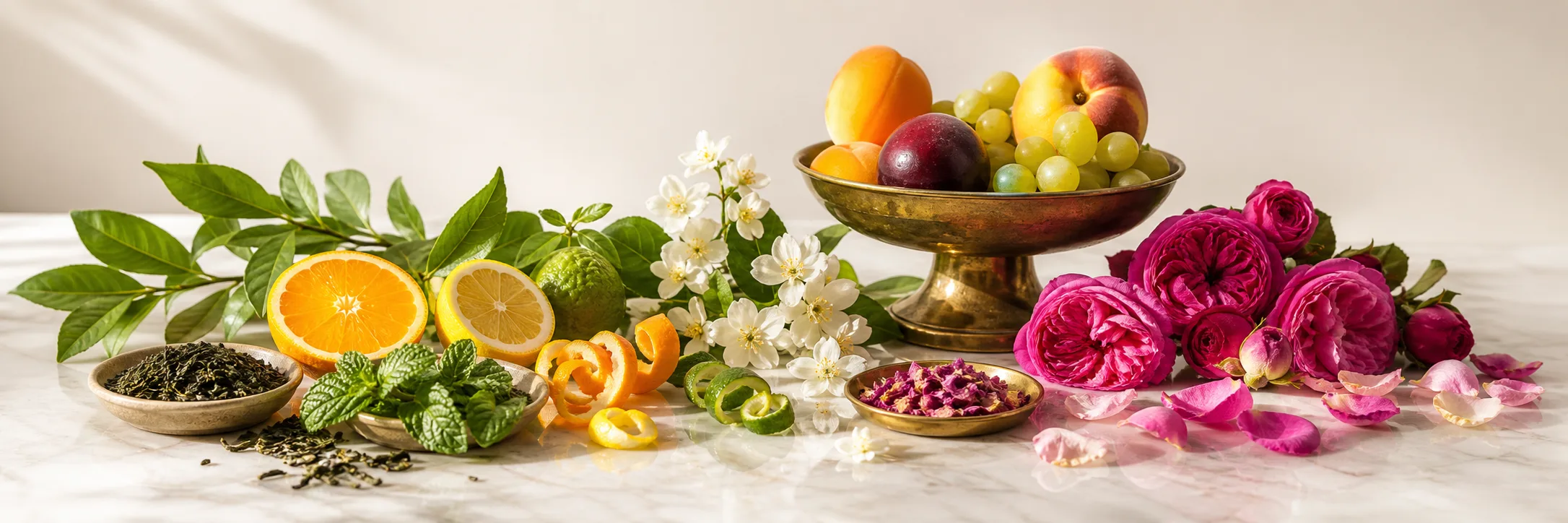
The defining trick of Monte Carlo is its fruit. Where most 2000-era fruity-florals leaned on apple, melon, or generic red berries, this one foregrounds blueberry, an unusual note that wearers single out as among the best examples they have encountered. A tea-and-mint topnote gives the opening a green, faintly herbal lift, with the mint tea lingering and combining with neroli and jasmine before peach appears later. The heart is a fairly serious floral, described as a mature, strong rose alongside prominent jasmine, kept bright rather than dusty by the sweet but not cloying blueberry. The drydown is where wearers grow most enthusiastic: amber becomes the biggest player in the final stages, joined by patchouli, a green echo, and a dark vanilla that is not too sweet, with a suspicion of unlisted musk. The plummy, powdery base draws vintage comparisons to Rochas Femme and Feminite du Bois, placing it, on sympathetic skin, in a more sophisticated lineage than its price implies.
Performance
Reports diverge. Aggregate sentiment is moderate, suggesting most find it polite rather than booming, but individual wearers skew more generous, with one reporting it lasted all night and remained noticeable the next morning and another calling its sillage and longevity exceptional. Development can be slow, opening green and herbal before the flowers emerge, and one wearer noted it took three to four hours to reach the drydown they considered the best part. The fair synthesis is a soft-to-moderate projector with respectable-to-long persistence that varies considerably with skin chemistry.
Wearing Context
Wearers frame it as warm-weather and daytime-leaning despite the oriental base. The most evocative review ties it to its name, evoking a continental breakfast in a Monte Carlo hotel of sweet mint tea, citrus, and flowers in morning light, while another recommended it for a summer’s evening. The plummy, powdery drydown gives it enough weight to carry into cooler evenings, and one male wearer found the dry, soft-powdery base comfortable enough to wear despite the feminine marketing. It is best understood as a versatile fruity-floral with enough backbone for dinner rather than a strictly casual freshie.
Comparisons & DNA
The recurring reference points are telling. Vintage Rochas Femme is invoked for the plumminess, Feminite du Bois for the rounded woody-plum drydown minus the spice, and unspecified Guerlain classics for the powdery, ambery finish. None of these are 2000s mall-fruity comparisons; they reach backward toward richer plum-and-amber compositions. The blueberry topnote, by contrast, has no obvious peer and is the one element wearers describe as genuinely distinctive. Within Pierre Cardin’s sprawling, uneven licensed output, Monte Carlo is regarded by its few fans as a hidden high point.
Reception
Documented reception is almost nonexistent, which is itself the finding. There are no critic reviews and no formal ratings, with one entry simply inviting the first review. The whole record rests on roughly four individual voices, including a two-person thread titled “Monte Carlo - Pierre Cardin STUNNER,” and within that tiny sample sentiment is unanimously positive, even affectionate. One blind buyer summed up the prevailing surprise, declaring it incredibly beautiful and expressing amazement that no reviews existed. This is a fragrance with a cult of about a half-dozen people rather than a reputation, so consensus should be read as enthusiastic but very small.
Versions & Reformulation
No reformulation history is documented, which is unsurprising for a low-volume licensed release that was simply discontinued rather than maintained across decades. It was sold as an Eau de Parfum in 50 ml and 100 ml natural sprays. Beyond that there is no reliable record of batch variation, packaging revisions, or concentration flankers tied to this scent.
Acquisition Notes
Monte Carlo is discontinued and genuinely scarce, surviving only on the secondary market where it occupies the cheap-vintage tier rather than commanding collector prices. It was sold in 50 ml and 100 ml sprays. Buy with the usual caution for roughly 25-year-old juice: the fruit-forward topnotes are the first to turn, so condition matters, and with no tester culture most purchases are effectively blind. One disambiguation point: it is unrelated to the niche house Perris Monte Carlo and to “Monte Carlo pour Homme” by Monte Carlo Parfums.
Notable Facts & Lore
- The fragrance has been kept alive almost entirely by word of mouth among people who stumbled onto a lone dusty box.
- One discoverer found a solitary box with no tester in a small perfumery and bought it blind.
- A former Manhattan fragrance-counter salesgirl recounted ordering it from overseas at launch and later hunting down a replacement because nothing else scratched the same itch.
- Its basic family is unsettled, filed by one source as an oriental floral and by another as a floral-chypre.
- At least one storefront’s auto-generated copy wrongly describes it as a masculine orange cologne with leather and cinnamon, a fabrication matching a different Pierre Cardin scent.