Pierre Cardin — Rose by Cardin
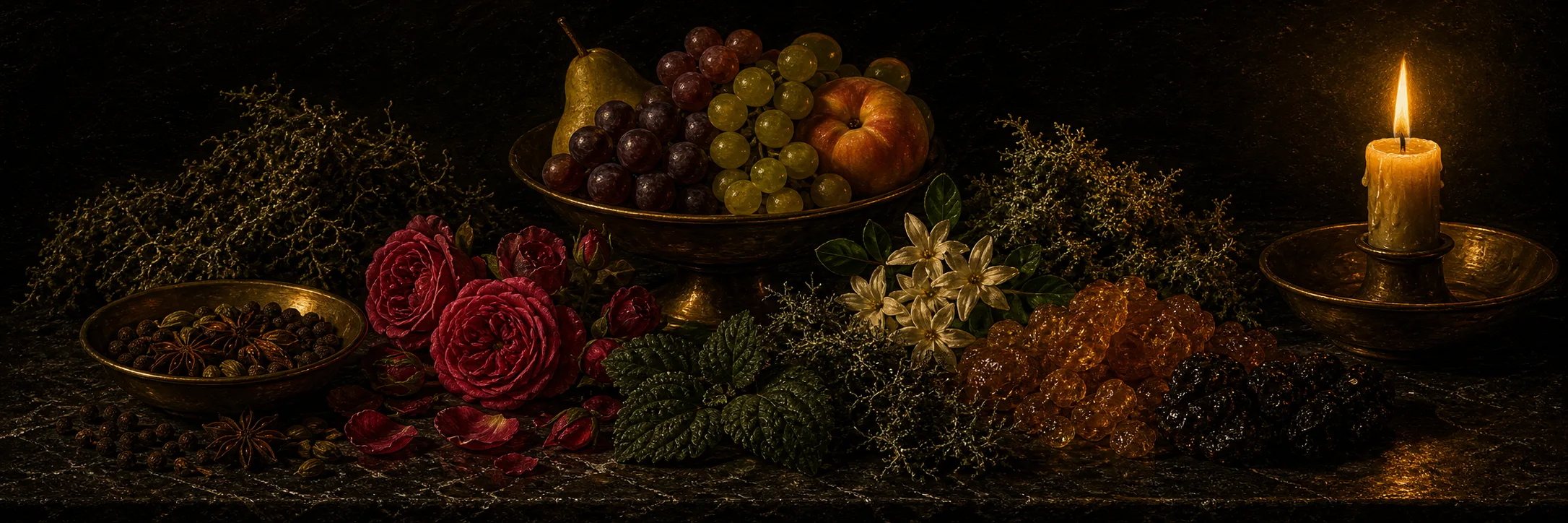
Essence
Rose by Cardin (1990; also catalogued as “Rose Cardin”) is a big, bold, woody rose chypre by Francoise Caron - a cheap-and-cheerful survivor of the late-80s/early-90s rose-patchouli school that punches far above its bargain-bin price and quirky pink sculptural bottle. It is loud, spicy, aldehydic, and unapologetically “obvious,” in the words of its fans - “no timid little petal.” Long discontinued, it has a small but devoted following among vintage-chypre lovers who prize it as an affordable cousin to the great rose chypres.
Scent Profile
It opens effervescent and fizzy - bright aldehydes, a green-spicy coriander/cardamom accent, and a rosewood-and-rose blast that several wearers describe as eye-wateringly potent, even “champagne”-like. The rose is the star: a raw, aggressive, “very pink,” almost cliche designer rose that some read as fat, fruity, and lipstick-like, others as shrivelled/woody and joined by dry fruit. A short-lived but real polarizing top note divides reviewers - a minority report a sour vinegar/urinous or “mothball/fleshy” facet in the first stretch. As it develops, the aggression mellows into a fuller floral accord (carnation, ylang, jasmine, lily-of-the-valley), then settles into the classic chypre drydown: rose-and-patchouli over woods, vetiver, incense, musk, and amber. The signature accord is a peppery red rose riding a patchouli-woody chypre base. It has serious throw and lasts all day.
Performance
Strong, by consistent wearer report - this is the rare bargain scent that over-projects. Wearers repeatedly warn against over-application (“the sillage is a gift-take care not to over-apply!”), describe it as “soooooooooo strong,” and note it lasts “all day” with sillage and longevity comparable to far pricier classics. One reviewer ranked its strength alongside Balenciaga Rumba and Amouage. The vintage formulation is reported as more potent than the later “Five Star”/reformulated version, which is described as easier to wear in public. Performance is the fragrance’s most agreed-upon virtue.
Wearing Context
A cool-weather, evening, statement fragrance - too big and “obvious” for timid daytime use, by the admission of even its fans. Feminine by catalog and era, though its bold rose-chypre character suits anyone who loves the genre. Socially it reads as dramatic, glamorous, “provocative,” and decidedly old-school; one reviewer framed it as a serious, almost severe rose “for the age of emancipation,” not a romantic or innocent rose. Best for those who want a vintage rose-chypre with presence and don’t mind being noticed.
Comparisons & DNA
This fragrance is unusually well-anchored by named comparisons. The most precise: Jean Couturier Coriandre - a lead review frames Rose by Cardin as a derivative that “delineates from the classic Coriandre, turning up the levels on the aldehydes and rose and underlined with patchouli and musks.” In Miguel Matos’s “Revisiting Rose Cardin” feature, Miguel Matos explicitly places it in the pantheon of patchouli-rose chypres: “Coriandre, Aromatics Elixir, La Perla, Knowing, Aramis 900. These are among the greatest patchouli-rose chypre fragrances of all time. And now I can add Rose Cardin to that list.” Other wearers touchpoints: a “more butch and bolder” relative of those same notes, a “rosy Coriandre” or “more complex Tea Rose” (Perfumer’s Workshop Tea Rose), and comparisons to Agent Provocateur (but rosier and less powdery). One reviewer compared its dirtier facets to Iquitos. Within the house, fans link it to Caron’s other Cardin chypres, Choc de Cardin and Paradoxe.
Reception
For a discontinued drugstore fragrance, it enjoys warm, almost cult, regard among vintage lovers in surviving reviews - though with a clear minority of detractors. The praise: an astonishing-value rose chypre, “beautiful,” with “out of this world” projection and longevity; Miguel Matos’s article is the high-water mark of critical enthusiasm. other reviews are more measured - a representative neutral review calls it “not extremely refined but… well done and quite pleasant,” a competent “medium-level designer” rose. The harshest review famously savaged the top notes as “a venomous combination of vinegar and stale urine that surely violate some clause of the Geneva Convention,” judging it superfluous next to better roses. So the polarization axis is clear: lovers prize its potent, characterful rose-chypre value; detractors find it unrefined, dated, or marred by a sour/synthetic opening. Blind buy verdict: low cost, and for chypre fans it is a strong-value pickup - but the divisive opening and reformulation differences argue for sampling or buying cheaply.
Versions & Reformulation
Multiple formulations exist and the differences matter. There is the vintage original (often in a deep-purple box, EDT) versus a later reformulation associated with “Five Star” and other licensees (a Coty-era issue also surfaces on the secondary market). wearer consensus: the vintage is more potent and richer, while the modern version is weaker and “actually makes it easier to wear in public.” Wearers seeking the original advise looking for specific vintage packaging cues (e.g., the deep-purple box). The fragrance is discontinued, so all purchases are vintage or old stock; version/condition is the key variable.
Acquisition Notes
Discontinued, but still cheaply and widely found on the secondary market. Reformulated/old-stock bottles turn up on eBay for as little as $10-35, while sealed vintage and rarer listings range up into the hundreds (sellers ask $400-480 for some new-with-box bottles). The signature sculptural pink bottle with a purple-ish cap (described by some as “tacky” thin plastic) is part of its charm. Decanted vintage samples are available from vintage specialists. Counterfeiting is not a major issue at this price; the real risks are (1) top-note degradation/turned vintage juice and (2) confusing the potent vintage with the weaker reformulation. Buy from reputable vintage sellers and verify packaging/era.
Notable Facts & Lore
- Francoise Caron’s chypre pedigree is central to its modern reassessment.
- The sculptural pink bottle echoes Cardin’s design-world theatricality.
- Some bottles appear under the Taffetas name, creating packaging confusion.
- Its cult reputation grew through slow vintage rediscovery rather than launch fame.