Ralph Lauren — Polo
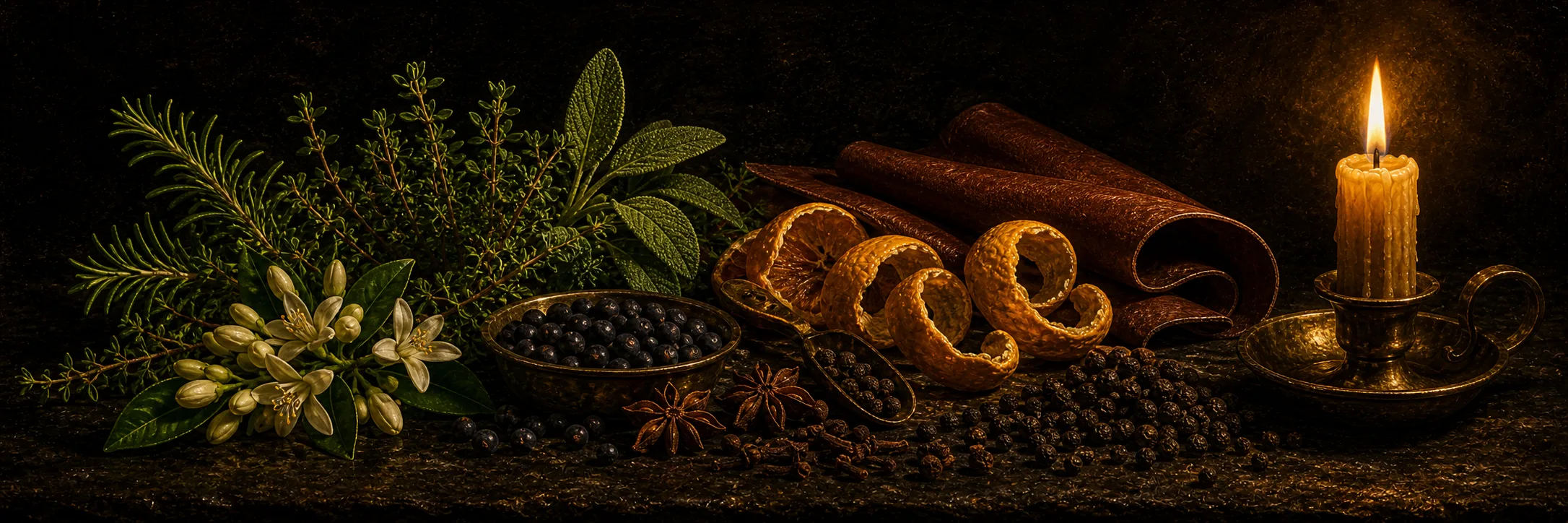
Essence
Polo (1978) is a landmark of American masculine perfumery, the debut men’s fragrance for Ralph Lauren, created by Carlos Benaim and a FiFi Award winner in 1979. It is the archetypal green, piney, leather-tobacco woody chypre: a dry, bracing, oakmoss-driven powerhouse universally described as unapologetically masculine. Nicknamed Polo Green after its emerald bottle, it has been worn by generations of men and stands as a reference point for the entire green-chypre genre. Its other defining story is reformulation, since across nearly five decades and several manufacturers, restrictions on oakmoss have measurably changed it.
Scent Profile
The opening is a sharp, sinus-awakening blast of green and pine: grassy artemisia, basil and dry herbs over a bracing pine-needle note that some read as almost menthol-like or even medicinal, framed by caraway, coriander and pepper and a bitter-green bite.
The heart is the soul of the fragrance, a dry, smoky pine-and-leather core, with carnation and a grassy chamomile adding an old-school floral-spicy facet. Notably, Polo is almost floral-free apart from that chamomile, which gives it an unexpected touch of sweetness.
The base is the long, intensive trail that made its reputation: tobacco, leather and above all oakmoss, with patchouli, cedar and vetiver giving a mossy, woody, resinous depth. Roja Dove describes it as a leathery chypre with an unmistakable sweetness from the pronounced chamomile, blended with juniper and artemisia. It is rich, dense and old-fashioned, drying down over many hours from its abrasive start toward a softer, soapy, pine-and-patchouli woodiness.
Performance
Polo is widely regarded as a powerhouse, especially in vintage form, with longevity reports converging on roughly eight to twelve hours and strong sillage that projects hard. It is potent enough that two or three sprays are repeatedly recommended as sufficient, and over-application can choke out a room, with the scent clinging to clothing for days. The modern version is somewhat lighter, particularly in the midsection, but still gives all-day longevity and very good sillage. It is best in cooler weather and evenings, since its strength makes it risky in heat or enclosed spaces, so it rewards a sparing hand.
Wearing Context
Polo skews formal, mature and cool-weather, associated with business attire and dressed-up evening occasions, and is strongly seasonal toward fall and winter. Socially it reads grounded, confident and old-school, recognizable in a heartbeat and carrying real gravitas, though it is uncommon on younger men today, which makes it distinctive rather than crowd-pleasing. There is a clear generational divide, with older wearers loving it for nostalgia and craft while some younger noses find it dated or harsh. It works best as a statement signature rather than an office or hot-climate scent.
Comparisons & DNA
- Clinique Aromatics Elixir is a frequent reference as a fellow woody chypre, sharing the dense, mossy character.
- Aramis is the leather-chypre cousin most often named alongside it.
- Lauren, its simultaneously launched feminine sibling, is the spicy floral-chypre counterpart to Polo’s green powerhouse.
- Within its own line, Polo Sport, Polo Black and Polo Blue are modern, mass-appeal departures that share little with the original’s pine-leather-oakmoss DNA.
No close modern dupe of vintage Polo exists; its character is genre-defining rather than copied.
Reception
Polo is a canonized classic, frequently called a masterpiece by vintage-lovers and praised for its timeless masculinity, craft and projection, and for serving as an antidote to interchangeable modern blue aquatics. It is also polarizing: detractors find it harsh, dated or dirty, and a vocal minority dislikes the current leather-tobacco rendering, describing it in terms of stale tobacco and an acrid synthetic leather. The two main fault lines are nostalgic classic versus dated and harsh, and vintage versus reformulation. In Perfumes: The Guide, Luca Turin and Tania Sanchez treat the original as a green-chypre classic, and Turin separately gave the flanker Polo Sport a four-star review. As a blind buy it is a safe, cheap way to understand classic masculine perfumery, though enthusiasts steer newcomers to vintage for the full legend.
Versions & Reformulation
Reformulation is central to Polo’s story, and collectors track it through the base label: Warner/Lauren as the original 1978 producer, the widely loved Cosmair vintage that took over in the mid-1980s, and the post-2000 modern era under L’Oreal and Ralph Lauren Fragrances. Across these generations the decisive change is the elimination of oakmoss, the central chypre ingredient, under industry restrictions formalized in the 2000s. Vintage Warner and Cosmair bottles share a wet-moss greenness, while the modern version is brighter, pinier and a touch more synthetic, with one recent reviewer judging it the weakest it has ever been. The many later line entries, from Polo Crest and Polo Sport through Polo Black, Polo Blue and Polo 67, are distinct fragrances rather than reformulations of the original.
Acquisition Notes
The current Polo EDT is inexpensive and widely available, typically running roughly fifty to ninety dollars depending on size and often found cheaper at discounters. The standard modern bottle is the tall, rounded-shoulder atomizer. Vintage is the connoisseur’s pursuit, with collectors hunting Warner/Lauren or Cosmair base labels on the secondary market for the classic oakmoss-rich juice. A known quirk is that older bottles often say “Cologne” even at eau de toilette strength, and batch-label identification, Warner versus Cosmair versus modern, is the practical tool for both authentication and vintage dating.
Notable Facts & Lore
- Polo was Ralph Lauren’s first fragrance, launched in 1978 alongside the women’s Lauren under a Warner/Lauren partnership.
- It won the Fragrance Foundation’s FiFi Award for Men’s Prestige in 1979.
- It is inseparable from the preppy Ralph Lauren lifestyle of the late 1970s and 1980s and from polo and equestrian imagery.
- Perfumer Carlos Benaim became IFF’s first Master Perfumer in 2013 and later composed for Armani, Calvin Klein, Givenchy and YSL, with Polo repeatedly cited among his masterpieces.
- Its nostalgic footprint is enormous, with countless wearers recalling fathers, grandfathers and classmates who wore and over-applied it.