Ralph Lauren — Safari
Essence
Safari is a 1990 floral-green eau de parfum, composed by Dominique Ropion early in his career, that has become a reference point for the galbanum-heavy mixed-floral style of late-1980s/early-1990s American perfumery. It is the women’s counterpart to the better-known Safari for Men (1992), and despite the adventure-travel name it is not a literal “savannah” scent - it is a lush, slightly retro bouquet built on a bitter-green galbanum opening, a heady narcissus-hyacinth-iris heart, and a powdery, mossy-woody drydown. What makes it distinctive is its tension between sharp green bitterness and warm floral opulence, plus its status as a beloved, repeatedly mourned “lost” fragrance that has been progressively hollowed out by reformulation. It reads as old-money, casual-chic, and conspicuously un-trendy.
Scent Profile
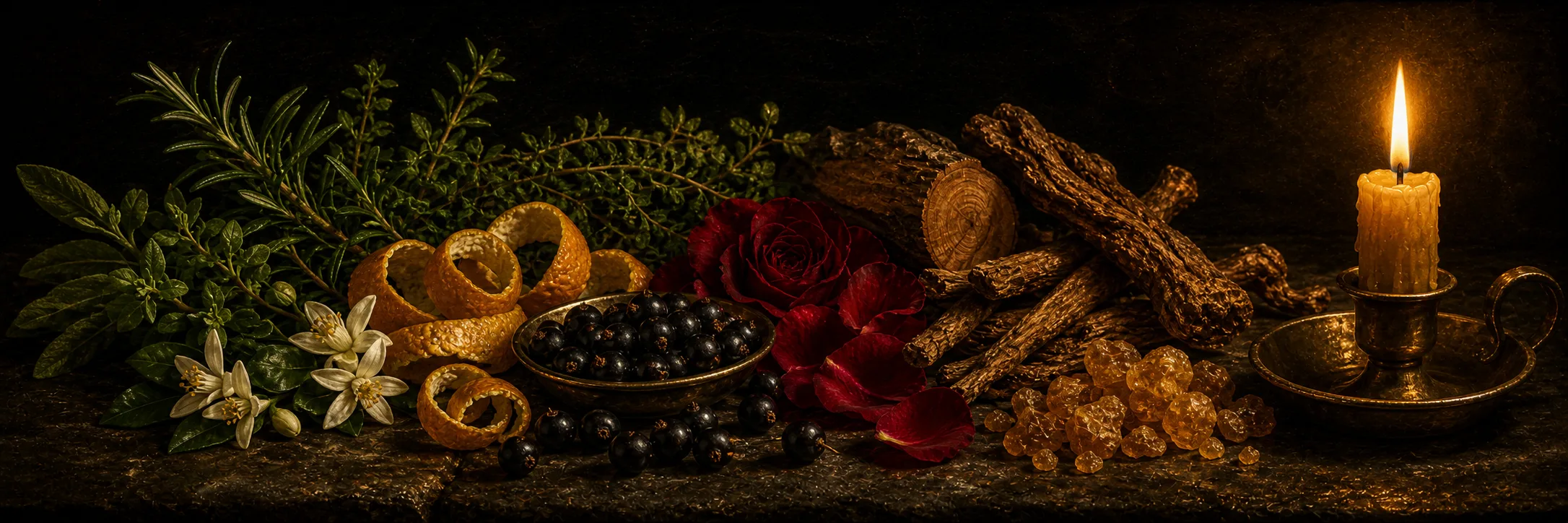
Safari opens loud and green: a big dose of galbanum (the bitter, sappy, “crushed green stem” note) lifted by marigold/tagetes, hyacinth, narcissus, and a fruity-tart flicker of mandarin and blackcurrant, with aldehydes giving the top a soapy sparkle. Reviewers consistently describe the opening as “dry, golden grass” rather than fresh-cut lawn - Bois de Jasmin’s Victoria Frolova calls it “a soapy green floral that becomes deliciously powdery as it develops. Hazy, dewy and sweet rather than camphorous,” led by “heady, rich hyacinth, with hazy, vintage-style galbanum providing the greenness.” The heart is a classic rich floral bouquet: narcissus (hay-like, daffodil-and-hot-grass), iris/orris and rose forming a powdery duo, with jasmine and orange blossom adding sweetness and a “barbershop green” edge. The drydown is where the modern and vintage versions diverge most: in vintage, oakmoss, styrax, patchouli, vetiver, sandalwood and amber create a powdery, mossy, softly animalic chypre-adjacent base; the current version is a thinner, woody-musky skin scent. The signature accord is that galbanum-over-powdery-floral contrast - green bitterness wrapped in iris-and-rose powder. It is fairly linear in spirit (“the same from start to finish. You cannot crack this nut,” per one wearer) though it does travel from green-bright to floral-powdery to woody-soapy over a wear.
Performance
Performance is the central battleground because of reformulation. Wearer consensus on vintage (Cosmair-era) bottles: strong sillage, big projection, and long longevity - multiple reviewers report it lasting all day and clinging to clothing “even after showers,” and one wearer notes the parfum is so diffusive that “I couldn’t smell the fragrance anymore, yet it was making its way through the elevator crowd.” One wearer reports “moderate sillage, excellent projection, and seven hours of longevity” on a 1990s bottle. Current/reformulated versions are widely described as much weaker: “noticeable difference in sillage and longevity,” “after an hour and a half no trace of it could be found on my skin,” with the oakmoss backbone gone. Practical reading: expect roughly 6-8 hours from a good vintage bottle with strong projection in the first 2-3 hours; expect markedly less (3-5 hours, close to skin) from current stock. Apply sparingly - even fans call it “not for the faint” and recommend “apply sparingly.” It is a fragrance that rewards spraying on clothing for longevity.
Wearing Context
It is daytime-leaning, office-appropriate in modern form, and was historically a signature/special-occasion scent for its wearers. Social-perception skew (well-supported by anecdote): it reads as sophisticated, mature, “old money,” casual-chic - the “khaki pants, white silk blouse, no-makeup-makeup” Ralph Lauren muse - and it is a documented compliment-getter, with numerous reviewers recounting strangers stopping them to ask what they’re wearing. It skews feminine and somewhat “grown-up”/vintage; some younger noses read it as “grandma.”
Comparisons & DNA
Within Ropion’s own work and the galbanum-floral genre, Guerlain Chamade is the most-cited comparison - one reviewer flatly notes “it’s a familiar style, and perfumes like Chamade are better iterations of it.” It sits in the green-floral chypre-adjacent family alongside Chanel No. 19 (sharper, more austere galbanum-iris) and Jil Sander No. 4 (a 1990 contemporary). Some wearer discussions map “reminds me of” to Vivienne Westwood Boudoir (shared “sticky pollen” narcissus feel) and Revlon Jontue. It is frequently and explicitly distinguished from its own masculine sibling, Safari for Men (1992), a spiced aromatic fougere in the YSL Jazz / Giorgio Beverly Hills Red for Men mold - a different scent entirely despite the shared name and bottle styling. There is no well-known clone/dupe of the women’s Safari; the closest “alternatives” people reach for are other vintage galbanum greens rather than a targeted copy.
Reception
Safari is broadly beloved as a craftsmanship benchmark and a nostalgic favorite, with the dominant axis of complaint being reformulation rather than the composition itself. Praise: “one of the best perfumes ever made,” “a true masterpiece,” “such perfumes of this quality will never be made again,” repeated admiration for the galbanum-floral blending and the heavy cut-glass bottle. The major criticisms: (1) the modern version is “a mere ghost of itself” / “reformulated to death,” stripped of oakmoss; (2) the name doesn’t match the scent (“doesn’t conjure up anything exotic. A warm, deep floral that gives off an expensive shampoo vibe”); (3) some find it dated or “grandma.” Polarization is mostly vintage-vs-current and “of its time” appeal rather than love/hate of the accord.
Versions & Reformulation
Multiple formulations exist and the differences are the single most-discussed aspect of Safari. Original production was by Cosmair (the U.S. L’Oreal licensee); collectors use “Cosmair, Inc.” On the box and a metallic-engraved “RL” logo on the glass as vintage markers, versus later flat/painted logos. The fragrance was offered in EDP and a richer pure parfum (the parfum is widely considered the pinnacle and is now effectively gone). It was reportedly discontinued/hard-to-find for a stretch (surfacing at TJ Maxx and discounters), then returned. The reformulation removed or drastically reduced oakmoss (IFRA-driven), gutting the chypre-ish base; reviewers note the box ingredient list no longer shows real oakmoss and that the current juice is “a light aromatic cologne on a woody base.” Ralph Lauren’s own site has at times described it with vaguer marketing notes (“Bourgeons de Cassis, Jasmine Italian, Fleur d’Oranger”).
Acquisition Notes
Safari sits in Ralph Lauren’s designer fragrance tier as an EDP. Catalog pricing lists 110 USD / 75 ml. Official formats vary by market and release cycle. Confirm the exact flanker, concentration, and packaging because Ralph Lauren names often repeat across related releases.
Notable Facts & Lore
- Safari was Ralph Lauren’s femme entry in the “Safari” lifestyle world (apparel, home) and is steeped in the brand’s idealized-American, Out of Africa romance - reviewers explicitly tie it to the 1985 Robert Redford/Meryl Streep film and the khaki, sun-drenched-savannah imagery of the era’s ads.
- It is an early, formative Dominique Ropion composition, predating his later Frederic Malle/IFF fame; Cafleurebon’s Rachel K.
- Ng wrote a personal essay framing it as her “coming-of-age scent,” capturing “the great outdoors, of wide-open spaces, and great adventures.” The women’s version is widely held to have launched in the commercial shadow of the men’s Safari and other big 1990 women’s releases.
- Its enduring lore is twofold: (1) it is one of the most frequently “please bring it back / why did you ruin it” fragrances, with devotees publicly petitioning Ralph Lauren; and (2) the famous Luca Turin barbs about “Safari” (“Burt Reynolds on a bearskin rug”; “it has a smell”) are routinely misattributed to it but actually target Safari for Men.
- No major modern celebrity or viral-TikTok association is documented; its fame is generational and nostalgia-driven.