Réminiscence — Heliotrope
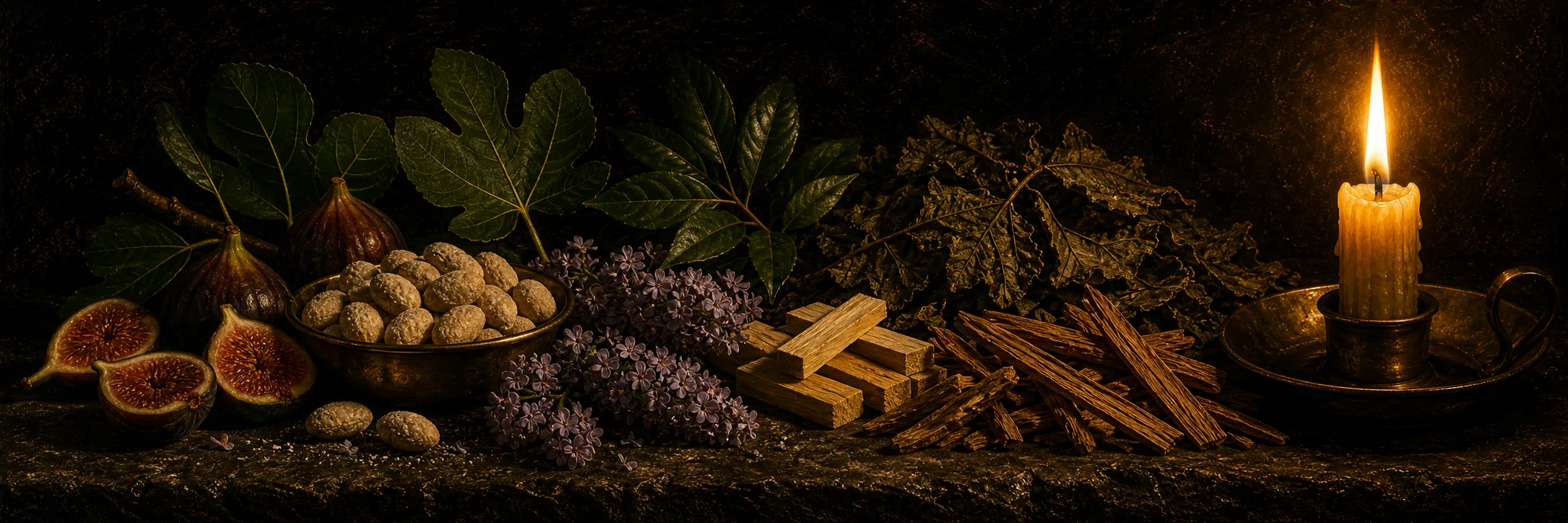
Essence
Heliotrope is the almond-marzipan member of Réminiscence’s “Les Notes Gourmandes” trio, an unapologetically almond-forward budget gourmand built on heliotropin — the molecule that smells of vanilla, almond and cherry pie at once. It is a deliberately regressive, comforting scent in the “Proust madeleine” mold, wrapped in a touch of fig-leaf greenness up top and a benzoin-vanilla-tonka base. Its single most important practical quirk is its identity: the same composition has worn three different names across two bottle generations, which is the first thing any shopper needs to understand.
Scent Profile
On most skins the fragrance opens with a brief green, slightly bitter fig-leaf flash — its one genuinely fresh gesture — before collapsing almost immediately into a dense almond-paste accord. For the majority of wearers the dominant impression is marzipan or amaretto: sweet, nutty and doughy. The heliotrope itself reads as powder rather than flower, with orris-like, lotiony, baby-powder facets sitting on top of the almond.
The most divisive element is a phantom coconut that a significant minority of wearers pick up strongly, sometimes to the point of needing to wash it off, while others get none at all and read only almond, vanilla and powder. This is a genuine skin-chemistry split rather than a disagreement about wording.
The base is the most consistently praised stretch: a soft, musky vanilla-tonka-benzoin drydown that several long-time wearers describe as creamier and better-made than the price suggests. The composition is broadly linear, stating its theme early and softening rather than transforming. The recurring negative is a “play-doh” reading, where the almond-powder-vanilla combination tips into modelling-clay for some noses — the flip side of the same accord that fans call cozy.
Performance
Performance is moderate and skin-dependent rather than powerful. After the first few hours the projected almond tends to fade into a close, musky vanilla skin-scent that mostly the wearer notices, and reports range from short-lived on some skins to all-day persistence with good cling on fabric. The practical takeaway is that this is a comfort scent worn close, not a room-filler, and because longevity varies, sampling first is wise.
Wearing Context
This is cold-weather, low-stakes, cozy wear, most at home on relaxed afternoons, at-home evenings and casual settings rather than formal or professional contexts, where the literal marzipan sweetness reads as too loud. Although marketed feminine, it is functionally unisex; the almond-vanilla-powder register carries no strong gendered signal and several men wear it without issue. It is best in fall and winter, since heat amplifies both the sweetness and the play-doh risk.
Comparisons & DNA
The clearest references are in-house: Guimauve is a softer, greener marshmallow that some wearers layer with Heliotrope to tame its sweetness, and Dragée is a cleaner sugared-almond often likened to Acqua di Parma’s Mandorlo di Sicilia. Outside the house, the most-cited touchstone is amaretto or Disaronno-style almond liqueur. For those wanting the heliotrope-powder note done with more polish, Guerlain’s L’Heure Bleue and Oriza L. Legrand’s Héliotrope are the more sophisticated relatives. A frequent modern comparison is Kayali Yum Pistachio Gelato 33, which several wearers say Heliotrope out-performs on strength and longevity.
Reception
Reception is genuinely polarized. The enthusiastic camp treats it as a budget sleeper; one widely-echoed verdict calls it “the IT GIRL of budget vanilla scents,” praising it as smelling more expensive than its price class with “a lovely marzipan note that reminds me of amaretto.” The skeptical camp finds it one-dimensional, synthetic in the drydown, or actively unpleasant via the play-doh reading. A representative balanced verdict leans against a blanket recommendation while conceding it can be lovely on the right skin. The honest summary is that it is blind-buyable only if you love almond and your skin does not pull coconut or play-doh.
Versions & Reformulation
The crucial issue here is identity rather than reformulation. The same composition has carried three names — Do Ré (2008), then Heliotrope (2013), then Histoire d’Orgeat (2024) — with separate catalog entries that confuse buyers. Longtime fans of the original Do Ré have worried whether the scent itself changed during the renaming, and launch material for the relaunch states the perfumes arrived in the same flacon form as Les Notes Gourmandes “but have brand new compositions,” giving documented reason to think the juice is not strictly identical across all three eras. The Heliotrope-era bottle is green, and both 50 ml and 100 ml EDP sizes have been standard.
Acquisition Notes
Heliotrope is inexpensive and frequently discounted, and many wearers report blind-buying it cheaply. Because of the triple naming, it is worth searching under all three names — Do Ré, Heliotrope and Histoire d’Orgeat — and checking the bottle color and era. Given the strong skin-chemistry split on coconut and the play-doh risk, a sample or travel decant before a full bottle is the sensible path, and the soft base is the reward, so judge it after several hours rather than at the almond-paste opening.
Notable Facts & Lore
- Heliotrope is sometimes called the “cherry pie flower” or “vanilla flower” because heliotropin smells of vanilla and marzipan, which is why a fragrance named for the flower reads as almond dessert.
- The solfège-naming origin (Do Re, Mi Fa, Sol La, Si Do) was abandoned because customers found the names unmemorable.
- The coconut that does not appear in the official pyramid is one of the most-discussed phantom notes for this fragrance, with wearers actively warning coconut-haters away.
- The same juice has been sold under three names across two bottle generations, making identity the key thing to verify before buying.