Tommy Hilfiger — T Girl
Essence
T Girl is the obscure, discontinued 2001 women’s floral that Annie Buzantian created as the feminine counterpart to the men’s “T,” both housed in distinctive bust-shaped bottles marked with a red “T.” It should not be confused with Tommy Hilfiger’s famous Tommy Girl (1996, by Calice Becker) — a mix-up so common that at least one online commenter mis-attributed a celebrated critic’s Tommy Girl review to T Girl. T Girl is a fresh, green, aldehydic floral built on citrus and daffodil, a minor and largely forgotten entry with a small but affectionate following.
Scent Profile
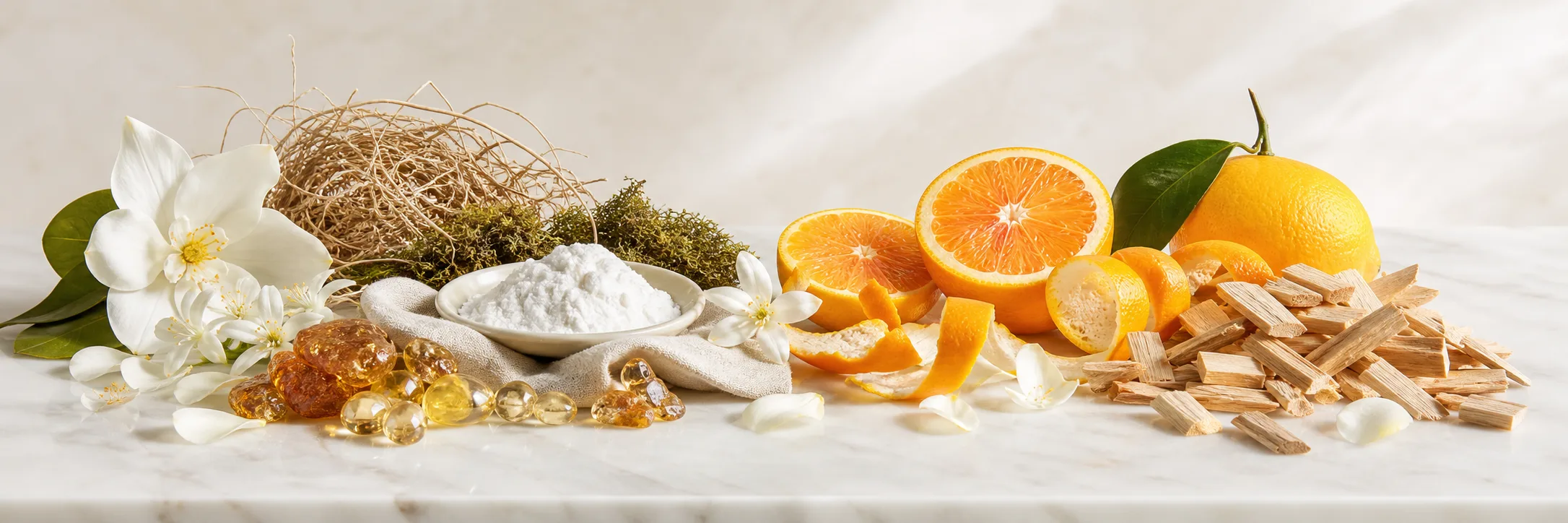
It opens with sparkling mandarin and bergamot, the same bright clementine-citrus facet found in the men’s T. The heart is the defining feature: narcissus, also called daffodil, paired with lily and rose, giving a fresh, green, slightly cool floral rather than a sweet or heavy one. Daffodil and phlox are the impressions wearers cite most. The base stays light — vetiver, soft woods, musk, and amber — kept subordinate so the composition never loses its airiness. It is largely linear, fresh, and transparent from start to finish; a recurring complaint is that it stays “too green” or too citrus-forward and never fully develops into its base on some skin types. The signature is bright citrus over a green, daffodil-led floral, with a polarizing facet: a bitter, almost chemical green edge that some wearers find harsh rather than fresh.
Performance
Performance is light, consistent with early-2000s fresh florals generally: noticeable but not long-lasting, with modest longevity and gentle sillage that call for reapplication over the course of a day. This is a daytime refresher rather than a projecting fragrance, best understood as something to be topped up rather than relied on to last unattended.
Wearing Context
This is a spring and summer, daytime fragrance for casual and everyday wear — youthful, fresh, and joyful in character. Many wearers who first encountered it in their teens or college years associate it strongly with that period of their lives. It reads as fully feminine but unfussy: clean, bright, and inoffensive in a girl-next-door way that is distinctly of its early-2000s American designer-floral moment.
Comparisons & DNA
The clearest in-house comparison is Tommy Girl (1996) itself: wearers who have tried both consistently describe T Girl as greener and more citrus-forward, and generally less balanced and less wearable than the iconic tea-based original, which most prefer. It has also been compared to Tommy Girl Summer Cologne (2004), described as similar but “more feminine and flowery.” The shared clementine top note explicitly links T Girl to its masculine sibling, T. Its green-floral-aldehyde character places it in the same family as other clean late-1990s and early-2000s designer florals, alongside scents like Clinique Happy and Estée Lauder Pleasures.
Reception
Documented critical coverage is essentially nonexistent — this is a minor release that never drew attention from major perfume critics, and the acclaim sometimes attached to it actually belongs to Tommy Girl (1996). What written sentiment exists is mixed-to-positive but low-volume. Fans describe it as “adorable and angelic, impossible to dislike” and “fantastically fresh and even sour,” with at least one enthusiast calling it the best of all Hilfiger women’s fragrances. Detractors are harsher, describing a “bitter,” “chemically” edge that some find unpleasant. Overall sentiment across the small number of accounts skews modest rather than strongly positive. The blind-buy read: worthwhile only for the curious or nostalgic — it’s inexpensive enough to gamble on, but it is a minor scent with a genuinely divisive green-citrus character.
Versions & Reformulation
T Girl is a single composition with no known reformulations, and it is discontinued. It was likely a limited or short-run release, though no official confirmation of that status or a firm discontinuation date survives — even the launch year is inconsistently recorded, with 2001 the usual figure and 2002 cited elsewhere. There is also a minor note-list discrepancy across sources: some list narcissus, lily, and rose in the heart, while others list phlox and daffodil — since daffodil and narcissus refer to the same flower, these largely reconcile into the same picture.
Acquisition Notes
Though discontinued, T Girl remains fairly easy to find on the secondary market. Confirmed sizes are 50 ml (1.7 oz) and 100 ml (3.4 oz) EDT sprays. Typical pricing runs $30 to $50 for new-in-box bottles, though some sellers market it as “rare” and ask considerably more — prices that reflect scarcity marketing rather than genuine collectible value, since stock is still findable through discount fragrance retailers. Counterfeiting is not a real concern for a scent this minor; the more common risk is sellers or buyers conflating it with the far more famous Tommy Girl.
Notable Facts & Lore
- T Girl’s defining piece of lore is its own identity confusion with Tommy Girl — the shared “Tommy/T” branding has largely erased its separate reputation.
- It launched in 2001 as a matched pair with the men’s fragrance T, both housed in bust-shaped bottles marked with a bold red “T.”
- Perfumer Annie Buzantian was the first woman named a Master Perfumer at Firmenich, though T Girl is a minor entry in her body of work.
- The fragrance launched under Estee Lauder’s Aramis and Designer Fragrances division; Tommy Hilfiger fragrances have since moved to Give Back Beauty.
- No campaign celebrity, viral moment, or controversy attaches to the release — it arrived quietly and left the same way.