Tommy Hilfiger — Tommy
Essence
Tommy (1995) is the original masculine fragrance from Tommy Hilfiger’s then-exploding all-American brand, a fresh-citrus/aromatic-fougere co-created by Annie Buzantian and Alberto Morillas and conceived as an olfactory “trip around America.” It is one of the defining mid-90s designer “freshies” - a clean, green, apple-and-citrus scent that became a high-school and college signature for a generation of American men. Its distinctiveness is less about complexity than about a specific, instantly recognizable 90s-Americana feeling: crisp citrus and mint up top, a fruity apple-cranberry heart, and a soft woody-amber finish. It won the Fragrance Foundation’s 1996 “Fragrance of the Year - Men’s Prestige” award.
Scent Profile
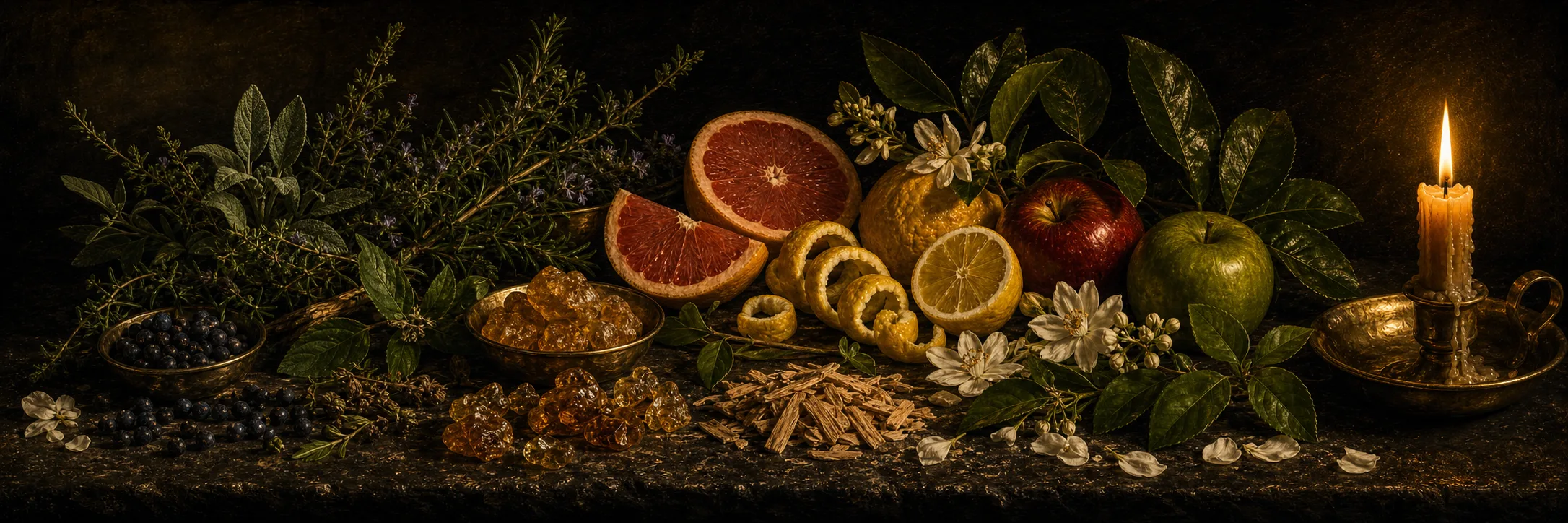
From the catalog’s mint/bergamot/grapefruit/lavender top, granny-smith-apple/cranberry/rose heart, and cotton-flower/cactus/amber base, the documented wear is a bright green-citrus opening - bergamot and grapefruit lifted by cool mint and aromatic lavender - that quickly gives way to the fragrance’s signature fruity heart: tart green apple and cranberry, lightly floral with rose. reviewers describe the arc well: “opens with a green and citrusy freshness that gradually fades away giving place to a sweeter subtle base of amber,” with “the floral green aspects transform themselves from fresh to sweet.” Perceptible: citrus-mint top, apple-cranberry fruit, soft amber-woody drydown. Submerged/textural: the cotton-flower and cactus read as soft, clean, slightly synthetic “airy” effects rather than distinct notes. Some reviewers detect a faint ozonic/aquatic facet underneath. It does not evolve dramatically - one reviewer notes it “doesn’t evolve so much as weaken after the first 15 minutes.” Signature accord: crisp green-apple-and-citrus over clean amber.
Performance
Longevity is the most-cited weakness, with a clear split between vintage and current formulations. Many modern-bottle reviewers report short wear - roughly “2 to 3 hours” to “about five hours” before it fades, consistent with a light fresh EDT. Vintage and well-macerated bottles are reported to perform markedly better: reviewer reviewers cite “longevity about 7-10 hours” with strong projection “for the first 3-4 hours,” and one reviewer reviewer of a macerated modern bottle claimed “Seventeen hours, nine of which were pounding.” The reliable pattern: as a fresh citrus EDT it is moderate at best, strongest in the first few hours, and benefits from generous application (six-plus sprays) and from maceration/older stock. Reviewers note it shines and projects best on warm, humid summer days.
Wearing Context
Quintessential daytime, warm-weather, casual wear - reviewers reach for it “on warm, humid days in the summer” and describe it as evoking “long, lazy afternoons.” It is overwhelmingly read as youthful, clean and inoffensive (“classy without trying too hard… subtle, clean, inoffensive and everyone will like it”), making it office-, school- and crowd-safe. The social-perception skew is strongly nostalgic and youth-coded: reviewers repeatedly tie it to high-school/90s memories, and some now find it “dated” or too “soft”/un-masculine for their taste. Practical reading: excellent spring/summer daytime casual scent and a compliment-getter when freshly applied, less suited to formal or cold-weather evening contexts.
Comparisons & DNA
The most-repeated wearer comparison is to Montale Fougeres Marines, widely described as a “popular niche spin on the Tommy DNA” - reviewers say “if you love Fougeres Marines Montale you will love this one… it smells 90% like Montale,” making Tommy effectively the affordable progenitor of that fresh-fougere accord. Reviewers also liken it to Boss Bottled (“a teenager version of Boss Bottled,” with the note that Boss No. 6 outlasts and outprojects it) and place it alongside its 90s freshie cohort. One reviewer reviewer flagged a perceived similarity to Perry Ellis America (“can be purchased much more affordably”). The drydown’s salty-ambroxan facet led one detailed reviewer to suspect the current formula borrows from the Fougeres Marines lineage. Its feminine counterpart, Tommy Girl (1996, by Calice Becker), is a separate tea-floral and not a variant of Tommy. Net DNA: a foundational fresh-citrus/aquatic-fougere that seeded a whole genre.
Reception
Beloved-but-debated. Praise centers on its clean, nostalgic, easy-to-wear character and excellent value (“dirt cheap but performs like a GBP 40+ cologne”; “a crowd pleaser… under $25”). Criticism clusters on weak longevity, lack of evolution, and - for some - a synthetic or “mock apple pie”/ketchup-like fruity facet that reads cheap or dated. reviewer hosts the sharpest detractors (“teenage boys, sweat, cheap deodorant,” “an extensive list of ingredients that add up to one big disappointment”), while many others defend it as a recognizable classic with “some Tommy DNA still there.” Axes of polarization: nostalgia/value versus dated/synthetic, and vintage versus reformulated. Blind-buy verdict: widely endorsed as blind-buy-worthy at its low price for a warm-weather casual freshie, with the caveat that performance is modest and the current formula differs from vintage.
Versions & Reformulation
Reformulated. This is a significant theme: reviewers distinguish a superior vintage (often the “Made in Switzerland” stickered bottles, praised for better “smell, projection, and especially longevity”) from a cheapened current formulation. One detailed reviewer noted the current version leans more salty/ambroxan-aquatic in the drydown, “to the point where this version of Tommy smells a mite bit like an aquatic.” Several note the licensing history (Estee Lauder/Aramis held the Hilfiger fragrance license; the brand is currently marketed by the Estee Lauder Companies). Packaging was modernized (the old full-crest box replaced by a cleaner white-and-stripe design). Reviewers also report that maceration (letting a new bottle rest months) substantially improves the current juice. Tommy Girl (1996) is a separate feminine release, not a flanker of this fragrance.
Acquisition Notes
Firmly budget tier - commonly found “under GBP 30 for a 100ml bottle” and “under $25” at discounters, making it one of the better-value 90s designer classics. Common sizes include 100ml and the larger 125ml/200ml bottles many longtime users mention. Vintage hunters specifically seek “Made in Switzerland” bottles for the older formulation. Given the low price it is not a heavy counterfeit target; no specific whitelisted batch-code guidance was found, though batch codes are used to gauge production date and maceration (e.g., reviewers cite codes to estimate a bottle’s age). Authentic stock is widely available at department stores and reputable discounters.
Notable Facts & Lore
- The launch concept, per a widely repeated wearer recollection, was Tommy Hilfiger’s vision of a fragrance capturing “a trip around the United States,” incorporating notes evoking the American landscape (the brand’s own framing lists Americana-flavored notes like cranberry, driftwood and black spruce).
- It won the Fragrance Foundation’s 1996 “Fragrance of the Year - Men’s Prestige” (FiFi) award - confirmed by the Foundation’s official award record, which lists “1996 Fragrance of the Year - Men’s Prestige - Tommy by Tommy Hilfiger - Aramis.” The fragrance is deeply tied to mid-90s American youth culture and the era of big-logo Hilfiger apparel, and reviewers’ nostalgia for that period is itself part of its enduring identity.
- Notably, while Luca Turin and Tania Sanchez famously awarded the feminine Tommy Girl five stars and a “masterpiece” verdict in Perfumes: The Guide, the masculine Tommy did not receive comparable majoracclaim.