Ensar Oud — Ibn Arabi
Essence
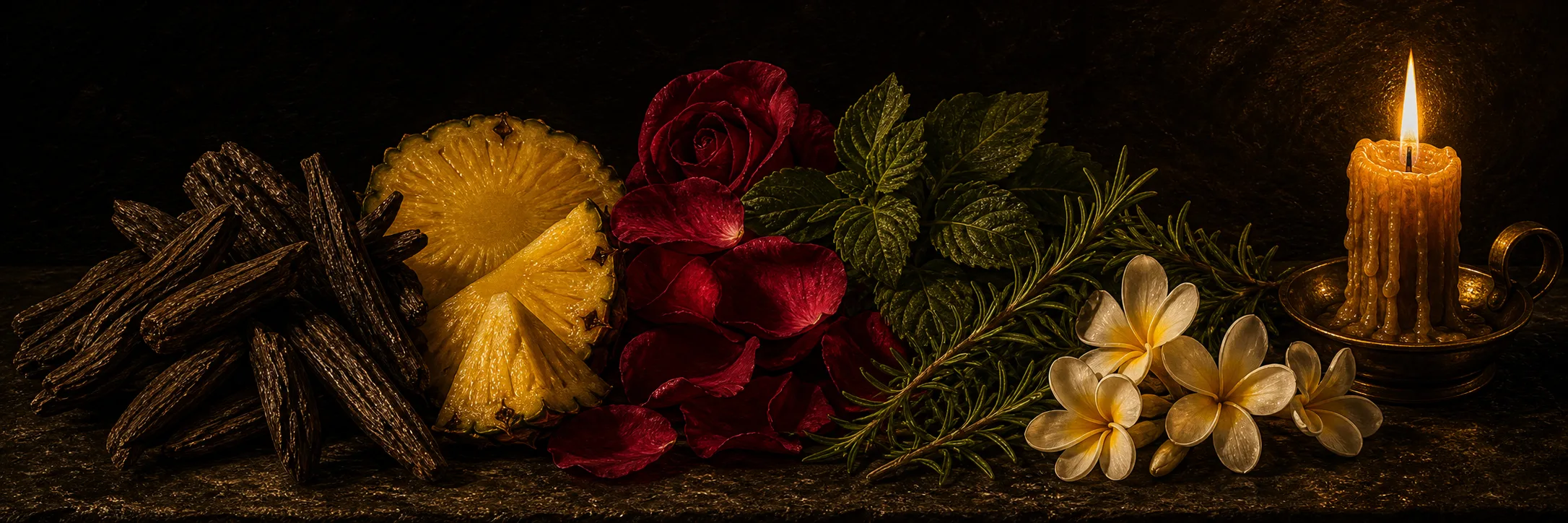
Ibn Arabi is an artisanal natural-perfume spray from Ensar Oud, part of a three-piece “Mystics Collection” alongside Rumi and Abu Madyan and named for the Andalusian Sufi philosopher Ibn ’Arabi. It is an experimental rose-oud built on real, top-grade naturals: a cooling rosemary-and-pineapple opening, a Bulgarian rose and frangipani heart laced with black tea, over a base of smoky Sumatran oud, wild Cambodian oud, and patchouli. Polarizing even among oud devotees, it is an unusual, herbaceous-fruity twist on the classic rose-oud rather than a conventional one.
Scent Profile
The opening over the first 10 to 20 minutes is dominated by a potent, authentic pineapple cut with fresh, cooling rosemary, producing a green, herbaceous, fruity-aromatic effect that some find bracing and others off-putting. One wearer likened the opening blast to bourbon whiskey, all spicy caramelized spirits, while detractors went as far as calling it a smell like vomit before conceding the rose rescues it. Into the heart, from one to three hours, the Bulgarian rose takes over, juicy and lychee-like, supported by frangipani’s almost caramel-like sweetness, creamy and viscous like tuberose, with palisander rosewood and a black-tea nuance that adds an austere, tannic dryness. The rose persists throughout the whole wear. In the drydown past three hours, patchouli’s dark, damp earthiness and the twin ouds emerge, but the oud reads as supportive rather than dominant. The Cambodian and Sumatran combination lends an earthy petrichor base and a cool, almost mentholated freshness from the rosemary-patchouli interplay. Pineapple, rosemary, Bulgarian rose, and patchouli are clearly readable; frangipani and black tea are woven in; and the oud, surprisingly for an Ensar release, stays in a smoky, earthy supporting role rather than barnyard center stage. The evolution from sharp fruity-herbal top to jammy rose heart to earthy oud-patchouli base is real rather than linear, and the signature accord is cool rosemary-pineapple over jammy Bulgarian rose and smoky-earthy oud — a deliberately experimental take that does not fully work for everyone but is unmistakably built from premium naturals.
Performance
Projection and longevity are listed as above-average, consistent with Ensar’s concentrated natural sprays. As a natural-heavy pure parfum, expect strong, intimate projection in the first hours that settles to a close, rich skin presence with long total longevity; the broader Mystics line is reported as multi-hour to all-day, with sibling Rumi cited as lasting most of a day from a single spray, though Ibn Arabi itself is not individually quantified. It is said to do very well in autumn, implying it leans cool-season and can turn heavy in heat, since the dark, earthy patchouli-oud base amplifies in warmth. It is best in cooler, dry conditions where the rose and oud stay defined, and as with all concentrated artisanal sprays, a single conservative spray is plenty. Performance data is thin and largely brand-derived, so treat specifics cautiously.
Wearing Context
Ibn Arabi is a cool-season, contemplative, connoisseur’s fragrance rather than a versatile daily wear, with autumn and winter the sweet spot given its dark oud-patchouli base and jammy rose. It skews toward evening or quiet daytime wear and personal, meditative occasions rather than office or mass-social settings, since its herbaceous-fruity-medicinal opening and earthy oud are challenging for the uninitiated. It shines for those who appreciate natural rose-oud craftsmanship and want something idiosyncratic, and falls flat for anyone seeking a crowd-pleasing or conventionally pretty rose-oud, as the pineapple-rosemary-oud combination is genuinely divisive. Given the Sufi-philosopher theme, it carries a deliberately spiritual, introspective association.
Comparisons & DNA
Ibn Arabi is best understood within Ensar Oud’s own catalog and the artisanal rose-oud tradition rather than against designers. Its closest siblings are the other two Mystics sprays: Rumi, a boozy ambered gourmand of coffee, cacao, Turkish rose, and tobacco that is far sweeter, and Abu Madyan, a savory, spicy Spanish-leather-and-Indian-oud composition that is drier and more savory. Within the artisanal-oud peer group, recommendation clusters point to Bortnikoff’s Oud Monarch and Areej Le Doré’s Ottoman Empire as kindred natural rose-ouds. As an experimental, fruit-and-herb-forward outlier in a deep house lineage of rose-ouds, it has no genuine clone: built on wild-harvested single-origin ouds, real frangipani, and Bulgarian rose, it cannot be meaningfully duplicated by designer or budget houses, so anyone wanting something like it must look to other artisanal rose-ouds.
Reception
Mainstream critical coverage is essentially absent, and even specialist oud forums carry only passing mentions rather than a dedicated review, so the deep-niche signal is itself thin on this scent. Substantive sentiment is sharply polarized. Some skew curious-to-positive, praising the authentic pineapple-rosemary opening, the lychee-like Bulgarian rose, and the quality of the natural materials, while caveating that the experimental concept does not fully convince. Others skew negative, with comments that the strangely spiced rose ruins even the finest oud, that the rose-and-oud idea has not succeeded amid sour pineapple and a sharp menthol undertone, and that the opening is hard to get past before the rose takes over. The central axis is the unconventional pineapple-rosemary-black-tea framing: adventurous noses appreciate the experiment, purists feel it sabotages good oud. A separate brand-level controversy over the house’s pricing, marketing, and review authenticity colors reception as well. Given that it is expensive, polarizing, and now discontinued, sampling via a decant or split first is the consensus rather than a blind buy.
Versions & Reformulation
Ibn Arabi is a small-batch artisanal release in Ensar’s 30 ml Pure Parfum spray format, part of the limited Mystics Collection. As a hand-made natural perfume in limited quantity, it has no concentration variants and no reformulations; instead it has sold out and is now widely listed as discontinued, with the official product page archived. Natural compositions like this can shift subtly batch-to-batch and continue to evolve in the bottle, but no formal reformulation is documented, so it is effectively a single, limited composition.
Acquisition Notes
Ibn Arabi sits in the ultra-luxury artisanal tier and is now scarce. It was sold as a 30 ml pure-parfum spray, and while the precise original price could not be confirmed since the page is archived, context places it in the hundreds of dollars: a direct-from-house trio of the three Mystics plus a small attar totaled around $1425, and sibling sprays resell in the $160 to $240 range. The realistic access route is the decant and split ecosystem, where group-buys break bottles into 10 ml decants and authorized artisanal resellers carry it, since mainstream decant houses generally do not stock ultra-niche Ensar. Counterfeit risk is unusual here; the bigger concern is the value behind the brand’s claims, so buy from the house directly when in stock, from trusted resellers, or via vetted splits, and beware grey-market resale at inflated prices.
Notable Facts & Lore
- Ensar describes Ibn Arabi as “both a tribute to his heritage and an olfactory rendering of the time and land he lived in,” the Sufi sage of Spain.
- He singles out the frangipani as the prized centerpiece, “creamy, viscous, like tuberose, but prettier,” calling sourcing it “the bane of our company.”
- He explains the pineapple as color symbolism: a touch of yellow against the deep orange of the frangipani and the red of the rose, evoking Spain’s golden era.
- The base pairs smoky Sumatran oud with a wild Cambodian oud the house values at $550+ per bottle, wild-harvested and distilled with Cambodian waterfall water.
- The house, founded in 2004, positions itself as the vanguard of artisanal oud, distilling its own oud from villages, farms, and forests worldwide.
- A persistent brand-wide controversy over pricing, FOMO-style limited drops, and the genuineness of online reviews materially shapes how the fragrance is discussed.