Lancôme — Hypnôse
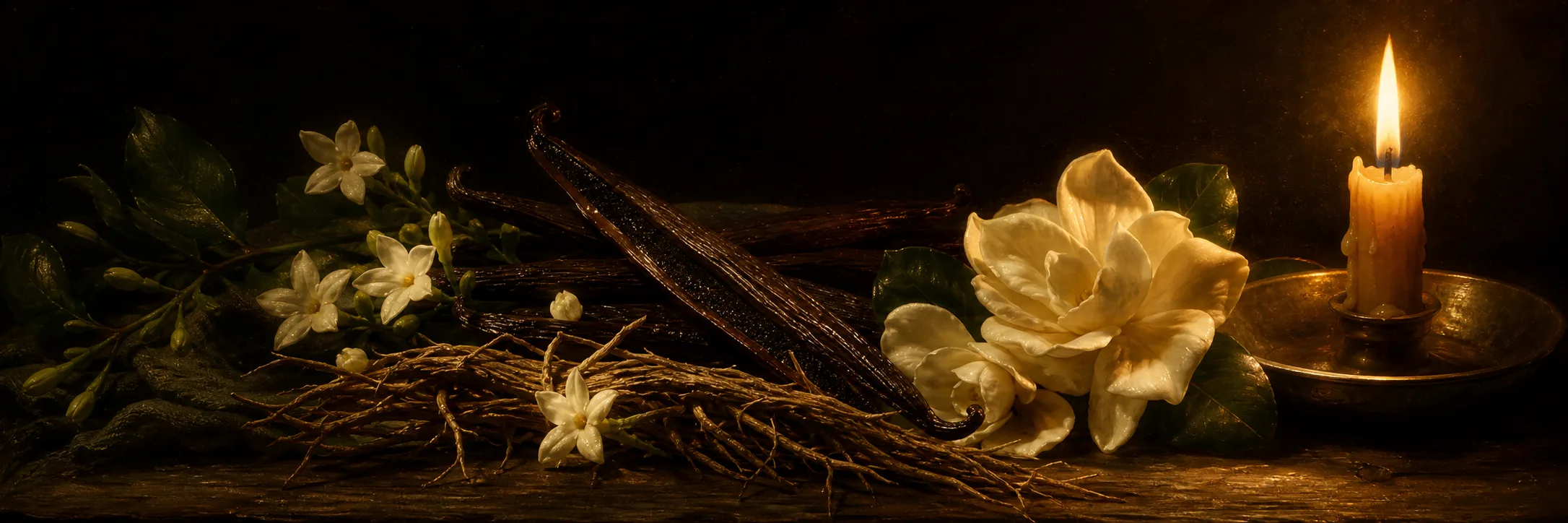
Essence
A 2005 oriental-vanilla by Annick Menardo and Thierry Wasser (both then of Firmenich) — and, per Osmoz, the 50th fragrance from the House of Lancôme — that became one of the brand’s modern signatures. A “vanilla flower” concept that dresses a creamy vanilla in passionflower, jasmine and a touch of vetiver, with a recurring anise/licorice facet that gives it an unusual, slightly cool edge. It’s the rare sweet vanilla that reads as grown-up rather than gourmand-dessert, housed in an iconic spiraling amethyst-blue bottle. Hypnôse is widely beloved and also genuinely polarizing — the same scent reads as “pillowy vanilla marshmallow” to fans and “licorice and aftershave” or “root beer” to detractors.
Scent Profile
On the record’s passionflower-vanilla axis, the opening is bold and sweet, with a tropical-fruity passionflower lift and — for many noses — a distinct anise/licorice top that is the fragrance’s most divisive signature. Denyse Beaulieu of graindemusc.blogspot.com is a documented admirer of the composition. The heart blooms into creamy jasmine and gardenia white florals; the vanilla through the middle and base is the spine, but reviewers stress it is not a simple sugary vanilla — “any sweetness comes across more as warmth than sugar,” as one critic put it, calling it “a quiet oriental; very transparent.” The vetiver (and what several wearers swear is patchouli) adds a slightly “barbershop” or masculine bite that keeps it from going fully foody. Drydown is creamy, powdery vanilla with the florals folded in. A frequently cited comparison point for the structure is Maurice Roucel’s Tocade (Rochas) — a rose-vanilla — though one critic argued Tocade is “smoother and more elegant,” leaving Hypnôse “smelling crude by comparison.” Signature accord: creamy vanilla threaded with anise/licorice and white florals. Notably temperature-sensitive — wearers report it skews more vanillic/creamy in cold weather and more floral/fresh in heat.
Performance
Performance is skin-dependent but generally strong for the EDP. Many report large sillage and all-day longevity — one detractor warned its “sillage is unbelievably enormous,” and multiple fans report 6–9+ hours and scent that lingers on clothing the next day. A minority get much less. Critically, the concentrations diverge sharply: the EDT and the Eau Légère versions are widely panned as weak — “as weak as water,” lasting “around an hour” for several wearers — so the EDP is the one to seek for performance. Strong projection in the first 10–20 minutes is common before it settles. Apply to warm pulse points; the EDP needs a restrained hand given its reach.
Wearing Context
Versatile but most at home in cooler months and evenings, where the creamy-vanilla side dominates; fans also wear it casually and to the office, and a contingent insists it “wakes up” and shines in spring/summer as its floral side emerges. The brand and many wearers frame it as a sensual, alluring “date night” or signature scent; wearer opinion calls it “generally crowd-safe” but with a guaranteed minority who actively dislike it (the licorice/laundry/root-beer reactions). Skews feminine but the vetiver bite makes it wearable as unisex-leaning. Avoid heavy application in tight indoor spaces given the sillage.
Comparisons & DNA
Documented comparisons from wearers and critics: Maurice Roucel’s Tocade (Rochas) for the rose-vanilla-amber structure; wearers also liken it to YSL Manifesto, Guerlain Angélique Noire, and Dior Addict as fellow “green/sweet floral vanillas,” with several arguing Dior Addict is the superior pick. It shares Menardo’s gourmand-but-not-edible sensibility seen in her other work. Dupe/clone alternatives that genuinely circulate: Marks & Spencer’s discontinued “Infusion” (cited as a freesia-led, less-sweet riff), Avon “Eternal Magic,” and oil-house impressions (e.g., Oil Perfumery) — none matching the EDP’s performance per the wearers who compared them.
Reception
Among the better-documented fragrances here, with both critic and deep wearer coverage. Praise: distinctive, “smells like nothing else,” elegant and comforting, beautiful bottle, strong performance in EDP, a cult/“it” scent of the late-2000s. Criticism: polarizing licorice/anise facet; some find it cloying, headache-inducing, “flat and boring,” or soapy/“laundry detergent.” Axis of polarization is almost entirely the anise-vanilla accord and sweetness tolerance. Critics were measured-to-warm rather than ecstatic — well-crafted and likable but, to some, not the highest-quality florals in the genre. Blind-buy verdict: reasonably safe for vanilla lovers who can sample the licorice facet first; buy the EDP, not the EDT/Eau Légère.
Versions & Reformulation
A substantial family: the 2005 EDP (the core), an EDT (2005, weaker and floral-fresher), Hypnôse Eau Légère (2007, guava-lemon, very light), Hypnôse Senses, and the masculine Hypnôse Homme (2007, by Maurice Roucel — cardamom/lavender, also discontinued). The core EDP has seen the quiet reformulations typical of long-running designer scents; some wearers report current bottles labeled “L’eau de Parfum” smell weaker/less vetiver-forward than older batches, and brown/aged juice is noted to “bloom” with rest. Discontinuation status is muddled: flankers like Senses and Eau Légère are discontinued and several markets report the line thinning, though the core EDP has remained available via Lancôme in some regions; treat availability as region-dependent and shrinking.
Acquisition Notes
Mid designer tier. Common sizes 30/50/75ml EDP (75ml/2.5oz widely circulated). Frequently surfaces discounted and at off-price retailers (TJ Maxx sightings are a running theme in reviews), and discontinued flankers command collector prices on the secondary market (eBay). Because the EDT/Eau Légère are markedly weaker, confirm concentration before buying. No specific whitelisted batch-code decoding guidance was found; buy EDP from Lancôme or established discounters to avoid aged/degraded stock, and note vintage 2005–2007 bottles are sought by enthusiasts.
Notable Facts & Lore
- Conceived as a “vanilla flower” and positioned as the sensual, modern counterpart to Lancôme’s Trésor.
- Per Osmoz, the spiraling, faceted bottle — tinted amethyst/blue — “reprises the shapes of the Magie bottle (1950), which was based on a Japanese kimono,” tying it both to Lancôme heritage and to the hypnotic-spiral motif of the name.
- The advertising campaign fronted by model Daria Werbowy is fondly remembered in wearers threads.
- Co-perfumer Thierry Wasser went on to become Guerlain’s in-house perfumer, which gives the credit a degree of later fame.
- The “smells like root beer / licorice / black licorice” reaction is a recurring, almost meme-like thread in wearers discussion.