Parfums de Marly — Ispazon
Essence
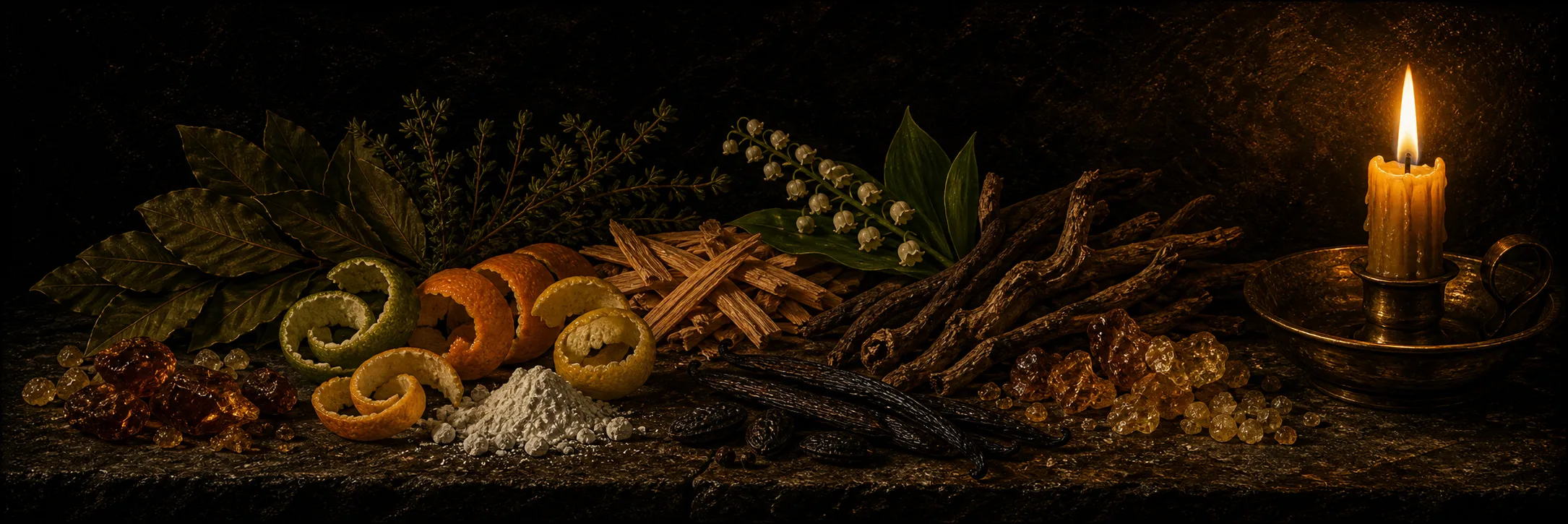
Ispazon is one of the earliest Parfums de Marly releases - 2010, less than a year into the brand’s existence - and one of the few that sits stylistically outside the warm-sweet-niche-oriental territory the house has since become known for. An aromatic-citrus-woody composition by Jacques Flori, built on a bay-leaf-thyme-citrus opening, a Virginia cedar and lily-of-the-valley heart, and a quiet musk-amber-vanilla base. A masculine, traditionally European-aromatic structure - closer to the green-cedar-citrus school of classical French perfumery than to anything PdM makes today. Niche enough now that many newer PdM fans have never tried it.
Scent Profile
By the half-hour mark the heart takes shape. Virginia cedar (the dry, slightly cigar-box American cedar rather than the moister Atlas cedar) emerges as the dominant note and remains so for most of the fragrance’s life. Cedar in Ispazon is dry, slightly dusty, pencil-sharpening - a recognizably aromatic-woody scaffold rather than a sweet base. Lily-of-the-valley (muguet) sits behind the cedar as a green floral facet - not a feminine floral statement but a structural element that adds dewy lift and prevents the cedar from going entirely dry. The herbal top notes persist into the heart; bay leaf and thyme don’t fade as fast as the citrus does, and they continue to interact with the cedar through hour two or three. Perceptibility: bay leaf, thyme, lime, cedar, and lily-of-the-valley are all clearly readable; orange and Amalfi lemon contribute to the citrus blend without standing out; musk and amber are present but understated; vanilla is barely identifiable as a discrete note. Evolution is moderate - citrus-aromatic top, cedar-floral heart, soft musky-amber base - over four to five hours, then near-skin. The signature accord is bay-leaf-and-thyme over Virginia cedar with citrus lift - an aromatic-woody-fresh signature that has more in common with the 1980s - 1990s aromatic cedars than with the 2010s niche zeitgeist.
Performance
Performance is moderate and consistent. Projection is moderate at the opening (the citrus and bay leaf travel well), readable at arm’s length for the first ninety minutes, then closer-skin. Sillage is moderate-light, never a powerhouse. Longevity on skin averages six to eight hours, with the cedar-musk base lingering as a skin scent into hour eight or nine. On clothing the cedar holds well - twelve hours plus on wool or linen, with the herbal top notes fully evaporated but the cedar-amber base detectable. Heat behavior is favorable: Ispazon is the rare PdM that genuinely works in warm weather. The bay-leaf-citrus-cedar structure handles heat much better than the brand’s sweet orientals - the herbal-aromatic facets stay green rather than turning syrupy. Dry heat is ideal; high humidity flattens the citrus faster.
Wearing Context
Ispazon is the rare PdM with daytime/spring/summer credibility. Best seasons are spring and summer, with strong shoulder-season use in early fall. Time of day is genuinely daytime - morning, work, afternoon - and the composition lacks the warmth for true evening wear. Occasions where it shines: business-casual offices, daytime social events, warm-weather outdoor wear, the classical “going about your day” use-case that most of PdM’s catalog ignores in favor of evening drama. Office wearability is among the best in the line. Settings where it falls flat: cold winter evenings (the cedar-amber lacks the warmth to anchor); formal evening occasions (it reads too “fresh” and not enough “structured”); contexts demanding the modern compliment-magnet sweetness that has become PdM’s signature. Social perception is firmly masculine and “mature traditional.”
Comparisons & DNA
The most-cited comparison is Givenchy Xeryus - the structural template Ispazon most closely mirrors: bay leaf, lime, cedar, herbal-aromatic-citrus-woody DNA. MDCI Invasion Barbare is the high-niche reference point for the “barbershop prince” facet - Invasion Barbare is more lavender-fougere and richer; Ispazon is greener and citrus-led. Acqua di Parma Colonia Essenza sits in adjacent classical cologne territory but is more citrus-rosemary and less cedar. Hermes Rocabar and Hermes Bel Ami are useful old-school masculine comparisons - Bel Ami especially for the dry-cedar-leather aromatic register, though Bel Ami has actual leather where Ispazon has lily-of-the-valley. Other useful comparisons: Aramis (the original, for the herbal-leather-cedar tradition); Davidoff Cool Water for the green-aromatic-citrus-musk skeleton (Ispazon is drier and woodier); Creed Original Vetiver and Creed Royal Mayfair for the green-citrus-woody niche space; Tom Ford Italian Cypress for the bay-leaf-citrus-cypress direction. In the PdM catalog itself, Ispazon is structurally similar to Lippizan (the brand’s other early aromatic) and stylistically opposite to virtually everything PdM has released since 2015 - there is no current PdM that smells like Ispazon. Greenley (the brand’s later citrus-aromatic) is the closest active-line cousin, though Greenley is brighter and more contemporary. Designer alternatives at lower prices include Givenchy Xeryus itself, Lacoste Pour Homme (lighter, less complex), and Hugo Boss Boss Number One (more powdery-aromatic). Clone-house alternatives: there is no established Lattafa/Armaf/Maison Alhambra dupe - Ispazon’s niche-within-niche status and the broader cloning industry’s lack of interest in aromatic-citrus-woody compositions (the category is less marketable than oriental gourmands) means no dedicated clone exists. Lineage: Ispazon descends from the 1980s aromatic-cedar tradition (Xeryus, Bel Ami, vintage Aramis) and represents an early PdM positioning attempt before the house pivoted toward warm-sweet-oriental territory.
Reception
Reception is small but largely positive within the niche aromatic-citrus-woody audience, while the broader PdM-fan wearers largely ignores it. And Europe as of mid-2020s, though no public discontinuation announcement has been made. The 2008/2009 Perfumes Guide editions predate Ispazon.
Versions & Reformulation
Single composition, no documented reformulations. Released in 2010 as a 125ml EDP - the standard PdM bottle of the early line. No EDT, no extrait, no flanker - Ispazon is a single-SKU release. Some longtime owners report that current/late-production batches feel slightly lighter than original 2010 - 2012 runs, but this is anecdotal and likely reflects ordinary maceration variance rather than reformulation.
Acquisition Notes
Current acquisition is essentially secondary-market: Jomashop, FragranceX, eBay, and Maxaroma list Ispazon when stock is available, typically $180 - $280 depending on packaging condition. Authorized retailer availability is poor. Original boxes in unopened condition trend higher as a quasi-collector item, particularly with the older Arabian Breed/dark bottle packaging. Given the discontinuation pressure, decant-first is sensible.
Notable Facts & Lore
- Ispazon was launched in 2010 - one of PdM’s first releases, following Shagya (the inaugural 2009 fragrance) and Lippizan.
- The brand was a young niche house at the time, with Julien Sprecher building inventory in the aromatic-cedar/horse-themed direction before pivoting toward the warmer Royal Essence flagships (Pegasus 2011, Layton 2016) that would come to define PdM’s commercial identity.
- Ispazon is among the founder-era PdMs that predate the brand’s recognition wave.
- The perfumer credit is Jacques Flori.
- No public Flori interview specifically discusses Ispazon, so this dossier does not pad with generic biographical context.
- The fragrance’s structural traditionalism (bay leaf, thyme, citrus, Virginia cedar, lily-of-the-valley, musk-amber-vanilla) is consistent with the classical French aromatic school of which Flori is part.
- Ispazon’s name reportedly derives from a horse breed - though the precise referent is contested in PdM’s own materials.