Parfums de Marly — Sedbury
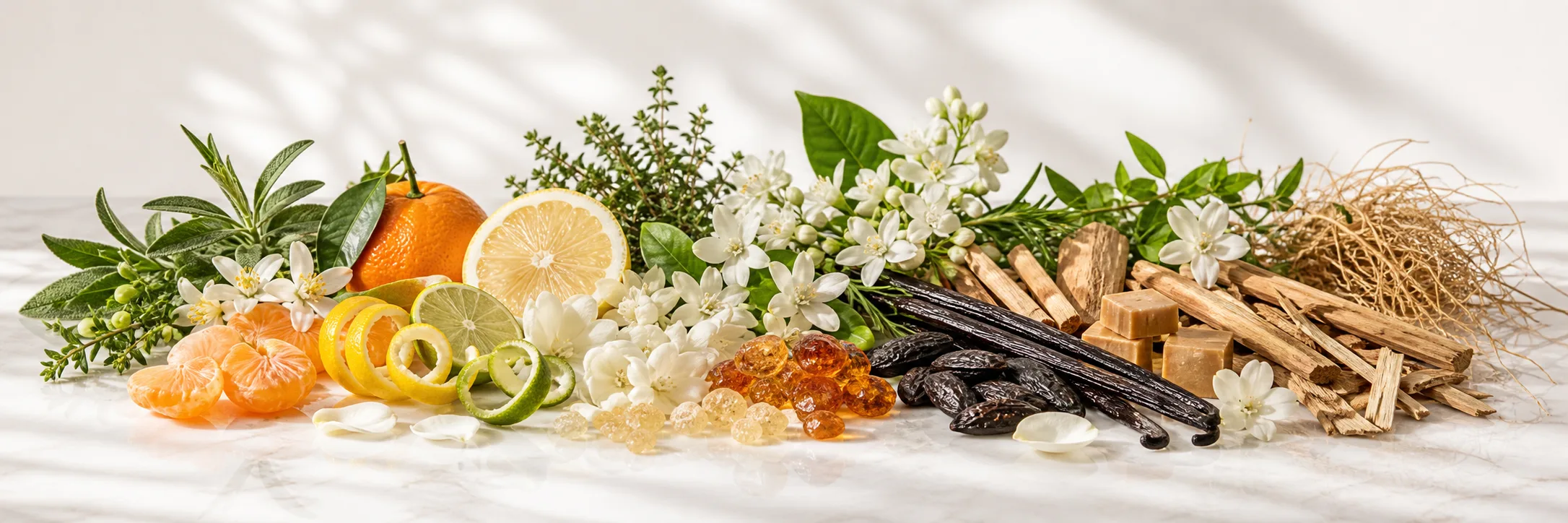
Essence
Sedbury is Parfums de Marly’s 2015 chypre-floral by Firmenich’s Nathalie Lorson - a creamy white-floral built around tuberose and jasmine, framed by a barbershop-aromatic top (lavender, clary sage, mandarin, bergamot) and grounded in a powdery amber-vanilla-patchouli base. It’s the most unconventional PDM feminine: not sweet enough to be a Delina sister, not green enough to be a true chypre, and dignified-feminine in a way that genuinely splits the room between “elegant and grown-up” and “boring and old.” The white-on-white painted matte bottle distinguishes it visually from PDM’s brighter feminine flacons.
Scent Profile
By 20-40 minutes the transition begins and the white florals start to unfurl. Tuberose comes forward first - creamy, slightly green, slightly rubbery in the classic indolic tuberose way but pulled back from full Fracas-style narcotic. Jasmine arrives alongside, sweetening and rounding the tuberose without dominating. The aromatic top notes don’t fully exit - clary sage and lavender continue to thread through the heart for at least the first hour, which is what gives Sedbury its unusual character. This is not a clean tuberose; it’s tuberose wearing a tailored jacket. By hour two to three, the drydown emerges: vanilla, benzoin (warm-resinous, slightly cinnamic), ambergris/amber, vetiver, and patchouli. The ambergris/amber provides the long-trailing skin-scent floor, with vanilla as the soft sweetener. By hour 5+, skin-scent phase is mostly powdery-floral amber-vanilla with a faint patchouli edge and a barely-perceptible ghost of tuberose. Evolution: this is one of the more genuinely evolutionary PDM compositions, with three distinct phases (aromatic-citrus top tuberose-jasmine-iris heart amber-patchouli-vanilla base). The signature accord that defines it is creamy tuberose framed by sage-lavender and resting on powdery amber-patchouli - not quite chypre, not quite white-floral oriental, but its own register. Notes perceptible in actual wear: clary sage, lavender, bergamot, tangerine, tuberose, jasmine, iris, vanilla, benzoin, patchouli. Submerged or near-invisible: vetiver (technically listed but functionally absorbed into the base), tangerine after the opening (folded into the bergamot).
Performance
After hour three projection drops to close-skin range. Sillage is significant in the opening phase and modest thereafter. Longevity on skin runs 6-9 hours for most wearers, with skin-scent extending to 10-12 hours on better-fed skin. In high heat and humidity the tuberose-jasmine amplifies and the patchouli can read as slightly metallic or rubbery on some skins. In cold dry weather the performance is more balanced and the powdery amber-vanilla base sits beautifully. Mild temperate weather is the sweet spot - neither too hot to be cloying nor too cold to flatten the white-floral heart. Best application strategy: 2-3 sprays maximum. Sedbury punishes overspray more than most PDMs; the patchouli and tuberose combination amplifies into “perfumey-old-fashioned” territory with 4+ sprays.
Wearing Context
Cool-weather evening is Sedbury’s strongest context - dinner, theater, gallery openings, cocktail events. It also works for formal daytime in fall/winter (a fall wedding, a board meeting in November, holiday family gatherings). It does not work well at the office in typical white-collar environments - the white-floral heart is too distinctive for shared-air professional settings unless your office has a glamorous register. It’s a poor summer choice, a poor gym choice, and a poor “low-effort daily” choice. Where Sedbury shines specifically: formal evening dressing, settings where you want to be remembered, when you want to smell unambiguously feminine-with-substance rather than feminine-light. Where it falls flat: casual daytime, summer outdoors, office environments, settings adjacent to food preparation. This skews are real and consistent across years; budget for them.
Comparisons & DNA
Within white-floral territory, the most cited comparison is Amouage Love Tuberose (2017) - Sedbury is more aromatic-fougere in the top, less narcotic-creamy in the heart, and more powdery-patchouli in the base; Love Tuberose is the more “pure tuberose” expression while Sedbury is the more constructed-compositional one. Love Tuberose; wearer response is split. 9 (mentioned as the cheaper-but-not-as-good alternative). Other direct comparators: Frederic Malle Carnal Flower (Dominique Ropion, 2005) - the gold-standard tuberose; Carnal Flower is greener, eucalyptus-tinged, and less powdery than Sedbury. Robert Piguet Fracas (1948) - the original tuberose bomb; Fracas is sweeter and more retro-grand, Sedbury is drier and more contemporary. Jo Malone Angelica Tuberose + Amber Lily layered is one wearer-suggested DIY approximation. Habanita L’Esprit (Molinard) was cited for the drydown. Within PDM, Sedbury sits closest to Athalia (a later white-floral release also touched by Lorson and her collaborators) and is the structural opposite of Delina (which is sweet, rosy, and youth-coded). It is the most “old-school” composition in PDM’s feminine lineup. Designer-clone landscape: Sedbury has not been heavily cloned.
Reception
Wearer response is genuinely polarized. Polarization axes: (1) “elegant restraint” vs. “Boring playing-it-safe” - about 60/40 favorable; (2) “true chypre” vs. “Not really a chypre” - wearers fights about this regularly; (3) age-appropriateness (older wearers love it more); (4) whether the patchouli is a feature or a flaw - skin-chemistry dependent. Sample first specifically because the aromatic-fougere top and the patchouli base are both polarizing in ways that depend on skin chemistry, and because Sedbury is currently shown as discontinued, meaning bottle availability is variable. She also explicitly named the patchouli, mandarin, and animalic late drydown. Parfums de Marly is, for the most part, an overrated brand…
Versions & Reformulation
Single composition; no documented reformulations. No EDT, parfum, or exclusif version exists - Sedbury was released and remains an EDP-only composition.
Acquisition Notes
MSRP was $300-325 for 75 ml when in active production. Discontinued status means current pricing is volatile: authorized stock at MSRP, eBay/Vinted secondary market sometimes substantially above MSRP for sealed bottles, discounter pricing 30-40% below MSRP where stock remains. Bottle sizes available historically: 75 ml and 125 ml EDP. The 125 ml is the more commonly available size in current grey-market channels. Decant ecosystem: Surrender to Chance, Scent Split, The Perfumed Court, DecantX, and Krystal Fragrance all carry or have carried Sedbury samples; Scent Split’s listings remain active as of this writing. Decant prices: $4-15 for 1-5 ml.
Notable Facts & Lore
- Nathalie Lorson (Firmenich master perfumer) is the perfumer of record.
- Lorson’s broader PDM catalog includes Meliora, Sedbury, and Oriana (the last co-composed with Hamid Merati-Kashani).
- There is no widely-circulated quote from Lorson about Sedbury’s specific creative brief.
- The name Sedbury refers to a thoroughbred horse - per Parfums de Marly’s brand copy, “a steed of exquisite beauty, fine shape and form, said to be the best of his size in his day” - continuing the house’s tradition of naming each fragrance after a documented racehorse from English-French thoroughbred lineage.
- Sedbury was a real 18th-century thoroughbred associated with the early racing pedigrees that fed into the Godolphin Arabian and Byerley Turk lineage that PDM also commemorates with separate fragrances.
- Sedbury launched in 2015 alongside other PDM expansion-era releases as the house was scaling rapidly into international department-store presence.
- There has been no significant viral TikTok or Instagram moment for Sedbury.