Zoologist — Chameleon
Essence
Chameleon is Zoologist’s 2019 tropical floral-fruity, composed by Brazilian-born, Paris-based perfumer Daniel Pescio as an evocation of Madagascar - buttery ylang-ylang at its heart, juicy mango and star fruit up top, and a salty-skin, sea-breeze drydown. Pescio’s stated intent was to avoid the usual “Monoi” ylang-vanilla cliche - in his words, “I wouldn’t have created this perfume based on an ylang-vanilla scent as a main accord. Otherwise, it would be just one more ylang-vanilla perfume on the market” - instead building a contrasting, sensual, slightly animalic tropical scent that genuinely shifts on skin, in weather, and between people, true to its chameleon name. It’s a punchy, creamy beach-vacation fragrance with hidden complexity that reveals itself on long, warm-skin drydown.
Scent Profile
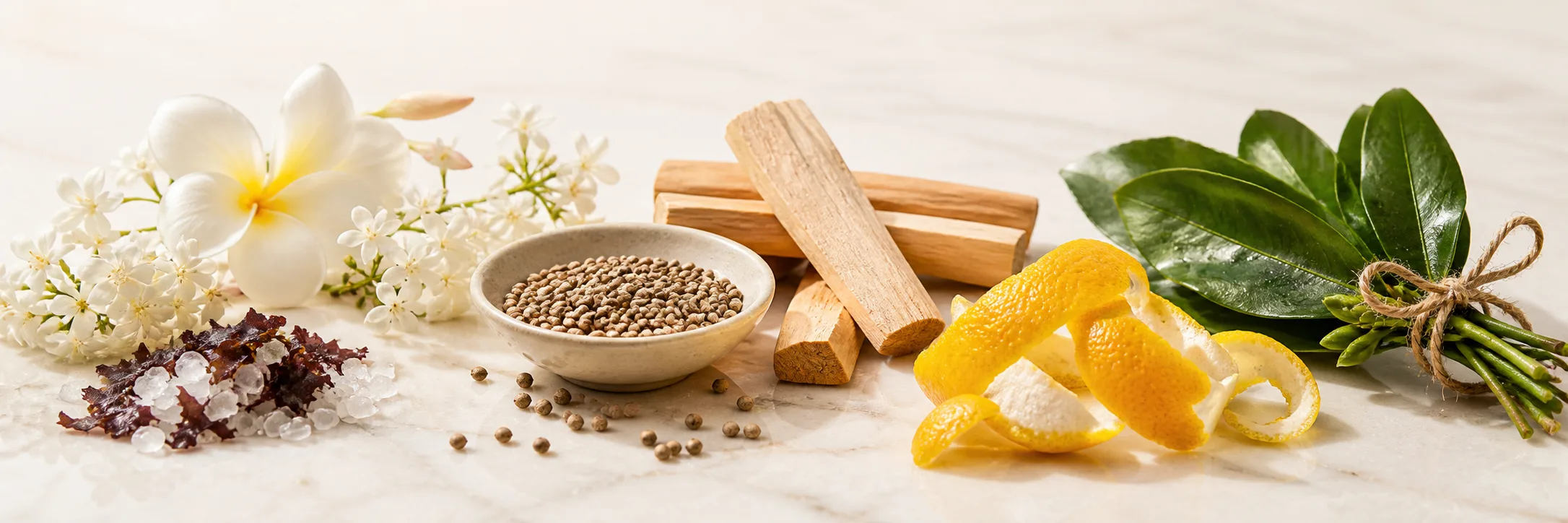
Chameleon opens (first 10 - 20 minutes) bright and juicy: a fruity-citrus burst of mango, tart star fruit (carambola), lemon and bergamot lifted by sparkling pink pepper, over green violet leaves that suggest verdant jungle foliage. It can be loud and slightly heady at first spray - some find a fleeting “intense ylang” or even a pungent/soapy off-note in the first seconds - before it smooths out. The fruit reads natural and ripe rather than candied, though on some skins the mango-plus-ylang combination amplifies into a recognizable “banana sunscreen” or suntan-lotion effect. The heart (1 - 3 hours) is dominated by buttery, creamy ylang-ylang - Pescio’s centerpiece - joined by frangipani and a salty marine/sea-salt accord plus a “skin” note that together build the signature beach-vacation atmosphere. Pescio has explained the construction: “To make this ‘skin accord’, I put Ylang Ylang Extra Madagascar oil with a lot of Salicylates and Cashmeran. These make up almost 40% of the fragrance composition.” Coconut adds tropical creaminess; jasmine, saffron and a whisper of clove add spice and depth. This is where the chameleon concept earns its name: the same juice reads as bright floral on one person, super-sweet or tart on another, and oddly musky/animalic on a third. A meaningful minority of wearers get a pronounced animalic or “cat-litter/urinal-cake” facet here - the ylang’s indolic, animalic side colliding with the salty-skin accord - which is the single most divisive aspect of the fragrance. The drydown (3+ hours) is where Chameleon rewards patience and cold-weather testing: as it dries, the tropical brightness gives way to a darker, more complex base of vanilla, sandalwood, amber, opoponax, patchouli and vetiver over musk. Reviewers who dismissed it as a “tropical snoozefest” early often report it becoming markedly richer, woodier and more intriguing hours in - a salty, musky, skin-scent finish. Violet leaf, lemon and the tart fruits submerge entirely; clove and saffron fade to a faint spicy shimmer. The signature accord is creamy ylang-ylang and ripe tropical fruit over a salty-skin musk - a sun-kissed beach-after-dark idea. Evolution is genuine and bidirectional (bright/fruity creamy-floral salty-woody-musky), more than most fruity-florals, which is the whole conceit. Longevity-wise it leans light on many skins, and the salty-skin drydown is its most loved and most polarizing phase.
Performance
Performance is moderate and skin-dependent - a recurring soft spot for what is otherwise a strong-performing house. Projection is moderate at the bright opening (it can be loud for the first 30 minutes) then settles closer to skin. Sillage is light-to-moderate; this is more an intimate aura than a projecting tropical bomb. Longevity is the weak point: many report 4 - 6 hours on skin before it becomes a faint skin scent, with some getting the full Zoologist 8 - 12 hours and others (notably some wearers) finding it “poor performance” by the house’s standard; on clothing it holds noticeably longer, and the salty-musky base can persist. Weather behavior is central to enjoyment: warm weather and humidity amplify the tropical fruit and ylang (intended), but excessive heat can push the suntan-lotion/banana facet and, on some, the animalic sourness. Counterintuitively, several reviewers report Chameleon “blew my mind” tested in cold weather, where the bright opening calms quickly and the complex woody-salty drydown gets room to shine. Best application strategy: apply generously (it’s a light performer), and consider clothing application to extend the salty-skin base; sample across both warm and cold conditions, since it genuinely reads differently.
Wearing Context
Chameleon is a warm-weather, daytime, casual scent at its core - spring and summer, beach and vacation settings, relaxed sunny outings - but its drydown gives it surprising cool-weather range for those who test it. Best occasions: holidays, beach days, casual daywear, anything where a bright tropical floral fits. It evokes, by design, a tropical island, a salty breeze on sun-kissed skin, getting ready for a night out after a beach day. Where it falls flat or feels wrong: formal or conservative settings (too playful/fruity), and - critically - on skins where it turns animalic or suntan-lotion-like, where it can read as cat-litter, paint, or insect repellent (these complaints recur). It’s also a risk in extreme heat for the same reason. Social-perception skew: marketed unisex and worn by both, but it leans feminine/bright to most noses; a few men wear it as an offbeat, appealing daytime scent. Because reactions vary so wildly by skin chemistry - Zoologist literally encouraged sampling it on neighbors at events - it is the textbook “test on your own skin” fragrance. Not a safe blind buy.
Comparisons & DNA
Chameleon sits in the tropical/solar floral lane alongside coconut-and-white-flower beach scents, but with more floral-fruit emphasis and less vanilla/coconut than the genre staples. Closest mainstream reference points cited by reviewers: Tom Ford Soleil Blanc and Maison Margiela Replica Beach Walk - Chameleon is more focused on flowers and tart fruit and less on coconut/vanilla than either, and (being extrait) denser. Lush Lust (heavy ylang/jasmine) gets compared for its ylang character, with Chameleon described as less “in your face.” The salty-skin/sea-salt aspect connects it to the modern salty-fruity-floral trend. Within Zoologist, it shares DNA with the house’s other fruity-florals: Hummingbird (Shelley Waddington - fruitier, honey-cherry-floral, lighter and sweeter) and Nightingale (plum-saffron chypre); the wearer consensus is that Hummingbird and Nightingale have more “quality and impact” as fruity florals, with Chameleon seen as lovely but less unique within the lineup. Pescio’s own Fleur Cannibale (the perfume that first connected him to Victor Wong) shares his contrasting-tropical-floral signature. Designer/clone alternatives: no established clone of Chameleon exists, and one reviewer notes you could likely find a cheaper tropical-floral with similar vibes but nothing replicating its specific ylang-salty-skin complexity. 7 Virtues Coconut Sun is offered by one reviewer as a better budget tropical white-floral in a related lane. Lineage-wise, Chameleon is the direct ancestor of the 2026 Chameleon Tropical Blooms Edition flanker (Antoine Lie), which strips the salty-skin animalic concept for a brighter, sweeter, more straightforwardly tropical-fruity reading.
Reception
Chameleon is one of Zoologist’s most polarizing releases - wearer response data show it deeply split, with a large “love it” camp and a notable “dislike/hate” minority. Reception was warm: critic Mark Behnke framed it admiringly as another worthwhile entry in Victor Wong’s “Field of Perfumes,” and on the ylang wrote that “rather quickly it drops into a lower harmonic as that quality I enjoy in ylang-ylang begins to be noticeable. I have enjoyed this because it was the basis of so many vintage perfumes where it would be paired with animalic ingredients for an incredible sensuality.” StephanMatthews and Ventvenir highlighted the saffron-spiced, vetiver-patchouli-sandalwood construction. Common praise: gorgeous, complex, creamy tropical floral; natural-reading mango and star fruit; a “best tropical floral I’ve tried” verdict from fans; and a drydown that converts skeptics. Common criticism, and the dominant axis of polarization, is skin chemistry: a significant cohort gets banana-sunscreen, soapy-aldehydic, “insect repellent,” “paint,” or outright “cat litter / urinal cake” effects, especially from the ylang-mango-salty-skin interaction. The second axis is performance - light projection and short-to-moderate longevity disappoint relative to the house norm. A third, milder critique is that it’s “not that unique” versus other Zoologist fruity-florals. Blind-buy verdict: No - sample first, and on skin, not paper. It is the single most chemistry-dependent fragrance in the line; paper tests and others’ reviews are unreliable predictors of how it will read on you.
Versions & Reformulation
Single composition, no known reformulations of the original Chameleon. It launched in 2019 as an extrait de parfum and remains in production, now in Zoologist’s post-2025 cylindrical bottle (earlier stock used the tapered design). Note the important distinction: the 2026 Chameleon Tropical Blooms Edition (Antoine Lie) is a separate flanker, not a reformulation - the original Pescio Chameleon continues to be sold alongside it.
Acquisition Notes
The cataloged full-bottle reference is 200 USD / 60 ml. Current Zoologist formats center on full bottles, with samples and travel sprays available for trial. Sampling is the sensible first step, especially for the house’s more animalic or conceptual entries. Buy through official or authorized channels and confirm the exact edition for similarly named releases.
Notable Facts & Lore
- Chameleon’s origin is a collaboration story Victor Wong tells fondly: he met Daniel Pescio when buying vintage perfumes from him, and Pescio slipped one of his own creations into the box.
- Wong thought it smelled very “French,” filed the name away, and later paired Pescio with a brief for an ylang-ylang-and-vanilla-focused tropical scent.
- Pescio - who came to perfumery late, recounting that “in 2006, at age of 36, I decided to see a coach for a career orientation, and I discovered the perfumer’s world,” after careers in advertising and film set design in Brazil and France - set out explicitly to avoid the standard “Monoi” ylang-vanilla-Hedione treatment, instead translating a mental trip through Madagascar (beaches, sun, ocean breeze, skin, exotic woods, fruits, spices, the chameleon’s daily life) into scent, prizing ingredient quality, balance and evolution.
- The fragrance’s defining real-world lore is its extreme skin-chemistry variability: it’s the Zoologist that smells different on everyone, a quality the house leaned into at sampling events by having attendees smell it on each other.
- Madagascar is home to roughly 97 chameleon species - over 40% of the world’s total, more than any other country - which anchors the concept.