Zoologist — Civet
Essence
Civet is Zoologist’s vintage-style animalic chypre and one of the house’s defining early flagships, composed by Shelley Waddington (En Voyage Perfumes) and launched December 31, 2016. Far from the “stink bomb” its name threatens, it is a plush, sophisticated fruity-floral-spicy-woody chypre in which synthetic civet (civettone) and a celebrated Kopi Luwak coffee accord add warmth and carnal depth to a creamy tuberose heart and a classic mossy-leathery base. It reads as “a fur coat over naked skin”: sensual, dark, mysterious, and only suggestively animalic - a modern homage to the great civet-laced classics.
Scent Profile
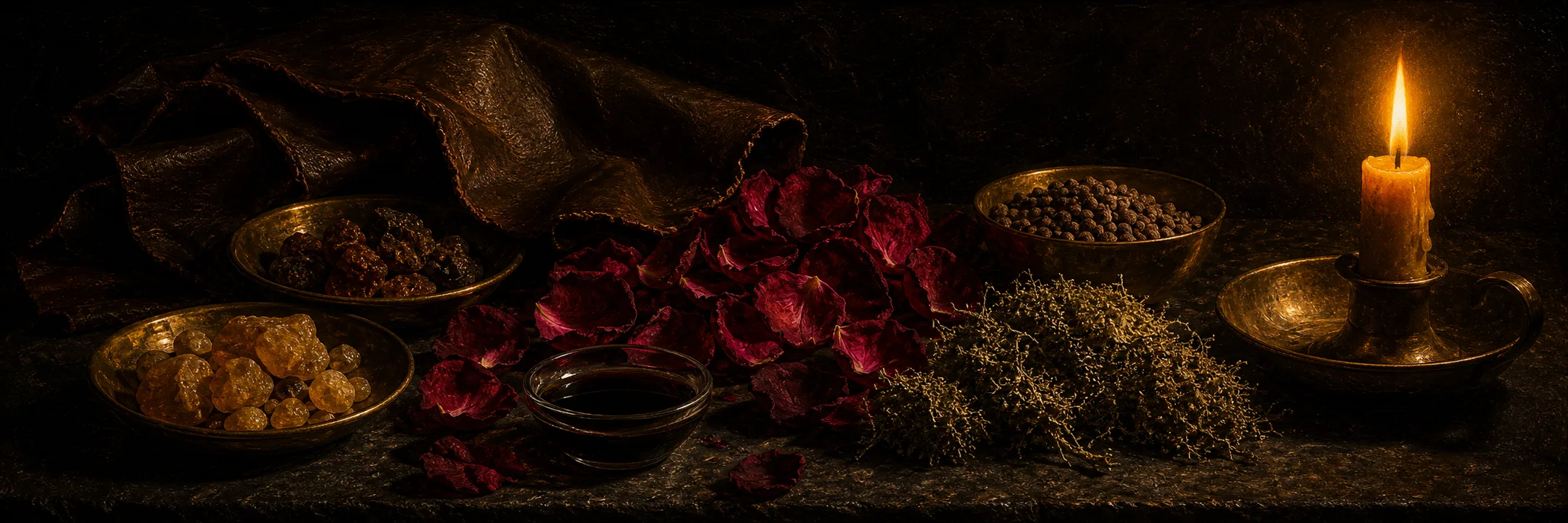
The opening is a fizzy, spicy-citrus flourish: bergamot, lemon, and orange lifted by black pepper and a green, herbal tarragon. This replaces what would have been the aldehydic top of a classic chypre with something brighter and slightly fruity, lasting only minutes before the florals take over. Some reviewers catch an aldehydic, “champagne-bright” sparkle in these first moments. The heart (roughly one to three hours) is the soul of the fragrance: a full-bodied, creamy tuberose “in all of its glory,” camphoraceous and intense in the vintage manner, surrounded by spicy clove-like carnation, buttery ylang-ylang, honeyed linden blossom, verdant hyacinth, and almond-powdery heliotrope, with frangipani adding tropical lushness. The civet and the famous coffee note arrive here. The coffee is “plusher” than usual - softened by the high-dilution civettone - and the trio of tuberose, coffee, and civet forms the perfume’s true signature accord. The civet itself is restrained: warm, slightly urinous, more “skin and fur” than feral, and most noses get no overt “poopy” character at all. The drydown (three-plus hours) settles into the classic chypre architecture: oakmoss, labdanum, vetiver, Russian leather, balsams, incense, and vanilla, evoking the lost Mousse de Saxe effect via synthetic proxy. Here the civet’s slightly animal warmth finally pushes through, especially after washing the hands, lending a “sweaty sheets, bodies at rest” intimacy over a mossy-leathery, incense-laced, vanillic base. Cedar polishes the far drydown. Which notes register: tuberose, carnation, coffee, oakmoss, leather, and the slow-building civet are clearly perceptible; the citrus-spice top is fleeting; many individual florals (hyacinth, linden, frangipani) blend into a single lush “buttery floral” mass rather than standing out - by design, to muffle and support the civet. Civet evolves substantially (citrus creamy florals/coffee mossy animalic leather) rather than running linear. The defining character is a creamy animalic chypre: the tuberose-coffee-civet trio over vintage moss-and-leather.
Performance
Civet performs like a true extrait (labeled at 25% concentration): rich, dense, and long-lasting. Longevity on skin is strong - commonly all-day, roughly eight to twelve hours, with the mossy-animalic base persisting well into the evening; one wearer noted “just one spray lasts for hours.” On clothing it is extremely tenacious, readily lasting into the next day and clinging to fabric. Projection is moderate rather than monstrous: noticeable but not a room-filler, described as “really good but not overwhelming.” A little goes a long way, and applying lightly is the recommended way to keep the civet “intimate rather than dirty.” Sillage is moderate and warm; the animalic facets grow more assertive as the fragrance heats on skin and as it ages through the day. In cold weather the resinous, mossy, leathery base is anchored and elegant; in heat the civet and tuberose amplify and can tip toward heavy or overtly animalic, so smaller doses suit warm conditions. Surprisingly, some wearers in cold climates report enjoying it even in summer because the florals stay legible. Best strategy: spray conservatively (one to two sprays for the office, more for cold-weather evenings) and let it bloom rather than over-applying.
Wearing Context
Civet is a cool-weather, evening, dressed-up fragrance at heart - its vintage-chypre sensuality, animalic depth, and coffee-laced richness suit autumn and winter nights, romantic occasions, and “sultry nighttime rendezvous” moods. It carries a deliberately retro, sophisticated, “old-Hollywood” aura; reviewers invoke Ava Gardner, fur coats, and refined vintage glamour. It shines when you want something complex, grown-up, and a little dangerous, and it rewards close-up intimacy. Where it falls flat: it is not a fresh, casual, or sporty scent, and the creamy tuberose-frangipani heart can read as cloyingly fruity-floral to those who dislike that genre. Despite the alarming name it never becomes “publicly awkward to wear” at moderate dose - reviewers repeatedly stress it is office-survivable if applied lightly - but heavy application in heat can push the animalic side past some comfort thresholds. It is fully unisex, though its vintage-feminine-chypre lineage means it can read as “refined old lady’s vanity” nostalgia to younger noses. Best for those who already love classic chypres and animalics.
Comparisons & DNA
Civet is explicitly a modern homage to vintage civet-laced chypres, and critics anchor it to specific classics. Comparisons point to Roudnitska’s Rochas Femme (1944), Dior Diorama, and Guerlain Parure - Femme being the most-cited reference, though Civet is creamier, more floral, more complex, and less masculine. Wearers liken it to a buttery, tropical-floral-laced Femme. A widely shared comparison places it as kin to Chanel No. 5 in its earliest aldehydic-animalic incarnations, and one decanter review called it “a modern interpretation of Chanel’s 31 Rue Cambon” with a coffee break mid-romance. Bal a Versailles comes up as an animalic touchstone, though wearers say Civet smells distinct from it. Within the niche-animalic field, Civet is itself a key comparison anchor - the wearable, beautiful end of the animalic spectrum, contrasted against the barnyard intensity of its own housemate Zoologist Hyrax (far funkier, castoreum/civet/hyraceum) and Zoologist Beaver (castoreum). Wong positioned it explicitly: “Civet is the second scent in the ‘Zoologist Animalic Musk Trilogy’. The first one is ‘Beaver’, which features castoreum. Civet, as the name suggests, features civet musk.” For coffee-animalic lovers, it sits near gourmand-chypre experiments but is more classically structured than most. Designer/clone alternatives: there is no close mass-market dupe; the honest cheaper substitutes are the vintage classics it references (Femme, Bal a Versailles) on the secondhand market, not modern clones. Civet’s lineage is backward-looking - it descends from the golden-age civet chypres rather than spawning imitators, and stands as proof that synthetic civet can deliver the genre cruelty-free.
Reception
Civet is among the best-reviewed Zoologists and was an immediate critical darling - Olfactoria’s-era bloggers and critics raved on launch. Colognoisseur’s Mark Behnke called it “the best perfume of both of their careers to date,” judging the Wong-Waddington collaboration “multiplicative” rather than merely additive. Cafleurebon named it a Best of 2016 and praised “an absolute stunner of a fragrance” with “a vintage air… Done so with a keen eye on doing something contemporary.” EauMG declared it her Best Indie/Niche Scent of 2016 - “this is a perfect fragrance… PERFECT.” Ida Meister was “besotted,” calling it “an enigmatic perfume possessing all the stature of a fine chypre minus any fussiness.” Robert Herrmann of Australian Perfume Junkies made it his pick for a Best Fragrance of 2016. Wearer consensus is strongly positive, with frequent “favorite Zoologist” votes and praise for its layered, “lush and blended” complexity and its restrained, non-fecal civet. Polarization axes: (1) the creamy tuberose/frangipani heart divides people - fans find it gorgeous, detractors find the peachy tuberose plus fruit plus coffee too much; and (2) expectations - those wanting a genuinely filthy civet bomb are disappointed by how civilized it is. Blind buy verdict: not blind-buy-safe per Zoologist’s own guidance - sample first, especially if you dislike tuberose or expect raunch - but it has one of the highest “love it” rates in the line and is the standout recommendation for anyone seeking a wearable vintage-style animalic chypre.
Versions & Reformulation
Civet’s only “version” change was a label correction, not a juice reformulation. It launched in late 2016 subtitled “Eau de Parfum,” but was already built at 25% perfume-oil concentration; in mid-2017 Zoologist corrected the label to “Extrait de Parfum” to reflect the true strength, without raising the price. Zoologist’s own FAQ lists Civet (25%) among scents “re-subtitled” from EdP to Extrait - “the same perfume, with the same strength and concentration” - explicitly distinct from the scents it “completely redesigned” (Panda was the one in that group flagged as “completely redesigned”). Contrary to the speculation that often attaches to Zoologist (the house is known for occasionally remaking poorly-received scents - as it did with Panda and the original 2015 Bat), there is no documented evidence that Civet’s formula or civet intensity was ever changed. The 20%-vs-25% “5% difference” discussion in the launch interview was a pre-release dilution choice, not a later reformulation. No credible wearer thread documents a vintage-vs-current juice difference for Civet; perceived intensity variation is attributed to skin chemistry and the slow-building base, not different batches.
Acquisition Notes
The cataloged full-bottle reference is 240 USD / 60 ml. This version has historical or edition-specific availability, so confirm the exact name, perfumer, and release year before buying. Samples or small formats are the sensible first step when available, especially for discontinued or similarly named Zoologist editions. Buy through official or authorized channels when possible.
Notable Facts & Lore
- Civet was a 2017 Art and Olfaction Awards finalist in the Independent category - announced March 23, 2017 in Milan, with winners revealed May 6, 2017 at Berlin’s Silent Green Kulturquartier (the year housemate Bat won that category).
- Wong’s stated intent was striking: he originally wanted Civet to be a polarizing “stink bomb” that only a handful of perfumistas would appreciate.
- Waddington described the creature as swanky, a little sly, and luxuriously furry.
- The cleverest conceptual flourish is the coffee note: it references Kopi Luwak, made from beans digested and excreted by Asian palm civets - what Waddington amusedly called the “civet butt” note.
- This ties the coffee accord thematically to the animal even though, in perfumery terms, the civet material and the coffee are unrelated.