Zoologist — Seahorse
Essence
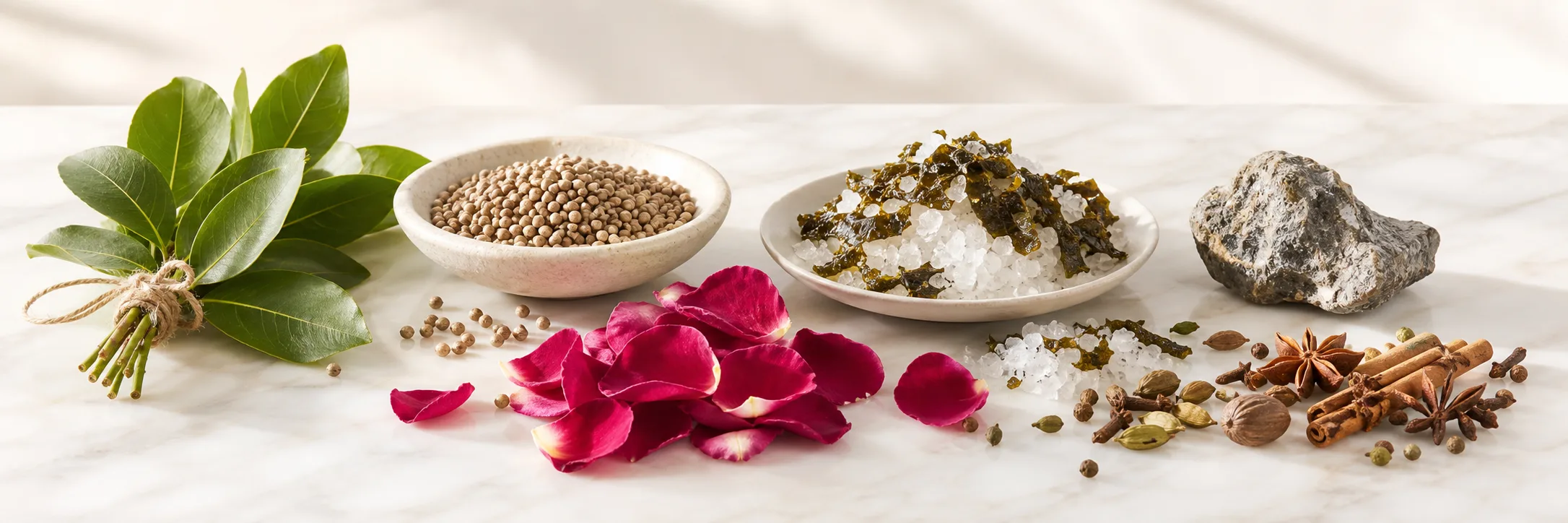
Seahorse is Zoologist’s “bright” aquatic - a fantastical, sun-dappled coral-reef scent built around a seaweed (algae absolute) heart that founder Victor Wong always wanted to centre a perfume on. Where the house’s earlier Squid plunges into the cold depths, Seahorse skims the warm shallows: a green-herbal, faintly briny marine accord wrapped in tuberose and neroli, deliberately made unisex (most aquatics skew masculine) to mirror the seahorse’s role-reversed biology, in which the male carries the young. The result is one of the most wearable, crowd-friendly things in the catalog, if also one of its lighter performers.
Scent Profile
The opening is the most polarizing stretch. A spicy, anisic burst of fennel leads, sharpened by guatemalan cardamom and the powdery, slightly nutty musk of ambrette seed. Several wearers describe the first few minutes as “harsh” or strident - fennel-forward and almost medicinal - and counsel patience, because the composition resolves within ten to fifteen minutes into something far more balanced. Once the fennel recedes, a sheer, faintly creamy floral-grassy texture emerges that recalls the original (2017) Dragonfly. The heart is where Seahorse turns marine. Clary sage adds a herbal, slightly sweet greenness; neroli and tuberose provide a bright, sunlit floral lift; and the algae note arrives as a clean, kelpy, mineral salinity rather than anything fishy or rotting. Reviewers repeatedly liken the aquatic effect to a melon-tinged calone freshness - comparisons to DKNY Be Delicious’s squeaky cucumber and to a “high-saturation turquoise” appear often. The tuberose stays restrained and cool rather than carnal, folded into the green-marine accord. This is the signature character: a clean, bright, slightly briny floral-aquatic, the olfactory equivalent of translucent lagoon water. The drydown (3+ hours) is the quietest and, for many, the best phase: a soft, salty-woody skin scent in which a synthetic ambergris accord and a clean, fluffy musk dominate, with vetiver providing a faint woody backbone. Some critics find this base disappointingly thin - wearer reviewers describe a “simple and plain woody vetiver” finish and even a “harsh,” “burnt-rubber” woody facet on certain skin chemistries (a minority anosmia-dependent reaction). The listed neroli and clary sage largely submerge by this stage; the most perceptible through-line is the algae-musk-ambrette trio. Seahorse evolves clearly from spicy-green to marine-floral to salty-musky-woody rather than running linear, though the transitions are gentle.
Performance
Performance is Seahorse’s chief weakness and the most consistent criticism. As an extrait it has real materials, but it wears light and close. Projection is light-to-moderate - a modest arm’s-length bubble for the first couple of hours that quickly settles to skin proximity. Sillage is soft. Longevity on skin clusters around four to six hours for most wearers (one reviewer reports a “full, frolicky afternoon… around 5h”; others lament it “disappear[s] within twenty minutes” of strong projection), though it lingers far longer on fabric - multiple users note it “smells great on my sweater cuff the next day.” Heat and humidity flatter it, lifting the marine-green facets; in cold, dry air it reads thinner and shorter. Best applied generously (six to eight sprays cited by fans) and ideally to clothing as well as skin to stretch its life. Treat it as an intimate warm-weather scent, not a projection monster.
Wearing Context
Seahorse is a spring and summer fragrance, full stop - it blooms in warmth and reads “Florida or Charleston in summer” to one reviewer who cast Squid as “New England in winter.” Daytime is its natural slot: beach days, vacations, casual warm-weather wear, the office (it is inoffensive and quiet). It shines as an easy, mood-lifting “you’re on holiday” scent and as an entry point into Zoologist for people wary of the house’s animalic reputation; it is widely called the most wearable and “crowd-pleasing” Zoologist aquatic. It falls flat in cold weather and in any context demanding presence or longevity - it will not carry an evening event. Socially it skews very slightly feminine to some noses but is genuinely unisex; the fennel-cardamom opening keeps it from being a generic “blue” freshie.
Comparisons & DNA
Seahorse is best understood as the warm, shallow-water counterpart to Zoologist Squid - Squid is darker, sweeter, more amber-forward and incense-driven, while Seahorse is greener, brighter, floral and cleaner; the two share a synthetic-ambergris lineage and are routinely cross-shopped. Within the house it also echoes the airy greenness of the original Dragonfly and the heart of Dodo. Outside the house, the most cited touchpoints are Jo Malone Wood Sage & Sea Salt (similar salty-ambrette sheerness, but Seahorse has more “grit and seaweed” presence), Tom Ford Neroli Portofino (a shared “artificial beach” brightness, but Seahorse is more aquatic and less sweet-floral), and DKNY Be Delicious (the clean cucumber-melon facet). Several wearers reach for cheaper designer aquatics as value alternatives - one reviewer flatly recommends Kenneth Cole Reaction as “the closest designer fragrance… Extremely cheap on discounters,” and some commenters invoke Dolce & Gabbana Light Blue pour Homme. There is no true clone from the Armaf/Lattafa/Maison Alhambra ecosystem; the seaweed-fennel-tuberose construction is too idiosyncratic. Lineage-wise it descends from Squid’s success and represents Wong’s wish to build an aquatic around algae absolute as the hero material.
Reception
Across wearer response the praise centres on originality, wearability and the convincing, non-fishy marine-green effect; it is frequently called the friendliest Zoologist aquatic (“squid’s golden child sibling who everyone can get along with”). The dominant criticism is performance - weak longevity and projection for the price. A secondary polarization axis is the opening: fennel/anise lovers enjoy it, others find the first fifteen minutes harsh or “hairspray”-like. A vocal minority finds it underwhelming or “the most basic fragrance from Zoologist,” a “blue shower gel.” Among critics, critic Jessica gave it an affectionate, detailed positive review, tracking its evolution from sheer floral-grassy top to briny mineral heart to a salty-woody skin scent she calls “my favorite part.” Critic Mark Behnke framed it as “Tropical Reef Technicolor,” an “exceedingly smart aquatic” representing the shallow reef as Squid represented the depths. WearersMore skeptical voices (and a self-described Rasquinet skeptic) judged it “not particularly well done,” with “disappointing” durability. Blind-buy verdict: sample first. It is wearable and likeable enough that disappointment is unlikely, but the light performance means many will prefer a 10 ml format to a full bottle.
Versions & Reformulation
Single composition, no known reformulations. Seahorse launched in 2021 as an Extrait de Parfum and has only ever existed at that strength. A winter 2021 limited-edition bottle (turquoise/white deluxe packaging) was released alongside the standard bottle; the juice is identical.
Acquisition Notes
The cataloged full-bottle reference is 200 USD / 60 ml. This version has historical or edition-specific availability, so confirm the exact name, perfumer, and release year before buying. Samples or small formats are the sensible first step when available, especially for discontinued or similarly named Zoologist editions. Buy through official or authorized channels when possible.
Notable Facts & Lore
- The most documented lore is Victor Wong’s stated intent.
- Wong also recounted being initially “repulsed by the amount of seaweed (algae absolute)” in perfumer Julien Rasquinet’s first mods, which reminded him of “the dry seafood market in Hong Kong,” before Rasquinet rebalanced it with florals.
- The bottle illustration, like all Zoologist labels, is by Daisy Chan, Wong’s former video-game-company colleague.
- No awards are associated with Seahorse specifically.