Creed — Bois du Portugal
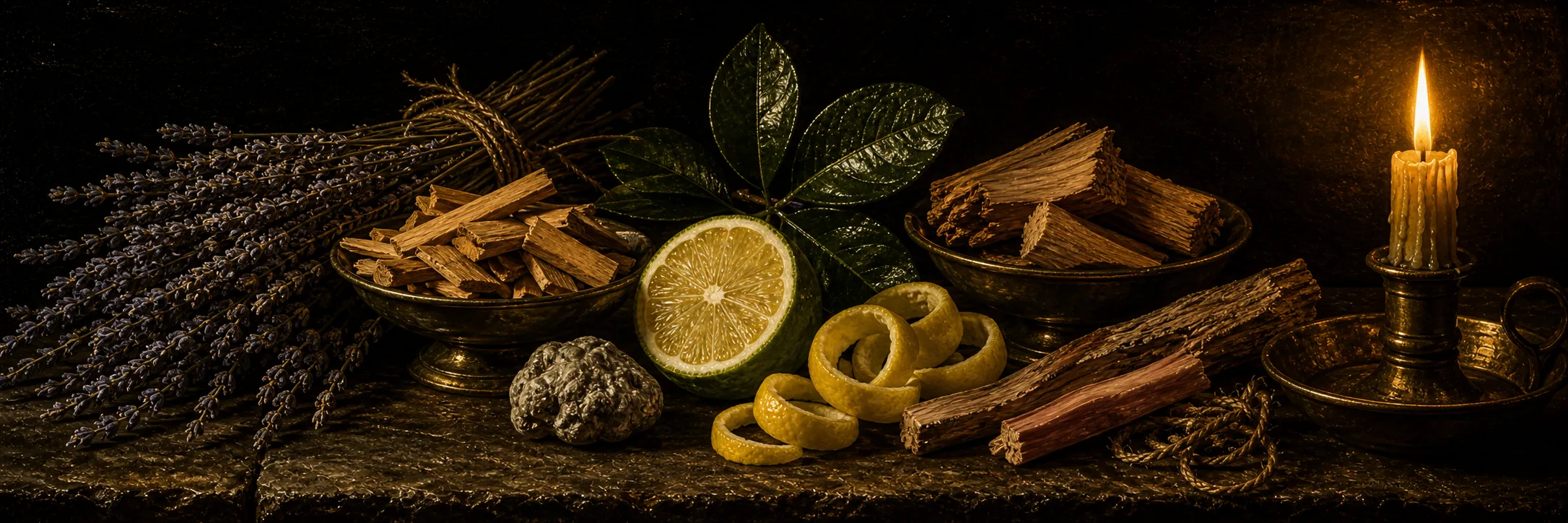
Essence
Bois du Portugal is Creed’s 1987 woody-aromatic statement: a lavender-and-sandalwood barbershop-classical structure built on the house’s signature ambergris-musk base, executed with the material weight and natural-feeling sandalwood that distinguishes it from its designer contemporaries. It is the Creed most frequently invoked in conversations about “old-money,” “boardroom,” and “sophisticated mature masculine” - terms that simultaneously praise and quietly limit its audience. The fragrance is closer to a polished aromatic fougère than to a true oriental despite the genre tag.
Scent Profile
The opening is bergamot lifted over a clean, almost cool lavender. The bergamot is bright but not sharp - a polished citrus that reads expensive rather than acidic - and the lavender appears almost immediately, more rounded and slightly creamy than the sharp herbal lavender found in classical fougères like Caron Pour Un Homme. Some wearers noses report a brief vaguely sweet petitgrain-and-mandarin glimmer in the very first minutes that is not on the official note list, which is consistent with the lavender’s herbal-coumarinic side reading as faintly sweet to certain perceivers. The opening is “lavender-citrus” as one continuous accord rather than a citrus-then-lavender sequence. Inside thirty minutes the heart settles. This is a single-listed-note heart - lavender alone - but in wear what you smell is the lavender becoming powdery and being met from below by sandalwood and cedar rising prematurely from the base. The sandalwood here is the heart of the entire composition. It is the creamy, slightly milky, faintly powdery Mysore-style sandalwood that Creed achieves through a blend of natural and synthetic materials and that no current designer house renders convincingly. The cedar is dry and pencil-shavings clean, sharpening the sandalwood’s softness rather than competing with it. The lavender persists for an unusual length of time - three to four hours - woven through this woody scaffold. The drydown, from roughly three hours, is where Bois du Portugal becomes itself. Vetiver enters as a grassy, earthy undercurrent that prevents the sandalwood from going soapy. Ambergris - the Creed house base, today predominantly ambroxan with supporting woody-amber materials - comes up with its characteristic salty, slightly mineral, faintly animalic quality, and the composition holds in this state for hours: lavender ghosting at the top, sandalwood and cedar at the core, vetiver and ambergris at the foundation. This is what wearers and reviewers mean by “barbershop”: clean, polished, woody-powdery, masculine in a vintage register rather than a modern one. The signature accord is the sandalwood-lavender-ambergris core. Linearity is moderate-to-high - Bois du Portugal does not transform dramatically, it deepens. Long-form commentary has described the late drydown as “darker, relatively minimalist woody” and slightly less distinctive than the heart, an honest assessment: the fragrance peaks in its first three hours and then holds rather than continuing to evolve.
Performance
Projection is strong for the first two hours - a clear three to four feet of scent bubble - and remains noticeable at one to two feet through hours three to five before collapsing to skin scent. Sillage is comparatively strong for a Creed; many reviewers note that Bois du Portugal is one of the few in the line that genuinely projects. On skin, longevity is excellent: eight to twelve hours is common, with the late sandalwood-vetiver-ambergris base sometimes persisting past twelve. On clothing, twenty-four hours or more is normal, particularly on wool - a suit jacket worn with Bois du Portugal will hold the scent into the next day. Heat amplifies the powdery sandalwood and can make the lavender feel slightly sweeter; humid heat brings out the ambergris. Cold weather is the natural home - dry winter air lets the woody-aromatic core read most clearly. Best application strategy is restrained: two to three sprays maximum, placed on chest and behind ears, avoiding the wrists where the lavender can amplify. This is a fragrance where overspray is a real risk - wearers guidance consistently warns that four-plus sprays can become headache-territory in close quarters.
Wearing Context
Best in autumn and winter, very wearable in spring, problematic in high summer where the powdery-sandalwood base can feel heavy. Time of day favors evening and late afternoon over morning. Occasions: business meetings, formal dinners, weddings, opera, anything requiring a tailored suit. Settings where it shines: any context where understated material quality reads as a virtue - high-end restaurants, boardrooms, professional events. Settings where it falls flat: casual daytime, gym, beach, anywhere with a young or trend-driven crowd. Social-perception skew: this is the Creed most likely to be characterized as “old-man scent” by younger wearers, which the fragrance carries simultaneously as a compliment and as a marketing problem. The and wearers have circled the descriptor “mature” so consistently that it has become defining - wearers under thirty-five frequently report being told they smell like their father or grandfather. For wearers who want that classical-masculine register, the perception is the point; for wearers who want to read youthful or modern, this is the wrong fragrance.
Comparisons & DNA
The clearest comparison is Guerlain Héritage EDT, which wearer discussion has flagged as a near-twin in its sandalwood-lavender masculine register. Héritage is less expensive, slightly drier, and shares enough DNA that some longtime fougère wearers consider Bois du Portugal a more luxurious render of the same idea. Caron Pour Un Homme is a sharper, less woody lavender classic in adjacent territory - same heritage, lower price, far more lavender-forward. Lalique Pour Homme Equus offers a similar floral-sandalwood masculine architecture and is one of the more frequently cited “budget alternatives.” Yves Saint Laurent Rive Gauche Pour Homme (a lavender-fougère classic) and Houbigant Fougère Royale (the genre’s ancestor) sit in the same conversation.
Reception
Consensus is durably positive. and scores rank Bois du Portugal in the top tier of Creed releases, frequently ahead of Aventus among longtime wearers. Common praise: blending quality, sandalwood naturalness, the lavender-bergamot opening, longevity (notably good for a Creed), and the “old money” character. Common criticisms: the maturity skew (perceived as too old for younger wearers), the price relative to Héritage and Pour Un Homme, the powdery sandalwood being too dated for some, and the brief clove-like sweetness that some perceive in current production. Axes of polarization: lavender-lovers vs. lavender-skeptics; classicists vs. wearers seeking modernity; those who consider it the best Creed vs. those who consider it overpriced for what it does. coverage is substantial. Mark Behnke at Colognoisseur has named Bois du Portugal among his favorite Creeds and built his review around the Sinatra-Don-Draper association supplied by Creed’s press materials. editorial “Allure of Bois du Portugal” feature (John Biebel) describes the late drydown as carrying the “buttery smoothness of a rich, Indian sandalwood” with an “outdoors-evoking” character. coverage is mixed. Luca Turin and Tania Sanchez in Perfumes: The Guide (2008) rated most Creeds harshly, citing skepticism toward the house’s marketing - Bois du Portugal received somewhat better treatment than several other Creeds in the book but is not among the household’s celebrated entries. Turin has been publicly skeptical of Creed broadly while acknowledging the house “is good at traditional scents” - a category that Bois du Portugal squarely occupies. Importantly, Luca Turin’s “ten desert-island scents” list, posted on his blog and widely circulated on, did not include any Creed; however, an enthusiastic wearer response to that list named Creed Bois du Portugal as the top of one regular contributor’s own ten - an indirect indicator of the fragrance’s standing among serious wearers. Blind-buy verdict: recommended for wearers over thirty-five who have any affinity for classical aromatic-fougères and who can verify authentic supply. Not recommended for younger wearers seeking modernity, or for anyone unfamiliar with the genre.
Versions & Reformulation
The fragrance is sold in EDP concentration only. Bottle sizes commonly available are 50ml, 100ml, 250ml, and larger 500ml and 1000ml flacons. Reformulation discourse is active. Multiple longtime wearers across and report that vintage production (pre-2010, particularly 1990s-early 2000s) carries more genuine Mysore sandalwood weight than current production, which leans more heavily on synthetic woody-amber materials and ambroxan. A long-form reviewer recommends seeking out vintage stock specifically for this reason. The shift is gradual rather than a single sharp reformulation, and current production remains widely regarded as a competent woody-aromatic - just less material-rich than the older bottles. The Kering acquisition (2023) has not yet produced an obvious further reformulation, but wearers vigilance is high.
Acquisition Notes
Pricing tier: luxury. Creed boutique retail in 2025 is approximately $345 for 50ml, $470 for 100ml, and scales upward for the larger sizes. The decant ecosystem is excellent: Surrender to Chance, MicroPerfumes, Scent Split, and The Perfumed Court all stock Bois du Portugal in small sizes - MicroPerfumes specifically offers 0. 75ml dauber samples for low-commitment testing.
Notable Facts & Lore
- Creed’s official press materials position Bois du Portugal as having been Frank Sinatra’s signature fragrance, which Mark Behnke at Colognoisseur reported faithfully and which has become the dominant piece of lore attached to the bottle.