Fragonard — Fragonard Parfum
Essence
Fragonard Parfum is the parfum-strength expression of the Grasse house’s eponymous signature scent: a classic green-tinged white floral built on honeysuckle, lily and jasmine over milky musk. Catalogued at 2018, the composition itself is older — the lighter eau de toilette has been worn and reviewed for years before that date. What makes the parfum interesting is how a deceptively simple, soapy-fresh bouquet rewards patience, opening loud and resolving into a creamy, musky base that long-time wearers regard as the best of all Fragonard fragrances.
Scent Profile
The opening is “a little loud,” sometimes reading as a sour-woody or aldehydic burst that settles within about twenty minutes. A green top of galbanum, petitgrain, bergamot and mandarin gives the composition a crisp, leafy edge that keeps the florals from turning sweet.
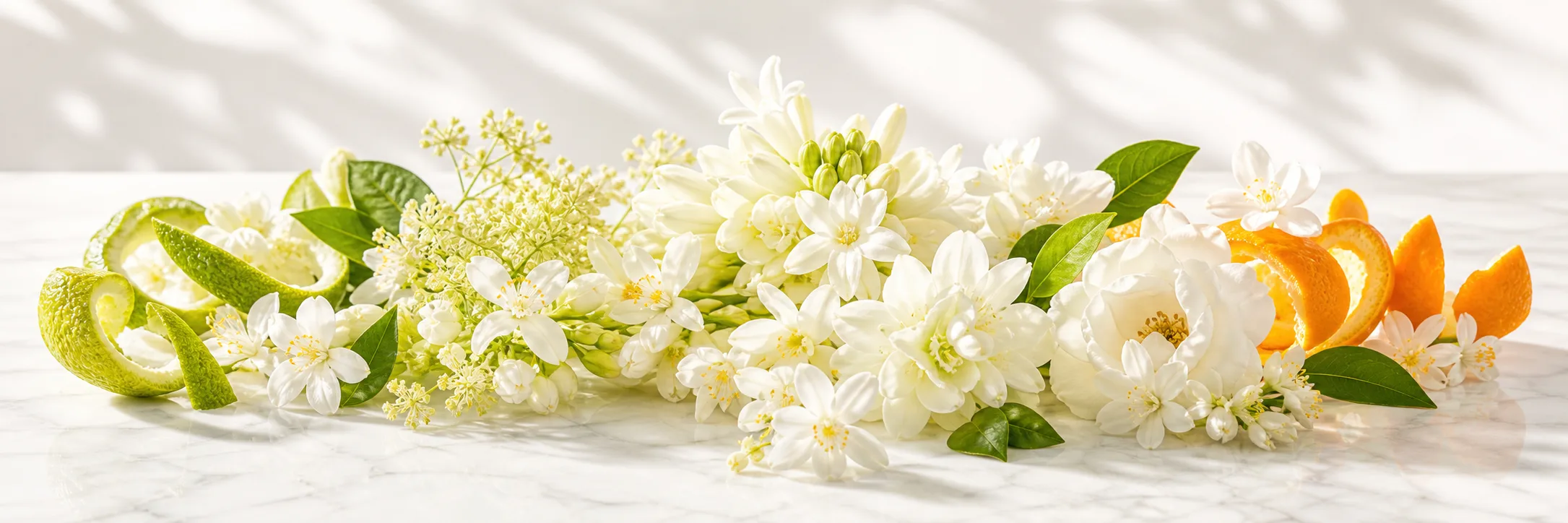
The heart is the centerpiece: a rush of sparkling honeysuckle and jasmine, with lily and a heavy white-lilac and hyacinth facet that recalls the lilac of Frederic Malle En Passant. It comes across as floral, faintly soapy and clean, yet ethereally pretty at the same time.
Over a couple of hours the base emerges — a milky, musky drydown with amber and soft woods. This is the part long-time wearers single out as the payoff of the parfum over the lighter eau de toilette. Honeysuckle stays forward throughout while the amber remains reticent; some perceive a faint indolic underside, evocatively described as the brownish water at the bottom of a vase of decaying lilies.
Performance
Performance is strong for the parfum, and it is the main practical reason wearers choose it over the eau de toilette. Devotees report seven to eight hours and more with good sillage, getting both the floral hit and the lasting milky-musk drydown the lighter version lacks; others see more moderate results of around five to six hours on a hot day, so skin and dosage matter. Two to three sprays carry well in the opening hours.
Wearing Context
This is a spring-and-fall floral suitable for day or evening wear, with several wearers calling it wedding-day appropriate — chic, classic and a little formal. It skews feminine and reads grown-up rather than youthful, suited to someone who appreciates a fragrance that unfolds over time. Its soapy-clean facet keeps it wearable in everyday settings, while its romantic, cold-elegant character makes it equally at home for dates and dressier occasions in transitional weather.
Comparisons & DNA
- Chanel No. 5 is the most-cited reference: long-time wearers place Fragonard in the same chic-and-classic French floral realm, and at least one preferred it to No. 5 in rotation.
- Frederic Malle En Passant shares the specific lilac-and-hyacinth facet that defines Fragonard’s heart.
- Dior Diorissimo sits on the same green-floral and lily axis, though Fragonard is plainer and less pink and spring-like. Overall the DNA is a galbanum-green, honeysuckle-jasmine-lily white floral over musky amber — a traditional Grasse reading of the aldehydic green-floral lineage rather than a modern fruity-floral.
Reception
Reception is warm among a modest but devoted following, with the recurring theme being eau de toilette versus parfum and the scent’s bloom-with-patience character. Wearers praise it as one of the best floral perfumes they have smelled, a perfectly balanced honeysuckle-and-jasmine blend with a simplistic beauty, and excellent value for a natural-smelling Grasse floral. Criticism is mild and mostly about register: some find it somewhat old-fashioned — beautiful and authentic but not quite to their personal taste — and some dislike a metallic smell at the aluminum flacon’s nozzle. The most consistent guidance is to choose the parfum or EDP over the EDT for the fuller base and longevity.
Versions & Reformulation
The eponymous Fragonard exists across concentrations: an eau de toilette (formerly stocked in the UK at Marks & Spencer), an eau de parfum, and the parfum catalogued here. The parfum and EDP are the fuller, longer-lasting expressions; the EDT is the lighter “initial floral hit” version. One long-time wearer preferred an older glass-bottle EDT to the current aluminum-flacon parfum on bottle aesthetics rather than scent. The 2018 date is best read as a catalog listing artifact for the parfum rather than the composition’s true birth, since the EDT predates it; no reformulation of the juice itself is documented beyond these concentration differences.
Acquisition Notes
Fragonard is famously affordable and sold mostly direct — through the house’s own boutiques (the Grasse and Eze factories, Paris museum-shops and roughly twenty boutiques) and website, where prices often undercut third-party channels and buyers report factory-only editions and monthly discounts. It has also been distributed in the UK via M&S. The parfum appears in the house’s distinctive flacons, including a frequently mentioned 37 ml size. Because Fragonard sells direct at modest prices, counterfeiting is not a documented concern; the only authenticity nuance is simply buying from Fragonard or an authorized stockist.
Notable Facts & Lore
- Fragonard was founded in 1926 by Eugene Fuchs, who acquired the Grasse perfumeries Cresp-Martinenq and Muraour and pioneered selling scented goods directly to Riviera tourists.
- The house is named after the Grasse-born Rococo painter Jean-Honore Fragonard (1732-1806).
- It remains family-run by Fuchs’s great-granddaughters, the sisters Anne, Agnes and Francoise Costa, with Agnes as president.
- Free factory tours, perfume museums and “Perfumer’s Apprentice” workshops are how many owners first discovered the namesake scent, often buying their first bottle at the Grasse factory or Eze laboratory.
- A persistent unverified piece of lore, denied by the house as a trade secret, holds that Fragonard manufactures fragrances for major brands.