Shiseido — Basala
Essence
Basala (released in some markets as Basara) is a 1993 Shiseido men’s chypre that has become one of the most mythologized discontinued masculines in the hobby. It is a dense, bone-dry, herbal-spicy chypre built on a bitter aromatic opening, a spicy-floral carnation-and-rose heart, and a labdanum-leather-oakmoss base - an unapologetically complex, “kitchen-sink” composition of the kind that was already going out of fashion when it launched into a market dominated by aquatics and clean freshies. What makes it distinctive is its uncompromising austerity and its synaesthetic, almost ceremonial quality: reviewers consistently reach for words like “samurai,” “Bushido,” “meditative,” and “totemic.”
Scent Profile
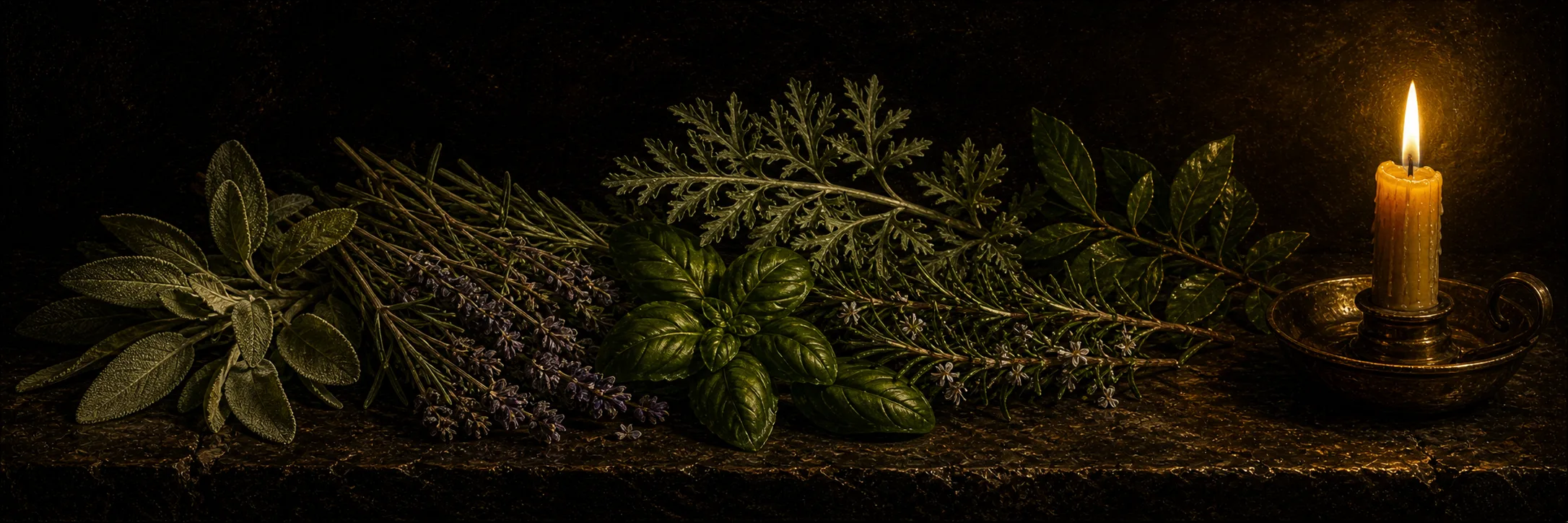
The opening is the part everyone remembers: a stark, bracing, citrusy-herbal fist. The catalog’s lavender, clary-sage, basil, rosemary and artemisia all read at once, with artemisia (wormwood) supplying a hard bitterness and the bergamot/neroli adding a thin thread of brightness. Multiple experienced reviewers describe it as almost “frightening” or coughing-dry on first spray - one wearer recounted thinking “Oh @#%!… What have I done?” before it settled. The “fruity” note in the pyramid is not a juicy fruit but the red-berry, slightly winey effect of damascones, which several reviewers single out as a rare case of that material reading elegantly rather than crass. The heart is where the chypre turns floral-spicy: rose fleshed out by those damascones, plus a distinct carnation (a clove-y, peppery floral that pairs with the catalog cinnamon and caraway). The drydown is the signature accord - a dry, warm, woody-resinous chypre base of labdanum, oakmoss, cedar and amber, with the leather note reading less as smoky birch tar and more as an animalic, castoreum-like warmth. Coconut and musk add a creamy heft without sweetness. Crucially, Basala is essentially sugar-free; reviewers repeatedly group it with other “not a speck of sugar” dry compositions. It is moderately linear in the sense that the dry herbal-chypre character persists, but it is genuinely transformative across its arc, “changing direction at least three times” per wearer accounts. Note that the lavender becomes more dominant as a bottle ages, and some reviewers report their vintage bottles have lost the volatile top structure over decades - a caveat for anyone judging it from old juice.
Performance
Wearer consensus is that Basala is a strong, long-lasting fragrance - a “powerhouse” by the standards of its era, though one whose sillage is described as well-dosed rather than nuclear. A representative wearer reports easily getting eight hours of wear and describes the sillage as “perfectly dosed, never absent.” Multiple owners describe “tremendous longevity on the skin.” Because surviving bottles are now 30+ years old, real-world performance varies with preservation - some owners note their juice has faded or “turned” over time. Practically, this is a cool-weather, sparing-application fragrance: reviewers warn that the dry, spicy density is overwhelming if overapplied and that one or two sprays carry a long way.
Wearing Context
This is overwhelmingly described as a cold-weather, evening, and “for myself” fragrance - autumn, winter, and transitional seasons. Reviewers repeatedly say they cannot imagine wearing it in spring or summer heat. The social-perception skew is mature, serious, and distinctly masculine; it reads as a confident, somewhat ceremonial “gentleman’s” scent rather than a crowd-pleasing compliment-getter, though a handful of owners report it drawing intrigued questions and positive attention from partners. It is not an office-safe, blend-into-the-background fragrance - it’s a statement. Practical reading: best deployed for evenings, dates, cool-weather days, and contemplative solo wear by someone who likes austere, complex, vintage-style masculines.
Comparisons & DNA
Basala sits squarely in the dry aromatic-chypre/spicy-leather lineage and reviewers reach for an unusually consistent set of comparisons. The most cited cousins: Caron Yatagan (shared bracing, bitter, sugar-free dry-herb austerity - one reviewer ranks Basala second only to Yatagan in apparent castoreum intensity), YSL Kouros (animalic spicy masculinity), and Etro Palais Jamais. Others repeatedly invoke Moschino Pour Homme (1990) and the obscure Roccobarocco/“Joint” as chypre-spicy-resinous relatives, with one wearer summarizing Basala as imagining Kouros combined with something like Moschino Pour Homme. Comparisons to Aramis Antaeus (“Antaeus without the castoreum”) and Calvin Klein Obsession for Men’s spicy heart also recur. As a DNA family it’s a complex, interwoven, vintage-style masculine chypre - a construction style reviewers say is essentially extinct in modern designer perfumery. There is no true modern designer equivalent; reaching for the same effect means going vintage or niche. One reviewer flags Michel Germain’s (unfortunately named) “Sexual Sugar Daddy” as sharing Basala’s damascone theme but replacing the dry woods with a sweeter synthetic praline - a budget curiosity, not a replacement.
Reception
Across surviving wearer accounts, Basala is one of the more polarizing-yet-revered discontinued masculines. The dominant camp treats it as a misunderstood masterpiece - “one of the first avant-garde perfumes in mass production,” “supremely masculine,” “a true gem,” timeless and ahead of its time. Wearers lean rapturous, framing it as a “tobacco-lavender gentleman” that arrived at the wrong moment (the aquatic-dominated mid-90s) and was a commercial “belly flop” through no fault of its quality. The skeptical camp - best represented by the blog critic “varanisridari” (The Scented Devil) - argues “the history of this is unfortunately more interesting than the scent,” calling it “just another spiced lavender creamy woody thing” of its era whose myth outgrew the juice, distinguished mainly by a carnation-and-labdanum, chypre-like finish. Polarization axes: (1) genuine greatness vs. nostalgia/hype inflation; (2) “unique and uncategorizable” vs. “typical of its period.”
Versions & Reformulation
Basala and Basara are the same fragrance issued under two names - the difference is a Japanese L/R transliteration. Collector sources gloss the word as meaning free, unrestrained, unconventional; the critic varanisridari (The Scented Devil) specifically reads “Basara” as “transgressively excessive” in style or dress, with the replacement name “Basala” connoting flamboyant behavior - a rebrand made after the first year. It was offered as an EDT alongside ancillary products (aftershave, deodorant, shower gel, etc.) The line is long discontinued, so the principal “version” issue today is age/condition of surviving stock rather than a corporate reformulation: owners note vintage bottles can lose top notes or shift over decades. No known modern reissue exists.
Acquisition Notes
This is a vintage or secondary-market purchase rather than a normal retail item. Condition, fill level, storage history, and top-note freshness matter more than nominal bottle size; sample where possible and verify packaging details before paying collector prices.
Notable Facts & Lore
- The lore is the heart of Basala’s appeal.
- The bottle - a deep scarlet flacon - was designed by famed industrial designer Marc Newson (Collector sources also spell it “Mark Newson”), whose own studio describes the commission as “an anthropomorphic torso-like shape, broad at the top and narrow at the waist”; per the Memory of Scent blog, Newson reused the same design idea to shape a series of iconic chairs.
- Its crimson palette was intended to complement the rose-plum pink of Serge Lutens’ Féminité du Bois bottle, and the two lines made a coordinated in-store display.
- Basala was conceived as the masculine counterpart to Féminité du Bois, though Lutens has never been credited with it (Dominique Preyssas is the listed perfumer).
- The name draws on a Japanese/Sanskrit concept; one wearer gloss ties “basala” to a Sanskrit word for “gem” or talisman warding off chaos, while others gloss “basara” as “free/unconventional” or “transgressively excessive.”
- The fragrance was explicitly marketed with Bushido/samurai philosophical framing (one reviewer connects it to Miyamoto Musashi’s The Book of Five Rings).