Shiseido — Zen 2000
Essence
Zen 2000 is the middle child of Shiseido’s three-times-told Zen story - the white-bottle relaunch that sits between Josephine Catapano’s 1964 green chypre original and Michel Almairac’s brash 2007 fruity-floral reboot. Composed by Nathalie Lorson, it translated the meditative “Zen garden” idea into a transparent, cool-toned floral-woody that reads less like seduction and more like weather: damp greenery, mineral stone, the rustle of bamboo. It is discontinued and increasingly collectible, and people who remember it tend to remember it with real tenderness.
Scent Profile
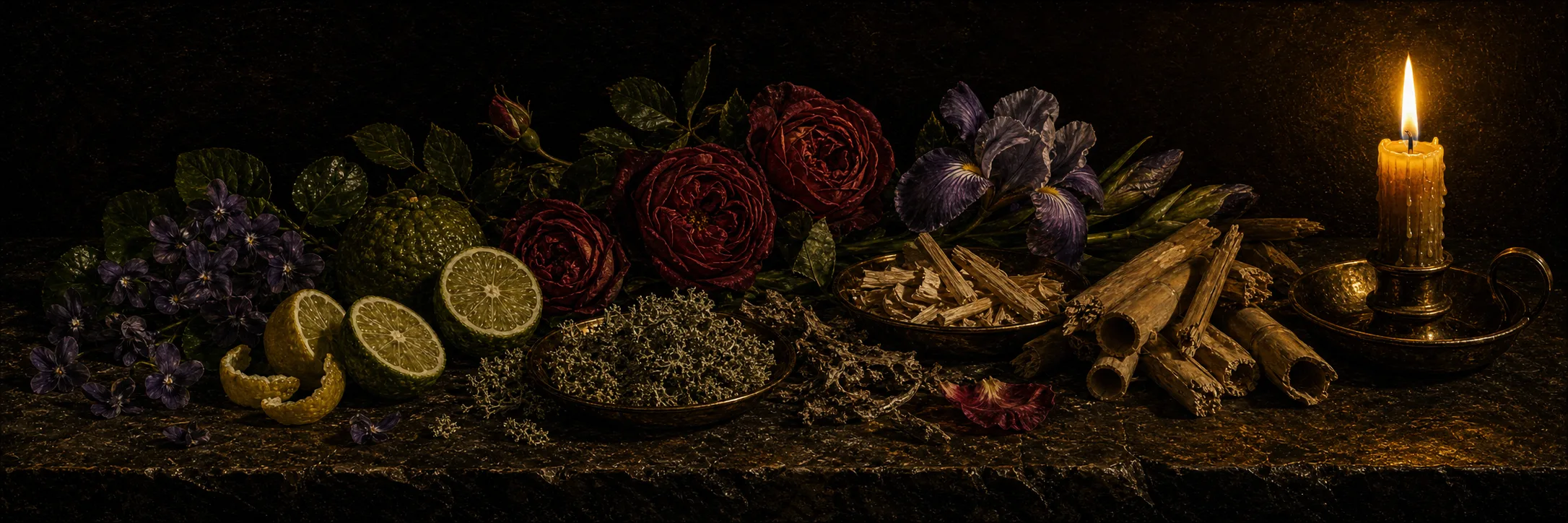
The signature here is contradiction held in balance: a fresh, almost aquatic-green opening pulled over a soft, powdery, musky-woody floor. Wearers describe “fresh bamboo, humble powdery violet and iris with a little rose thrown in” - a “calming, inspiring, happy” greenness rather than anything sweet or fruity. The iris and violet do the structural work: iris lends a cool, root-vegetal powderiness, violet a shy sweetness, and the two together keep the composition pale and diffuse rather than creamy. Oakmoss supplies the “distinct green stems / bitter mossy character” several wearers single out, while the base settles into what one calls a “musky-powdery elegant drydown.” The patchouli listed in the pyramid is, by most accounts, nearly invisible - “I don’t get any patchouli, but bamboo and juicy iris with moss are def prominent here.” A recurring failure mode is soap: a minority report that on their skin it “turns to a really strong soap smell” or reads as “an old ladies’ perfume.” The dominant impression, though, is of airy transparency - wearers note it “smells fantastic in open air and on windy days,” which is the tell of a high-musk, low-density modern floral. Concretely: cut bamboo stalk and wet violet leaf over a clean cosmetic-powder skin musk, the woods more suggestion than statement.
Performance
Better than its featherweight character would suggest. Multiple long-term wearers volunteer that “lasting power is very good,” and one notes the musk-powder drydown holding for hours. Sillage is moderate and intimate - this is a fragrance that breathes around you rather than announcing you, and several reviewers prize exactly that “not overbearing,” close-wearing quality. It performs best in open air and cool weather; in still, hot conditions the soapy facet is more likely to surface.
Wearing Context
This is the rare Shiseido that wearers describe in almost devotional, ritual terms - “perfume for meditation,” “calming to me,” something “just for me, not a fragrance to douse on and wear around town.” It skews spring and cool-weather, daytime, contemplative. The brand’s own period leaflet framed it explicitly around “aromachology” and well-being - “anytime you wish to bring new focus to your life or evoke feelings of peace and fulfilment” - and wearer accounts have largely taken that framing at face value rather than treating it as marketing. It is office-safe, unisex-leaning-feminine, and reads as quiet and grown-up rather than youthful.
Comparisons & DNA
The most telling internal comparison is to Shiseido’s own Murasaki - several wearers independently say Zen 2000 “reminds me of Murasaki,” suspecting a shared house base (“a Shiseido thing in the formulation”). Against the 1964 original (Josephine Catapano’s galbanum-hyacinth-oakmoss chypre, frequently likened to Guy Laroche Fidji), Zen 2000 is lighter, more pellucid, and more powdery-musky - a modernized echo rather than a faithful reissue. Against the 2007 Almairac version (grapefruit-pineapple “blue rose,” widely compared to Chanel Coco Mademoiselle), the 2000 is far more restrained, green and contemplative; partisans of the 2000 flatly call the 2007 “boring, generic” and lament that “they should never have discontinued that or changed it.” One wearer also draws a line to Lancôme’s woody-mossy register, contrasting it favorably with Estée Lauder Beyond Paradise and Lancôme Trésor as far less “overpowering.”
Reception
Among those who knew it, the 2000 is beloved - “this was my first perfume love,” “you are greatly missed Zen,” and repeated stories of hunting down backup bottles from Italy or Japan after discontinuation. Now Smell This’s Robin Krug noted in 2007 that she “liked the 2000 Zen as well,” and in the same comment threads enthusiasts who were lukewarm on it (“wasn’t bad, but wasn’t amazing either,” “rather bland but very likeable”) still regretted its withdrawal. The critical verdict is more measured: in Perfumes: The Guide, Luca Turin and Tania Sanchez awarded a Shiseido “Zen” three stars with the genre tag “fruity woody,” calling it “a perfect woody rose” - though it should be flagged that the Guide entry’s version attribution is ambiguous across secondary sources, and that the “woody rose” descriptor arguably fits the rose-bearing 2000 or 2007 compositions better than the 1964 chypre.
Versions & Reformulation
This is the second of three distinct Shiseido fragrances sharing the Zen name and is itself a relaunch, not a reformulation: the 1964 original (Catapano, black bottle, green chypre, now Japan-market/discontinued), the 2000 version under review (Lorson, white/pearlescent bottle), and the 2007 version (Almairac, gold-toned bottle, fruity-floral). An editorial note describes the 2000 as “lighter, more pellucid, with a general resemblance to the original.” There is a further wrinkle: some sources and a wearer report list materially different notes for what is sold as 2000-era Zen - citing valerian, Japanese gentian and hyacinth up top with Vietnamese oud and amber in the base, and Shiseido’s patented “Kyara wood” accord - suggesting either packaging/market variants or note-list drift between listings. Shiseido has since added further Zen-named launches (a 2009 Zen for Men; a 2026 “Zen Essence” by Florian Gallo), making the name one of the more genealogically tangled in mainstream perfumery.
Acquisition Notes
This is a vintage or secondary-market purchase rather than a normal retail item. Condition, fill level, storage history, and top-note freshness matter more than nominal bottle size; sample where possible and verify packaging details before paying collector prices.
Notable Facts & Lore
- Zen was Shiseido’s first fragrance released to the global/Western market (the 1964 original), which lends the name outsized importance in the house’s history.
- The 2000 launch leaned hard on the then-fashionable concept of “aromachology,” with Shiseido touting a patent-pending process for its Kyara (agarwood) scent developed in-house and ingredients like modified valerian oil chosen specifically to “decrease stress and induce feelings of calm.”
- Denyse Beaulieu’s Grain de Musc-era writing (on her earlier blog) memorably framed the Zen experience as “futuristic: as shocking and beautiful as a Hussein Chalayan dress” and “bamboo whispering in the breeze, while sappy greens are being cut with a machete” - among the most evocative critical descriptions the line ever received, and one that captures the cool, bladed greenness 2000’s fans still chase.
- Zen 2000 is the middle child of Shiseido’s three-times-told Zen story - the white-bottle relaunch that sits between Josephine Catapano’s 1964 green chypre original and Michel Almairac’s brash 2007 fruity-floral reboot.
- Composed by Nathalie Lorson, it translated the meditative “Zen garden” idea into a transparent, cool-toned floral-woody that reads less like seduction and more like weather: damp greenery, mineral stone, the rustle of bamboo.
- It is discontinued and increasingly collectible, and people who remember it tend to remember it with real tenderness.