Houbigant — Ciao
Essence
Ciao, released in 1980, is a discontinued Houbigant floral chypre that has become a quietly mourned cult favorite among vintage-chypre collectors. Created by Givaudan perfumers and marketed by L’International Houbigant, it rode the early-1980s vogue for chic Italian salutations, with the name borrowing the dolce-vita glamour of la bella Italia. Period advertising pitched it as a semi-oriental floral chypre and made much of its complexity, claiming a vibrant meld of more than 200 ingredients built around the heady osmanthus flower. Sold across cologne, eau de toilette, eau de parfum and parfum, it was discontinued by 1992 and survives today only in vintage bottles.
Scent Profile
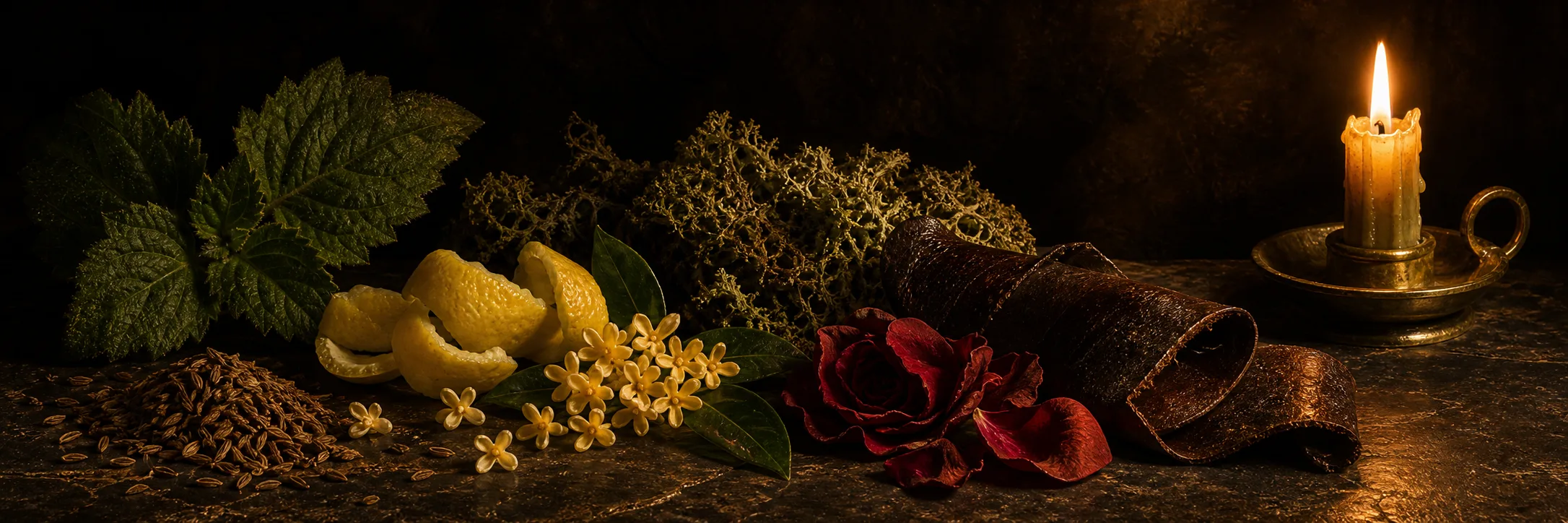
Ciao is a rich, dark, spicy-green floral chypre with a cumin-laced opening and a deep mossy, woody, leathery base. The top is fruity and aromatic, led by cumin, lemon, basil, rosewood and osmanthus, with an unmistakable dirty-cumin signal that sets the tone. The heart is a full classic floral bouquet of orris, rose, jasmine, lily of the valley, carnation, ylang and blackcurrant, blended so that no single flower stands out and the overall effect reads sensual and mature rather than pretty. The base is where the fragrance lives: oakmoss, leather, sandalwood, amber, vetiver, patchouli, benzoin, cedar and musk combine into an animalic, base-heavy structure. The drydown is slightly powdery with a deep, non-sugary sweetness, and a recurring leathery-metallic facet is the single most distinctive thing collectors remember about it.
Performance
Vintage bottles still perform strongly, with above-average longevity that wearers often describe as rich and very long-lasting, some citing well past twelve hours from the parfum and EDP. Sillage is moderate to rich rather than overpowering, and the scent is easy to overuse, so two sprays is the common advice. As with any juice more than forty years old, the cumin-citrus-green top notes degrade first, while the mossy-leathery drydown holds up best; collectors prioritize parfum and EDP for richness and surviving performance.
Wearing Context
Ciao is an autumn and winter, evening, cool-weather chypre. Its dark, mossy, leathery-spicy character places it firmly in the bold, grown-up category of its era, and one wearer paints it as a full-moon autumn evening, spicy and slightly damp from fallen leaves. It reads sophisticated and mature, the kind of scent owners wore as a signature for years. Marketed to women, its dark animalic-chypre base makes it effectively unisex in the eyes of many reviewers.
Comparisons & DNA
Ciao sits in the dense, dark, animalic floral-chypre family of its moment. Reviewers tie it most often to Molyneux Fete for its dark chypre quality and dirty cumin, and to Balmain Miss Balmain for its fruity, leathery-metallic character. It is also placed in the same family as the original YSL Opium, sharing that scratchy, dark, incense-like accord though softer, and likened to the first Armani pour femme as a greener, bolder relative. Norell and Revlon Charlie come up as woody-chypre cousins. Despite the osmanthus marketing, it smells nothing like other osmanthus scents such as Patou 1000.
Reception
Among those who knew it, Ciao inspires real devotion and genuine grief at its loss, with admirers calling it an all-time favorite and longing to have it back. Vintage-perfume archivist Grace Hummel preserved much of the period press and reader testimony, including the line that summarizes its cult status: a favorite the writer never found another fragrance to match. Other verdicts are cooler, calling it a decent dark chypre for those into animalic notes and not necessarily distinctive in its day. The fair reading is that it is a well-made, characterful 1980s chypre loved most by those with a personal history with it, collectible as much for being obscure and gone as for any critical canonization, of which it has none.
Versions & Reformulation
Ciao was sold in Parfum, Eau de Parfum spray and Eau de Cologne across a wide price range over its run, with parfum reaching around $130 by the late 1980s and cologne as low as $15 at launch. There is no modern reformulation, since production ended by 1992, so every bottle on the market is vintage and carries the usual batch-to-batch and storage variation. The presentation was notable: a shadow-box outer design with a transparent window over a mirror-bright silvery backdrop, concealing a hand-polished French bottle, with an early pen-shaped grey-lacquered travel format also in circulation.
Acquisition Notes
Ciao is acquired exclusively through the vintage market: auction sites, vintage sellers and estate finds. Parfum and EDP are the concentrations to prioritize for richness and surviving performance. Because it is such an obscure older fragrance, surviving bottles are more likely genuine than faked, though normal vintage caveats apply: expect possible top-note degradation and color shift, and inspect fill levels and seals. Avoid dupe and type recreations, which are reformulated impressions rather than Houbigant’s original juice.
Notable Facts & Lore
- The over-200-ingredients and semi-oriental floral chypre claims trace to 1980 print advertising and editorial coverage of the launch.
- A 1980 ad spotlighted the heady osmanthus as the scent’s base, despite the fragrance smelling nothing like other osmanthus perfumes.
- Much of the surviving documentation comes from archivist Grace Hummel, whose transcriptions carry occasional OCR-style typos but are substantively consistent.
- The recurring leathery-metallic descriptor is the most distinctive thing collectors remember about it.
- The name itself is a period artifact, with the Italian ciao a trendy borrowing in late-1970s and early-1980s marketing, a small time capsule of dolce-vita aspiration.