Houbigant — Patchouli Sauvage
Essence
Patchouli Sauvage is Houbigant’s bright, clean answer to a divisive note. Released in 2023 as part of La Collection Orientale and composed by Luca Maffei and Antoine Lie, it is built around a single hero material — patchouli — but deliberately sidesteps the dark, musty, “basement” stereotype in favor of a citrus-lifted, woody-earthy reading. The result is a high-concentration but relatively polite patchouli that has won over a notable share of self-described patchouli skeptics.
Scent Profile
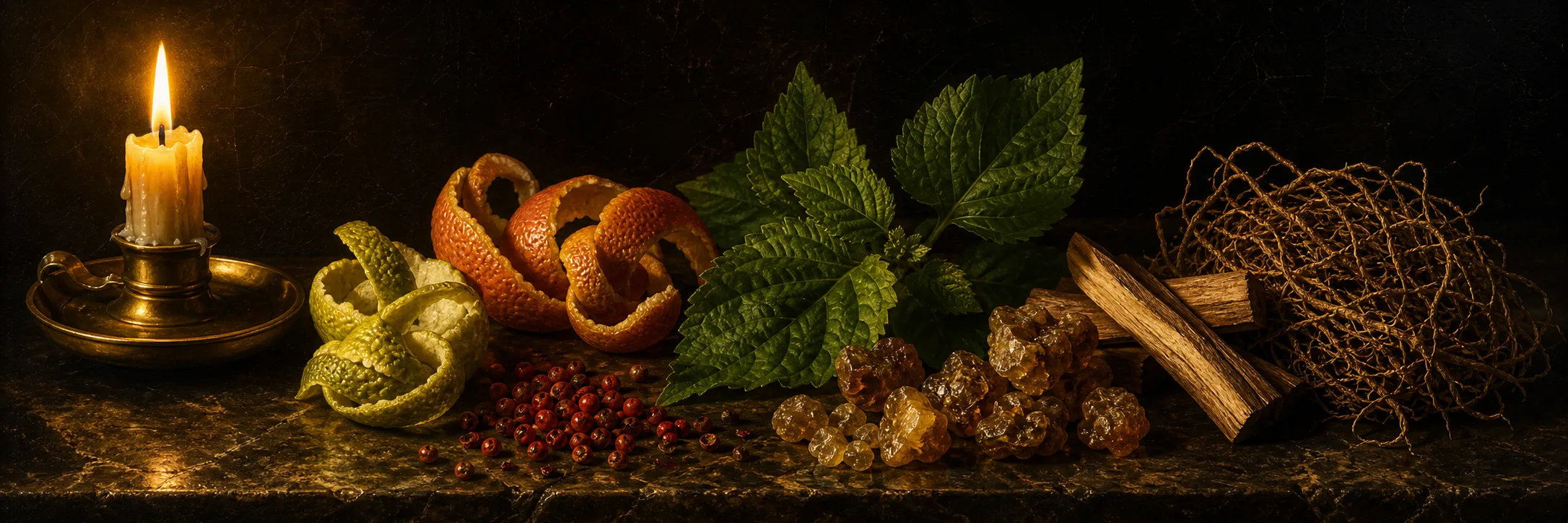
The opening sparkles. Bergamot and grapefruit lead, with a hint of pink pepper adding lift, so the first impression is bright and citrus-forward rather than heavy. Some wearers catch a fleeting basil-green impression or a brief rubbery “new tire” facet in the first minutes before the composition settles.
The heart is where the fragrance states its theme: patchouli, here rendered airy and clean rather than damp and earthy, supported by labdanum’s resinous depth and a subdued dried-fruit accord. That fruit reads as a supportive touch of sweetness, not a gourmand statement, so the patchouli stays the protagonist. The texture is the defining quality — repeatedly described as airy, crystalline, natural, and notably free of the medical, animalic, or retro qualities that patchouli can carry.
The drydown grows woodier, drier, and faintly balsamic over vetiver, cedar, sandalwood, amber, and tonka, without losing the earthy core. A slight suede facet emerges late, lending a refined, tactile finish. Throughout, the signature stays consistent: bright citrus over clean, dry patchouli.
Performance
Longevity is good and projection is moderate. Despite the composition’s polished character, several wearers stress its density and tenacity — one reported still detecting two sprays on a blotter sealed in a bag days later, and another found it noticeable beyond eight hours while staying relatively light in midday warmth. The pattern is high concentration with refined rather than aggressive projection. Because a little goes a long way, the practical advice is to apply sparingly; over-application can tip the scent into feeling dense or suffocating.
Wearing Context
Spring and autumn are the natural home, though its citrus brightness and lack of heavy warmth let it stretch into summer and even winter, making it more season-flexible than a typical dark patchouli. It reads as sophisticated and timeless, with that late suede facet giving it polish, so it suits both casual daytime wear and more dressed-up settings. As a unisex composition it sits comfortably on a range of wearers. The main caveat is potency: even this restrained patchouli can overwhelm in close quarters if over-applied.
Comparisons & DNA
The most direct reference is Givenchy Gentleman, which one wearer called a “spot on” resemblance, only “far more niche and classy.” Diptyque Tempo is the other close cousin, with Patchouli Sauvage reading as smoother and creamier with more burrowing complexity. Chanel Coromandel is the obvious benchmark in the refined-patchouli class, but the contrast is clear: Coromandel is the chocolate-and-amber interpretation, while Patchouli Sauvage is drier and more citrus-bright. John Varvatos Dark Rebel Rider gets mentioned as a more “amped up” patchouli for those wanting more force. Within its own line, Patchouli Sauvage is the earthy-woody pillar alongside Ambre des Abysses (amber), Oud Or (oud), and Tabac Nomade (tobacco).
Reception
Reception skews positive, especially among patchouli fans and the patchouli-curious. The most common praise is for balance and elegance — a beautifully clean, “airy-crystal” patchouli — and a recurring theme is conversion: wearers who expected to dislike it, finding most patchouli scents too heavy, report being won over. Strong longevity and the house’s craftsmanship draw consistent compliments. The axis of disagreement is value: a minority finds the price hard to justify, with one dismissive wearer comparing the smell unfavorably to a budget bottle, and a few describing it as harsh or dense. No major independent critic has published a dedicated review, and the available launch coverage is promotional in tone. The consensus take: a rewarding pick for committed patchouli lovers who can stretch to the price, but worth sampling first given the value debate and the polarizing density.
Versions & Reformulation
Patchouli Sauvage exists as a single composition within La Collection Orientale, with no reformulations documented. It is sold only as a 100 ml eau de parfum; there is no alternate full-bottle size, and smaller formats are limited to samples and discovery vials. The four-fragrance collection — Ambre des Abysses, Oud Or, Patchouli Sauvage, and Tabac Nomade — was shown at Esxence before its 2023 worldwide rollout, all four composed by Maffei and Lie.
Acquisition Notes
This sits in the niche price tier, with Houbigant’s list price around 200 euros for the 100 ml and US retailers listing it near $190. The only full-bottle format is the 100 ml EDP; samples and discovery vials are the way to try before committing. It is available through Houbigant’s official channels and established niche retailers. Original launch pricing was reportedly lower, so the cost has risen over time.
Notable Facts & Lore
- Houbigant frames the scent around wind rustling through patchouli leaves, “liberating an inebriating perfume simultaneously woody, earthy, and dry with smoky accents.”
- La Collection Orientale is positioned for wearers who want “fragrances with a strong character, daring and contrasting,” each built around a single hero raw material.
- The collection’s four pillars each spotlight one material: amber, oud, patchouli, and tobacco.
- Both perfumers, Luca Maffei and Antoine Lie, composed all four fragrances in the collection.
- Houbigant, founded in 1775, draws on its heritage in the collection’s bottle design.
- Patchouli carries a long cultural history, from associations with Poppaea, wife of Nero, to the hippie generation of the 1960s and 70s.