Comme des Garçons — Floriental
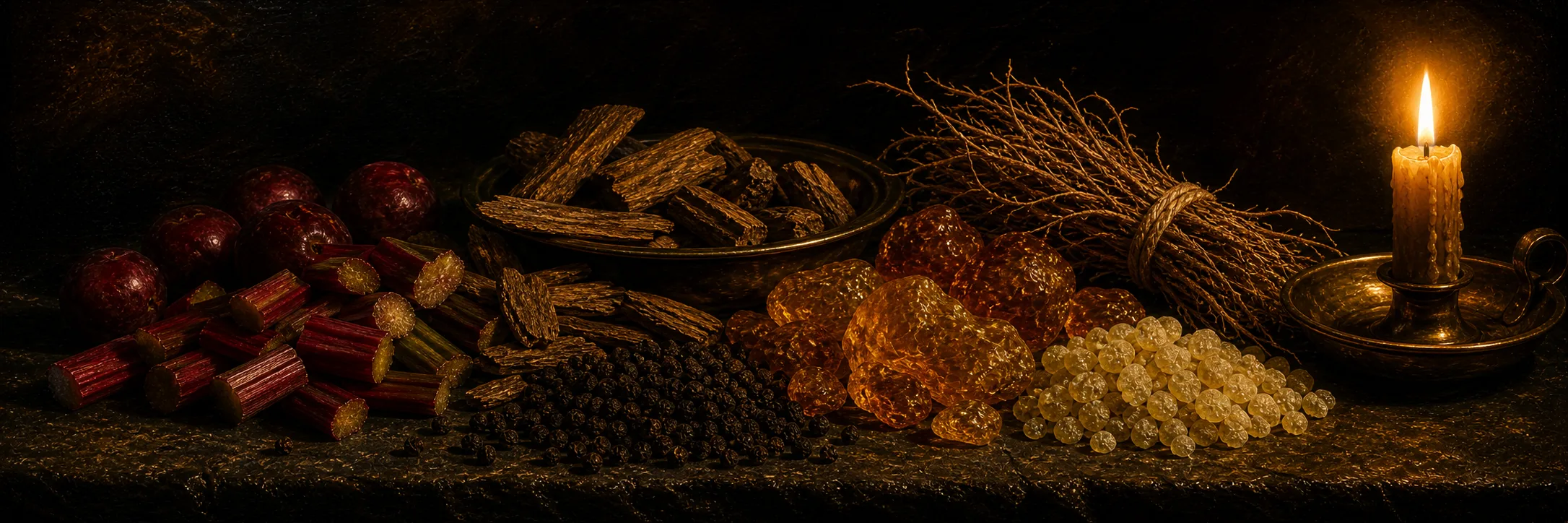
Essence
Floriental is one of perfumery’s great acts of misdirection: an eau de parfum named after the lushest, most baroque genre of all - the floral-oriental - that contains no real flowers and isn’t an oriental in the classical sense either. Released in 2015 under the Puig-licensed mainstream branch of Comme des Garcons (the oval-flacon line), it was developed by Emilie Coppermann around the conceit of building a fragrance around the cistus flower - a bloom that, as critical coverage noted, essentially has no scent. The marketing line at the London launch (Selfridges, end of July 2015) was that it “disrupts the perception” of what a floriental should be. What you actually get is a plummy, peppery, incense-laced woody composition - a piece of conceptual branding as much as a perfume, very much in the Rei Kawakubo intellectual-provocation tradition, even if the juice itself is more accessible than the concept suggests.
Scent Profile
The opening is the most divisive stretch. Reviewers consistently describe a sharp, almost rubbery or “Play-Doh” top - critical coverage found it “a bit too grating,” speculating it came from the labdanum, while one widely-echoed wearers note likens the first minute or two to Dr. Pepper soda (down to the cola-brown color of the juice) crossed with a faintly animalic “male sweat” facet. Pink pepper supplies a fizzy, gingery prickle that several wearers mistake for ginger outright. Once past that confrontational start - usually one to two minutes - Floriental settles into its real identity: a dried-plum-and-incense accord laid over a soft, slightly powdery sandalwood, with labdanum supplying a balsamic, ambery warmth and vetiver keeping things dry. The plum reads as boozy and jammy rather than fresh-fruity, giving the whole a “loud, boozy, woody plum” character. It is essentially linear after the opening - a smoky, lightly gourmand sandalwood haze that holds steady. The incense here is cold and dry, not the smoldering church-censer style; it functions as connective tissue between the fruit and the wood.
Performance
This is the fragrance’s chronic weakness, and it splits the wearers sharply. A vocal contingent of wearers report it as among the weakest things they own - one reviewer wrote verbatim that “this fades away within minutes, becomes non-existent even after 8 sprays, weakest fragrance i own and i had to sell it because there’s simply no point owning it.” Others get a respectable few hours of close-to-skin, lightly boozy sandalwood. The consensus lands on moderate-at-best longevity and soft projection - this is not a “beast mode” scent, and reviewers explicitly contrast it with the Mancera/Montale/Tauer/Amouage power-bracket. Katie Puckrik, by contrast, called it “hot-sillaged,” so skin chemistry clearly matters a great deal. Treat it as an intimate, several-hour wear rather than a day-long projector.
Wearing Context
Floriental is a cool-weather fragrance - fall and winter, transitional-sweater weather, as The Scented Hound framed it. The dry, boozy, smoky-woody profile reads as evening or date-night more than office, though its softness after the opening makes it less confrontational in close quarters than the concept implies. Nominally unisex (and very much so in CdG’s androgynous house tradition), it tilts slightly feminine to some noses because of the sweet, juicy plum, and slightly masculine to others because of the dry, cigar-box woodiness - which tells you it sits genuinely in the middle. wearers wearers scoring tends to mark it as not office-safe and not an everyday workhorse; it’s a deliberate-statement wear.
Comparisons & DNA
The most frequent and apt comparison is to Serge Lutens Feminite du Bois - the plum-and-cedar, boozy-fruit-over-dry-wood lineage - and several reviewers reach for that name immediately. Within the house, Floriental is openly described as a sibling of Wonderwood and Wonderoud: one wearers collector who has worn all three frames them as variations on a single CdG woody formula, with “Wonderwood for clean/super-dry cedar-pepper-vetiver, Wonderoud the creamier warmer version, and Floriental the plummy floral and slightly powdery” one. Katie Puckrik positioned it as “a tougher, leaner version of Miller Harris’ La Fumee series,” which dawdle longer in sappy cistus-and-rose, where Floriental “hews to sharp and smoky bark.” The Black Narcissus invoked the spiced eighties woods of Nina Ricci’s RicciClub and Ungaro III Pour Homme. Other wearers touchstones include CdG’s own Series 3 Incense line (for the cold-incense handling) and, less flatteringly, the dismissive claim that it dries down to Versace Blue Jeans.
Reception
Critically and in the wearers, Floriental is “enjoyable but not groundbreaking” - admired for being honest, well-blended, and unmistakably CdG, but widely seen as derivative of the house’s own back catalogue and undermined by weak performance. critical coverage was lukewarm, reading it as more “statement” than beauty and admitting that without the CdG name and the clever title there wasn’t much to hold interest. Persolaise found it “unoriginal yet appealing.” wearer discussion hosts the full spread: detractors call it a “cynical take on a popular genre” and “pointless fanboy cash-in,” while admirers call it a “wicked brew of plummy incense, woods, and amber” and a top-five plum fragrance. wearers sentiment is warmer than the critics, with multiple users calling it underrated and noting its distinctive, “loud boozy plum” uniqueness even as they decline to recommend it as a full-bottle blind buy.
Versions & Reformulation
No widely documented reformulation of Floriental specifically has been noted in the sources. It is worth noting the broader wearers grievance - voiced repeatedly on wearers - that CdG’s Puig-licensed line is seen as more diluted and conventional than the brand’s earlier independent output, a critique applied to the mainstream collection generally rather than to Floriental in particular. The fragrance has become somewhat hard to find at retail, with inconsistent online pricing noted by wearers, suggesting limited or wound-down distribution rather than a formal reformulation event.
Acquisition Notes
Floriental launched exclusively at Dover Street Market at $131 for the 100ml (3.4 fl oz) eau de parfum, per critical coverage, and has since drifted toward semi-discontinued status at conventional retail; availability is patchy and pricing inconsistent online, according to wearer reports. Given the polarizing rubbery opening and the genuinely poor longevity reported by a significant share of wearers, this is explicitly not a recommended blind buy - sample first. The bottle is the standard CdG oval flacon with the golf-ball-style cap; note the recurring complaint that the rounded base means it doesn’t stand upright easily. Because the scent is fairly linear, a small decant tells you almost everything you need to know about whether the plum-incense-sandalwood core works on your skin.
Notable Facts & Lore
- The central piece of lore is the name itself: Floriental is a deliberate provocation, a fragrance named for a floral genre that contains no obvious florals - compared by critical coverage commenters to John Cage’s silent composition 4’33“, forcing contemplation of the absence of flowers.
- The Black Narcissus drew the parallel to Le Labo’s intentional misnomers.
- The official conceit centers on cistus - the rockrose whose resin gives labdanum - a “flower with no scent,” making the labdanum base a sly literal joke on the floral premise.
- CdG perfumes are, fittingly, often sold in contemporary-art-museum gift shops in Japan, a context that suits Floriental’s status as branding-as-concept as much as perfume.