D'Orsay — À cœur perdu. L.B.
Essence
À cœur perdu. L.B. is Fanny Bal’s 2023 entry in D’Orsay’s relaunched line — a fresh, powdery, iris-citrus-orange-blossom EDP the house frames as the portrait of secret love. The “L.B.” names Lady Marguerite Blessington, the forbidden love of Count Alfred d’Orsay, for whom the original house fragrance was made in 1830. The load-bearing idea is bright aldehydic citrus set against a buttery iris and clean-skin orange blossom over a quiet warm musk. The effect is “clean skin with a soft floral halo” — a contemporary, restrained take on the aldehydic-floral idiom that never reaches for vintage drama.
Scent Profile
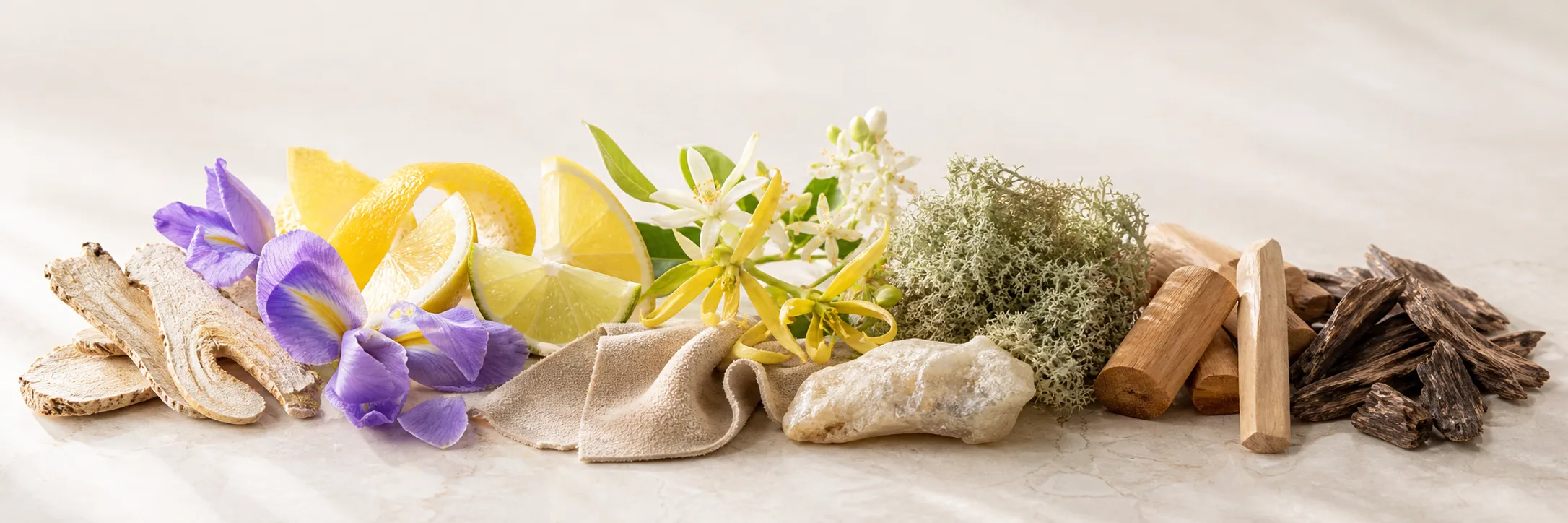
The opening fires off bergamot, lemon, and the iris-aldehyde combination the brand markets as its centerpiece. The aldehydes are calibrated soft rather than punchy — wearers consistently call them fresh rather than soapy, which is unusual for an aldehydic top. The citrus reads gentle and slightly bitter rather than juicy. Iris arrives almost immediately, buttery and cosmetic-powdery in character — carrot, suede, a faint root — rather than the cold metallic style. This bridge between citrus and iris-powder is where the fragrance finds its identity.
The heart unfolds neroli and orange blossom together: clean, slightly sweet, closer to laundry-blossom than to the indolic, animalic narcotic of Sicilian orange-blossom soliflores. A brief “freshly laundered sheets” impression appears here, dovetailing with the brand’s white-linen imagery. The orange blossom stays moderate — it never dominates or overpowers the iris.
The drydown is the surprise. Cashmeran and ambroxan push the composition into a soft, sensual register, with moss adding a faint earthy whisper rather than a true chypre snap. The base reads as a warm, slightly carnal skin musk, and the shift from clean-cool floral to warm skin is the fragrance’s most interesting move. The arc is gentle and fairly linear after the first half hour.
Performance
Performance reads as moderate and skin-leaning, and reports split: some wearers find it long-lasting, others describe a personal-bubble scent that stays close. That divergence is typical of iris-orange-blossom-ambroxan builds, which perform very differently by skin chemistry and dosing. The brand advises multiple spritzes on pulse points; in practice two to three sprays is the dose where the ambroxan base reads warm and intimate rather than transparent.
Wearing Context
This is a spring-and-summer scent for the citrus-floral lift, with the warm musk base extending it into transitional weather. Its “personal skin scent” character suits office days, daytime, and intimate dinners — contexts that want presence without projection. It is less convincing for high-impact occasions, club or evening settings, or cold weather, where the freshness washes out. The lean is unisex trending feminine, though several men report it works well on them.
Comparisons & DNA
- Diptyque Fleur de Peau: the closest reference — another iris-musk skin scent, restrained and powdery. Fleur de Peau leans dustier and more old-book/ambrette; À cœur perdu sits closer to clean citrus and orange blossom.
- Frédéric Malle Dans Tes Bras: shares the cashmeran-driven skin-musk DNA, but Malle is darker and more violet-led.
- Hermès Hiris: an iris-centered comparison that runs cooler and more austere than this warmer, citrus-lifted take.
- Atelier Cologne Iris Rebelle: representative of the modern “clean iris” wave À cœur perdu belongs to.
It is not a vintage aldehydic in the No. 5 or Madame Rochas lineage — the aldehydes are too restrained for that.
Reception
Coverage is moderate. Sentiment skews positive but polarizes on an “interesting versus boring” axis. Praise centers on the elegant restraint, the well-blended iris-orange-blossom-musk balance, the clean-skin effect, the engraved magnetic-cap bottle, and the refined contemporary character. Criticism centers on perceived blandness — too discreet, too “pleasant clean nothing,” or not distinctive enough for the niche price. One reviewer summarized the divide as “gentle but demanding, free but veiled, fresh but poisonous.” The practical verdict is to sample rather than blind-buy, given both the polarization and the skin-scent risk.
Versions & Reformulation
Single composition, no known reformulations, offered in 50 ml and 10 ml travel sizes. The brand’s framing — that this is “a contemporary version” of a fragrance Alfred d’Orsay made in 1830 — is mythology rather than a literal reformulation; no 1830 formula is being recreated. The house was founded in 1830, lay dormant for decades, and was relaunched in 2015 with new compositions by a roster of name perfumers.
Acquisition Notes
Priced in the niche-mid tier, roughly $200 for 50 ml at full retail, sold through D’Orsay’s own site and a small set of specialty boutiques. The 10 ml travel size is widely available and is the sensible entry point given how divided opinion is. The house offers a sample with full-bottle purchase and a 14-day return on unopened bottles, which softens the blind-buy risk. Counterfeiting appears minimal at this scale, and no batch-code guidance is established.
Notable Facts & Lore
- Every fragrance in the relaunched line pairs a French phrase with initials standing for a “secret identity” — L.B. is the one exception, openly revealed as Lady Marguerite Blessington.
- Blessington was the unconventional love of Count Alfred d’Orsay (1801–1852), a dandy and Beaux-Arts art director who counted Byron, Dickens, and Victor Hugo as friends.
- Their entangled relationship scandalized 19th-century London and is the literal narrative the fragrance points to.
- The house cites LMR Naturals, an IFF subsidiary, as the supplier of its responsibly sourced naturals.
- No celebrity associations, viral moments, or controversies are documented.