D'Orsay — Arome 3
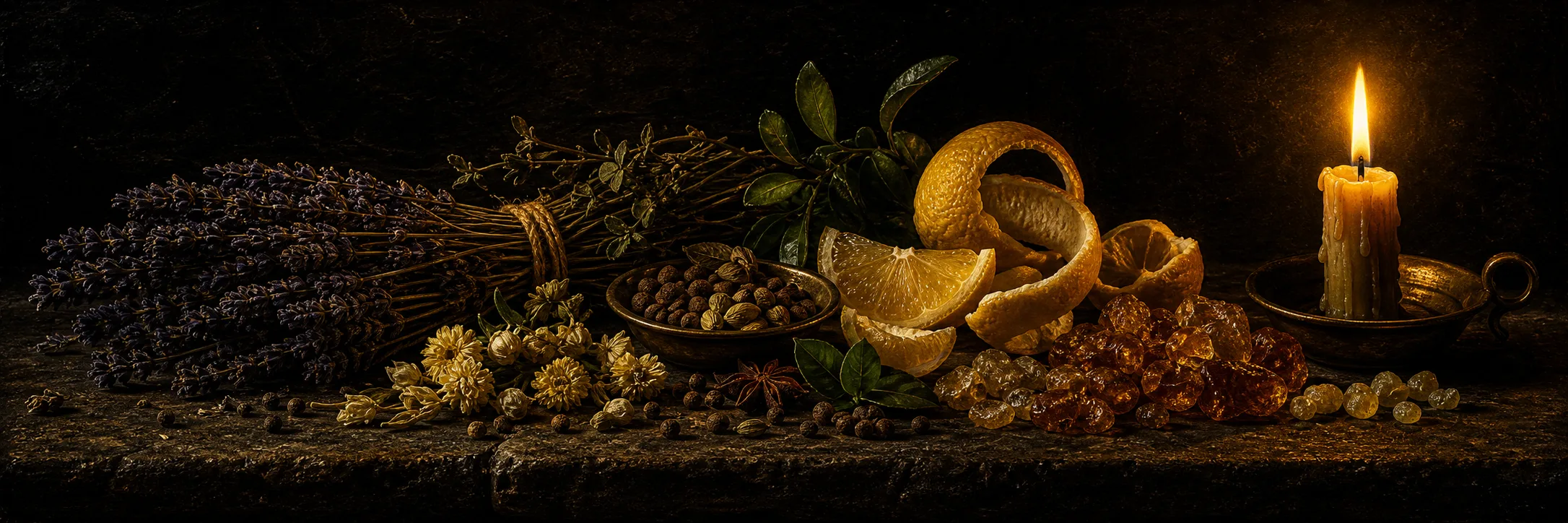
Essence
Arome 3 is a 1943 French aromatic fougère from Parfums D’Orsay, built around a realistic, dry, herbal lavender rather than the sweet barbershop lavender that defines the genre. Its distinction is restraint: where most fougères run loud and soapy, this one is measured and “white-shirt” elegant, finishing on a creamy, faintly powdery iris-and-musk drydown that longtime wearers describe as a refined near-skin-scent. It reads as a low-key, old-world reference fougère that quietly predates better-known later scents.
Scent Profile
The opening is aromatic and citrus-bright: a lavender-neroli-petitgrain-bergamot-orange accord that lands as a fresh, slightly sharp herbal-citrus splash, with the lavender realistic and dry rather than candied. Wearers single out that lavender as the spine of the whole composition — herbal, not fabric-softener.
The heart brings in coriander, clove, and sage spice with a light ylang and jasmine floralcy, reading as “good barbershop spice notes” carried by a slightly cool, airy edge typical of well-done peppery-clove builds. It is not loud; the spice stays integrated.
The base is where the character settles: a diffuse oakmoss with soft amber, vanilla, and tonka, and orris lending a soapy, waxy, ghostly-iris turn that lands smooth, clean, and light. The arc runs clearly from a sharp aromatic top to a creamy musky-mossy coda — coherent and well-blended rather than dramatic, with that fuzzy herbal lavender suspended over a balsamic, chypre-tinged moss. The lavender’s realism cuts both ways: a minority find the opening camphoraceous or soapy.
Performance
Performance reports vary, likely reflecting the age and storage of surviving bottles. The most detailed read gives moderate sillage, polite projection, and longevity around 8 hours as a pleasant intimate skin scent; harsher reports describe weak staying power, largely gone within about 4 hours. The honest expectation is a restrained fragrance that sits close after the opening hour, with vintage-stock longevity unpredictable. Like other D’Orsay scents, it lasts considerably better sprayed on fabric or hair.
Wearing Context
Both consensus and profile point to cool-weather, daytime, formal-leaning wear — one reviewer specifically recommends formal scenarios or cooler weather. It is office-friendly and refined, reading as classic, old-world, and somewhat dated, so its social skew is mature and gentlemanly rather than trend-aware. Though labeled masculine, it was marketed as unisex from launch and still wears that way. It feels wrong in loud social settings or hot weather, where the soapy-lavender aromatic can come across as bracing aftershave.
Comparisons & DNA
- Balenciaga Ho Hang (1971): the clearest stylistic descendant — a barbershop lavender fougère with chypre-like base. Arome 3 is less herbal but achieves a similar glow through its diffuse oakmoss.
- Chanel Pour Monsieur (1955): shares the chypre-like oakmoss base (its perfumer, Henri Robert, was a D’Orsay alumnus), though Arome 3 builds that base differently with amber, sandalwood, and labdanum.
- D’Orsay Etiquette Bleue: an in-house cousin sharing the sharp opening and soapy-lavender drydown.
- Penhaligon’s English Fern: a genre reference point for the same classic-fern register.
These are olfactory-DNA comparisons, not dupe claims; Arome 3 is discontinued and rare, with no clone market.
Reception
Among the small but devoted following that knows it, Arome 3 is held in high regard — one wearer called it worthy of “the pantheon of great mens’ fragrances,” and the line is a perennial pick in “underappreciated” discussions. Praise centers on the realistic dry lavender, the masterful blending, and a “bygone era of grand perfumery” feel. Criticism is twofold: weak and unpredictable longevity, and a lavender that can read dated, soapy, or “over-the-top,” with one former daily-wearer now finding it reminiscent of a bathroom diffuser. Opinion genuinely splits on the opening — elegant and herbal to admirers, camphoraceous to detractors. Given the discontinuation and variable surviving stock, this is a sample-first scent, though devotees consider a good bottle a steal.
Versions & Reformulation
The catalog item is the original Arome 3 (1943), an aromatic fougère, with a re-release in 1958 and again at the mid-1990s relaunch. It must be distinguished from Arome 3 Tradition (1998, sometimes dated 1999), which reviewers stress is “an entirely different fragrance” — an oriental fougère with a prominent black-currant note and a balsamic chypre base, greener and more tart. Note pyramids for the two have historically been swapped in listings, so identification matters. The fragrance is discontinued; the house itself foundered in 1983 and was later reinvented as a different niche brand.
Acquisition Notes
Arome 3 is discontinued and acquired chiefly on the secondary market or by decant. In production it was relatively affordable for its quality and generally considered underpriced. Surviving bottles use D’Orsay’s old-school flacons. No established counterfeit or batch-code guidance exists; the practical risks are age and storage degradation and version confusion — buying Tradition while thinking it is the original. Verify the version by the box and note pyramid, not the “Arome 3” name alone.
Notable Facts & Lore
- Launched in 1943 in occupied France.
- Jacques Guerin — who moved D’Orsay’s bottle production from Baccarat to Lalique before becoming the house’s perfumer and later president — was working from occupied France to deliver perfumes abroad in this period.
- Early advertising featured a woman in androgynous “dandy” Brummel attire, framing the scent as a deliberate gender-play dare.
- The 1958 relaunch repositioned it toward the men’s barbershop crowd as lavender fougères gained male popularity.
- The house is named for and themed around the historical dandy Comte d’Orsay.