D'Orsay — Jusqu'à toi. P.S.
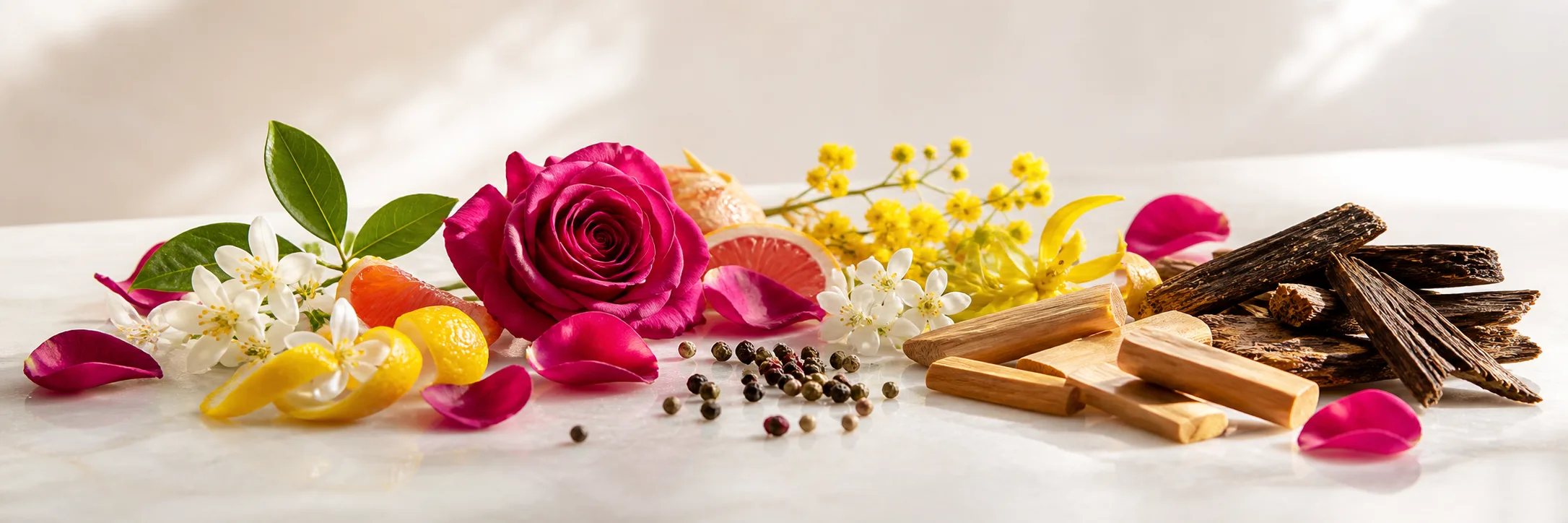
Essence
Jusqu’à toi. P.S. is part of the relaunched Maison D’Orsay’s “states of love” concept - genderless fragrances named like fragments of love letters and signed with the initials of an undisclosed personality (the “P.S.” here functions as that cryptic signature). Created by Nicolas Beaulieu, it is a woody-aromatic centered on a structuring cypress-patchouli-vetiver accord, with a geranium-rose facet modernized by rose oxide and a grapefruit-and-pink-pepper lift. The house frames it as “uncomplicated love”; in the bottle it reads as a dry, green, aromatic woody - closer to a “very expensive shampoo” or upscale shower-gel cleanliness than a heavy perfume.
Scent Profile
The opening is sharp and fresh: grapefruit tang with pink pepper and rose oxide, the latter giving a dewy, slightly metallic rose-petal facet that sits over a prominent geranium. That geranium is the polarizing centerpiece - wearers describe the whole thing as “super aromatic,” dry, green-leaning but stopping short of fully green, with several comparing it to old-school Diptyque aromatics or the scent of an Aesop product. The house’s own perfumer note explains the architecture cleanly: “built around a structuring woody accord of Cypress, Patchouli and Vetiver. Grapefruit accompanies the green and very fresh effect of Vetiver, Rose Oxide modernizes the geranium and Pink Pepper spices up the leaked floral of Magnolia.” In the drydown the Haitian vetiver becomes apparent - warm, dry, earthy - with patchouli underneath. Who What Wear’s review captured the dual character: “whole-heartedly woody, but the rose gives it a darkly velvety twist… Grapefruit, magnolia and geranium give it a floral lift, and vetiver becomes apparent in the dry-down, which is warm, dry and earthy.” A recurring wearer consensus is “soapy/shampoo-fresh,” sometimes likened to Bois Imperial but without going pungent.
Performance
Performance evidence is mixed and limited. The sharpest dissent comes from a detailed wearer who found it “ultra-soft” and “far too weak,” reporting they “can barely smell it after a half hour” and criticizing its weak concentration. Against that, other wearers call it “long lasting” and “year around,” and Who What Wear noted the rose “lingers for hours on the skin.” aggregated wearer scores (a small sample) land around mid-pack for longevity and slightly lower for sillage. The honest synthesis: this is a moderate, intimate performer with real skin-chemistry variance - some get hours, some get a quick fade - and it is not a projection monster. Sample to gauge how it behaves on your skin before committing.
Wearing Context
A genuinely year-round, daytime, unisex aromatic that fits casual, work and smart-casual settings. Its dry green-woody cleanliness reads polished and inoffensive - one wearer memorably called it “ideal for the first meeting with your future mother-in-law,” and another described a “goody-goody,” well-scrubbed impression. The geranium-vetiver dryness gives it a slightly mature, composed character rather than a youthful or sexy one, though the house markets it as flirtatious. As a practical reading: best where you want to smell expensively clean and understated rather than make a statement.
Comparisons & DNA
Within D’Orsay’s own line it sits beside the rosier “R.B.” (Une rose au paradis), and one wearers directly contrasted the two - calling P.S. “the ultra-soft abstract one” versus the bolder R.B. Wearer comparisons reach for green aromatic touchstones: old-school Diptyque aromatics and the Aesop-product accord for its herbal-green cleanliness, and Bois Imperial (Fragrance Du Bois) for the woody-fresh shape (with the note that P.S. stays softer and never turns pungent). The geranium-rose-vetiver triad places it broadly in the modern aromatic-woody fougère-adjacent space. No designer clone or dupe is documented - this is a niche composition without a known mass-market analog.
Reception
Niche and thinly reviewed, but with a clear shape. Praise centers on its uniqueness and polish: “super aromatic,” “unique,” well-blended, an under-appreciated house. The dominant criticism is performance/strength - the most detailed negative review dismisses it as bordering on “a perfume joke” for its weakness, and others note its quietness. There’s also a recurring “it just smells like nice expensive shampoo/shower gel” framing that cuts both ways (charming to some, unremarkable to others). A notable identity wrinkle surfaced in reviews: one wearer reports buying it at the D’Orsay Paris boutique in February 2022, while databases list a 2021 or 2023 date - suggesting the catalog’s 2023 year may reflect a re-release/wider rollout rather than original launch (one source lists 2021). Given the polarization on strength, the verdict is sample-first, not blind-buy - especially for anyone who needs projection.
Versions & Reformulation
There is a dating discrepancy across sources (2021 on wearer reports, 2023 in the catalog and on wearer reports), and a wearer’s 2022 boutique purchase predates the 2023 listing - pointing to a possible relaunch or rollout rather than a reformulation. No documented change to the juice itself. Single composition; offered in 50ml EDP and a 10ml travel format.
Acquisition Notes
Niche-premium pricing, sold primarily through D’Orsay’s own boutiques (Paris, Tokyo) and website plus curated niche retailers (Aedes, Luckyscent, ZGO and similar). Standard size is 50ml EDP with a 10ml travel size for sampling; the brand offers a free sample with purchase and a 14-day unopened-return policy. The bottle is a transparent, refined flacon with an engraved magnetic cap, consistent across the unisex line. All production is in France, and the brand emphasizes responsibly sourced naturals (the materials are credited to IFF’s LMR Naturals). No counterfeit problem is documented for this low-profile house; the practical advice is to use the travel size or a decant to test the divisive strength before buying full size.
Notable Facts & Lore
- The naming conceit is the lore: D’Orsay, founded in 1830 by the dandy Count Alfred d’Orsay around the first couple’s fragrance he created for his forbidden love Marguerite, Countess of Blessington, was revived in 2015 - 2019 by Amélie Huynh.
- Every relaunched fragrance is named after a “clue phrase” - here “Jusqu’à toi” (Until you) - and signed with the initials of a personality whose identity the house says “will never be revealed,” in homage to the lost correspondence between Alfred and Marguerite.
- CEO Amélie Huynh has said “everything we do references the romantic sensibility of Count d’Orsay - from the illicit affair to the sense of carnal desire.” The house glosses the “P.S.” as “Particularly serene.” The perfumer’s own brief describes the structuring cypress-patchouli-vetiver woody accord as the spine, with rose oxide deployed specifically to “modernize the geranium.”