D'Orsay — Vouloir Être Ailleurs C.G.
Essence
Vouloir Etre Ailleurs (“wanting to be elsewhere”), signed “C.G.,” is a linden-blossom soliflore by Olivia Giacobetti, released in 2020 as part of the relaunched Maison D’Orsay. It is one of the rare modern fragrances that is essentially a single-flower meditation: lime-blossom (tilleul) rendered with Giacobetti’s signature transparency, supported by hay, beeswax, and acacia. It is not a wholly new creation but a renamed, lightly modernized re-edition of D’Orsay’s historic Tilleul, first published in 1915. Within the house’s revival concept it is the gentle, tender, nostalgic entry — discreet, sensitive, and reassuring.
Scent Profile
At heart this is a linden-blossom study. Linden is a notoriously “mute” flower whose scent cannot be extracted and must be reconstructed, and the appeal here is how convincingly and gracefully Giacobetti builds that accord.
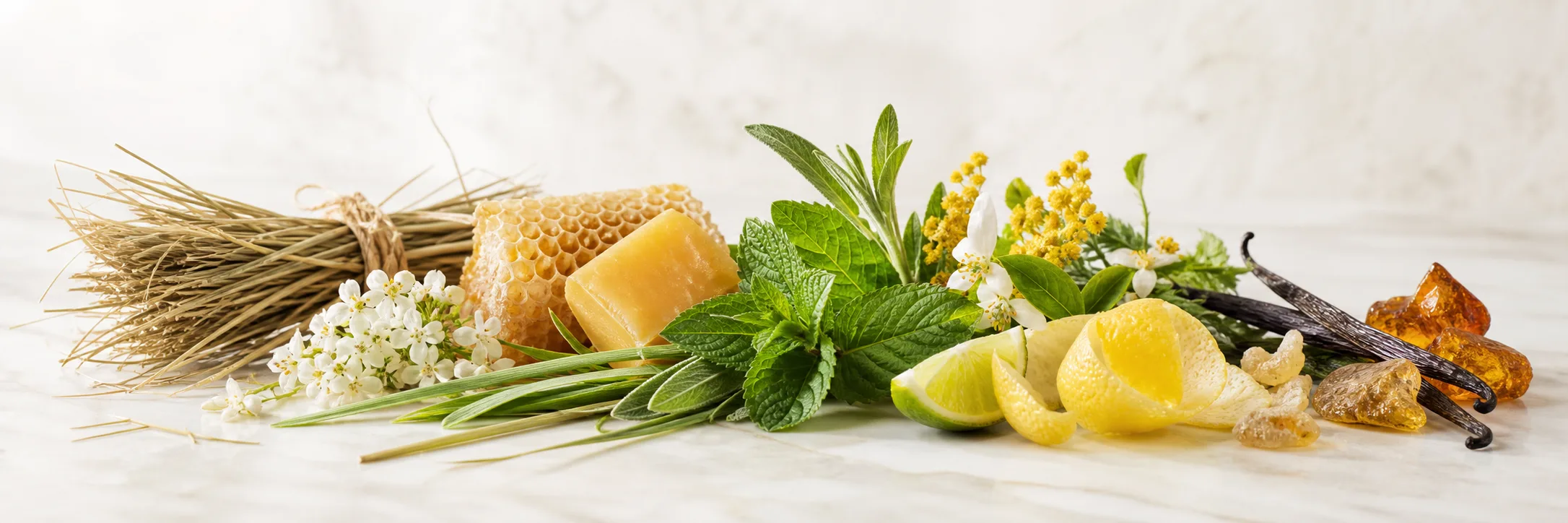
The opening pairs angelica and a green, slightly acidic lemon leaf with the linden, giving a dewy, leafy lift. The heart is the linden blossom itself: golden, polleny, honeyed, and floral-green, rendered with rare realism for the genre.
The base of acacia wood, hay, and beeswax shapes the sweetness into something mellow, mature, and faintly grassy. As one critic put it, the linden takes center stage with honeyed support from acacia and beeswax and a dry grassiness, sweet but not overpoweringly so. The result is creamy, silky, and watercolor-soft, with a mellow woodsy drydown. Experience splits along the hay axis — for most it is spring in a bottle, a midsummer countryside of flowers, leaves, hay, and sunshine; for a minority the hay dominates and tips toward a barnyard memory.
Performance
This is a deliberately quiet, intimate fragrance, and its performance follows from that aesthetic rather than failing it. The ingredient profile signals a soft, transparent floral, and reviewers consistently praise the restraint and delicacy as the point — an antidote to louder contemporary releases. Longevity and projection are modest and close to the skin; its strength comes through quietly, in clarity and intention rather than volume. Anyone expecting a performer should look elsewhere, while anyone wanting a tender personal aura will find it well judged.
Wearing Context
A late-spring and early-summer fragrance above all — linden trees bloom in June and release exactly this honeyed, polleny scent, which is essentially the moment bottled. It is unisex by construction and by the house’s couple-sharing philosophy. The intended mood is nostalgic, soothing, and intimate, framed as transporting the wearer back to age fifteen, and it works best as a calming, soft-focus daily scent for quiet moments rather than occasions. It rewards skin-proximity wear and contemplative settings.
Comparisons & DNA
The most important reference is Giacobetti’s own body of work, placing this alongside her fig landmarks L’Artisan Parfumeur Premier Figuier and Diptyque Philosykos, and her lilac-in-the-rain En Passant for Frederic Malle — all transparent, watery, naturalistic florals and greens. As one reviewer notes, it is unmistakably her style if you know En Passant or Philosykos. Within the linden subgenre the natural comparison is D’Orsay’s own ancestral Tilleul, of which this is the direct descendant, and it ranks among the more convincing linden reconstructions. Within the relaunched line, wearers pair it with the orange-blossom A Coeur Perdu as the house’s two honeyed-floral high points.
Reception
Among niche-floral and Giacobetti followers, reception is enthusiastic and affectionate, even though mainstream coverage is thin. Wearers call it absolutely beautiful, swoon-worthy, and a love-at-first-sniff for linden fans, and it is frequently named the most-recommended linden fragrance in informal polls. The clearest critical note comes from Robin at Now Smell This, who flagged the renaming from the 2008 Tilleul while cautioning that the new version cannot be assumed identical. No dedicated review by Persolaise, Cafleurebon, Bois de Jasmin, or Colognoisseur has surfaced; the most substantive editorial treatment is from the French outlet Nez/Auparfum. The recurring sentiment is affection for its softness, with the only real dissent coming from those for whom the hay note overwhelms.
Versions & Reformulation
The lineage is the genuinely interesting story, and the dates conflict. The house’s current marketing says the 1915 Tilleul was reinvented by Olivia Giacobetti in 1995, while independent sources date her rework to 2008. The discrepancy may be real rather than an error, since D’Orsay was revived several times and a 1990s and a 2008 Giacobetti version may both exist. When the house renamed its catalogue in 2020, the Giacobetti linden became Vouloir Etre Ailleurs. C.G. Asked directly, the brand confirmed it is a re-edition of the old Tilleul without specifying that the formula is identical, and the changed note presentation implies at least a light reformulation. As of mid-2026 the French site appears to be renaming it again as Tilleul d’Ailleurs. C.G., a further twist in an unusually tangled nomenclature.
Acquisition Notes
This is a current-production niche fragrance sold through D’Orsay’s own boutiques and niche retailers as an EDT in 50 ml, plus a 10 ml travel size, with a sample-before-you-commit return policy. Because the name has shifted between Tilleul, Vouloir Etre Ailleurs. C.G., and possibly Tilleul d’Ailleurs. C.G., buyers should match by the Giacobetti linden description and the “C.G.” initials rather than the name alone. Given the modest performance and soft profile, sampling first is especially advisable. There is no vintage-hunting imperative, though those curious about the lineage may seek older Tilleul-labeled bottles for comparison.
Notable Facts & Lore
- The central lore is the “C.G.” secret: the house signs each scent with initials it vows never to reveal, and no credible identification of “C.G.” exists.
- Every D’Orsay scent is dedicated to the founding love story between Count Alfred d’Orsay and Marguerite Gardiner, Countess of Blessington, named like a line from their burned correspondence.
- Confirmed initials elsewhere in the line include L.B. for Lady Blessington and G.A. for Grimod Alfred, Alfred d’Orsay’s original family name.
- Linden is a “mute” flower whose scent cannot be extracted, so every linden fragrance is an act of reconstruction.
- The fragrance bottles June linden-bloom nostalgia, an evocation of distant times and a longing for innocence.