Molinard — Figue Eau de Parfum
Essence
Molinard’s fig - part of the house’s “Les Elements” / “Collection Matieres” line (the catalog dates it 2016; public listings variously list 2015/2016 for the EDP, and there is a separate older/lighter “Figue” and a 1999 “Fleur de Figuier” in Molinard’s catalog, so confirm you’re looking at the Mathieu Nardin EDP, page 41700). The identity that matters: this is a fruit-forward fig, not a leaf-forward one.
Scent Profile
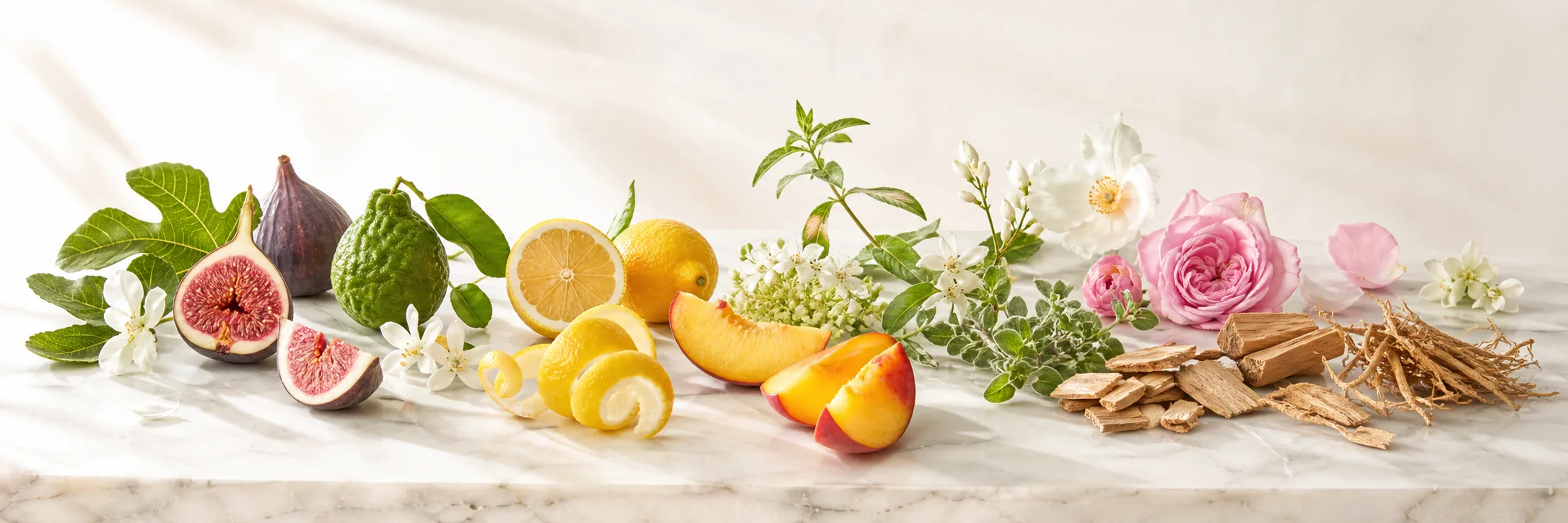
Opens with sun-warmed fig fruit, a sparkle of lemon, and a glint of blackcurrant that gives the fig its juicy, slightly tart sweetness. Then it “breathes green” - fig leaf, sheer florals, a touch of jasmine sambac - before settling onto cedar, musk, and amberwood. The signature, when it works, is a fig-cedar duet: “fresh wood wrapped around ripe fruit.” Notably, several wearers get a creamy, almost coconut-like softness in the drydown (“there isn’t any coconut in this but the dry down is such a beautiful creamy coconut to me”). The big caveat is skin chemistry: a meaningful subset gets little to no fig and instead reads “a strong, soapy citrus with a cedar undertone, barbershop vibes,” or a sharp grapefruit-y bitterness. So the profile bifurcates - for some, lush juicy fig; for others, soapy cedar-citrus. One reviewer pinned the fruit precisely: “a duet of fig fruit and black currant, by no means overly sweet, and interestingly still zero gourmand.”
Performance
Variable and the main weakness. Reports run the full gamut: from a delighted “still projecting after 10 hours,” to “abysmal on my skin, 1-2 hours and it’s completely gone,” to a roll-on version lasting only two hours. The realistic read is moderate longevity with high skin-chemistry dependence, which several wearers frame as acceptable-to-good given the low price (“the only issue is longevity which I can’t complain too much about given the price point”).
Wearing Context
Spring and summer, daytime, unisex - a “very suitable summer accessory to wear at the sea/beach,” fresh and lush. The fruit-forward sweetness reads slightly more conventionally feminine to some (public listings: “this fig is so dry I wouldn’t wear it, as a woman” - an interesting inversion), but the strong cedar-musk base pulls it back toward unisex/masculine for others. A few wearers use it as a soft, relaxing bedtime scent precisely because of its gentle performance.
Comparisons & DNA
This is the most comparison-rich genre in the batch, and the wearers deltas are sharp. Against Diptyque Philosykos (the reference fig): Philosykos is “woody, metallic-milky, introspective and low-sugar,” while Molinard is “a sweet and sparkly floral number” - one reviewer called Molinard “a beginner’s version of Philosykos.” Against Acqua di Parma Fico di Amalfi: similar fruity brightness but Fico has a “crystalline” special quality Molinard lacks, while Molinard offers better longevity and a fraction of the price. The standout value comparison is to Pierre Guillaume / Parfumerie Generale Jardin de Kerylos: a Molinard boutique customer reported the two are “very similar, but the Molinard has much better longevity, and at a fraction of the price.” Also referenced: Hermes Un Jardin en Mediterranee and Un Jardin sur le Nil (Molinard holds its own on quality but lacks their refinement), L’Artisan Premier Figuier, and Ferrari Noble Fig. The synthesis from a fig collector who owns most of these: “I keep coming back to Molinard Figue - calm and contemplative like Philosykos, but bright and refreshing like Fico di Amalfi, while having a personality all its own.”
Reception
Cafleurebon featured it favorably in its “The Three You Should Be Wearing” series - editor Sebastian Jara reviewed three Molinard fragrances and praised Figue’s “juicy pulpy fruit” as “perfect for summer.” The detractor camp is real and vivid - one extended reviewers from someone who grew up under fig trees insisted “it smells nothing like FIG,” reading instead as lost-in-the-fridge grapefruit. So: a beloved budget fig for most, a chemistry-dependent miss for a vocal minority. No major major critic coverage; signal is wearers plus Cafleurebon.
Versions & Reformulation
The catalog identity is muddied by Molinard’s own history: there’s the older 1999 Fleur de Figuier (a green, fig-leaf, oakmoss-inflected EDT from the Fleurs de Provence line - a genuinely different, leafier scent that some prefer pre-reformulation), plus the “Figue” listed variously under “Les Elements” / “Collection Matieres.” The 2020 line redesign re-presented these around “freshness, elements, prestige.” For the Mathieu Nardin fruit-fig EDP (this catalog entry), no specific reformulation is documented, but buyers should be careful which Molinard “fig” they’re actually purchasing - the leaf-forward Fleur de Figuier and the fruit-forward Figue EDP are not the same fragrance. Sold in 75ml (and a roll-on format with notably weaker performance).
Acquisition Notes
The whole pitch is value: this is frequently in the $40-50 range, making it one of the cheapest credible figs on the market and a low-stakes blind buy for fig fans - with the caveat that the soapy-citrus chemistry risk is real, so sampling is genuinely worthwhile here despite the low price. As a current-production Molinard from a Grasse house dating to 1849, sold through its own boutiques and standard retail, authenticity isn’t a concern. If you love the fruit/green side of fig and don’t need beast-mode performance, it’s an easy recommendation; if you’re a Philosykos-style milky-woody-fig person, you may find it too sweet and simple.
Notable Facts & Lore
- Molinard is one of the storied Grasse houses, founded 1849, and home to the 1921 icon Habanita.
- Mathieu Nardin is the documented nose for Figue (the Nardin name is itself perfuming royalty in Grasse).
- The fig genre’s modern prestige is generally credited to Olivia Giacobetti’s work (Diptyque Philosykos, L’Artisan Premier Figuier), which is the lineage Molinard’s fruitier take is implicitly answering at a mass-accessible price.
- The house museum and factory in Grasse remain a tourist attraction, part of why Molinard trades on heritage credibility despite budget pricing.