Molinard — Habanita Exclusive Edition
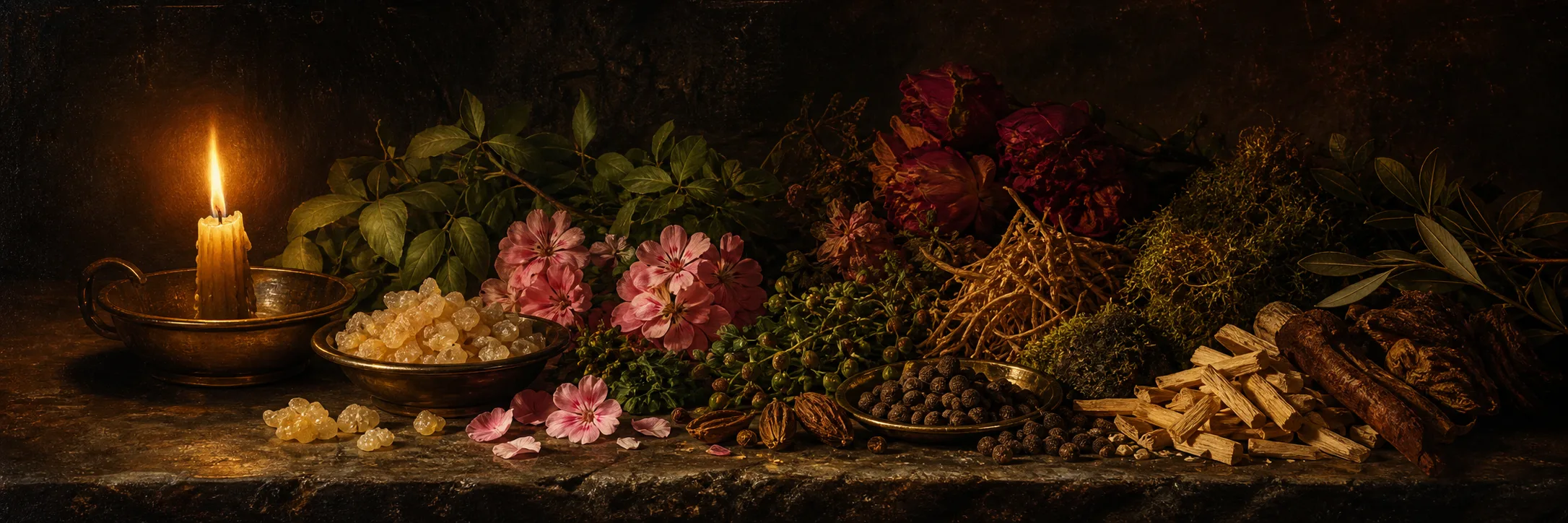
Essence
Habanita Exclusive Edition is a 2019 Eau de Parfum release of Molinard’s legendary Habanita, presented in a gold, “Orient-inspired” bottle aimed primarily at Middle Eastern markets. The catalog files it as feminine, oriental-floral, with a mastic/geranium/ylang/petitgrain top, a powdery-floral-woody heart (heliotrope, mimosa, nutmeg, ylang-ylang, vetiver, cedar, may-rose, jasmine) and a base of vanilla, amber, sandalwood, oakmoss and patchouli - powdery/floral/oriental/amber accords.
Scent Profile
Working from the modern EDP that this edition packages: Habanita’s modern form is a powdery floral-oriental resting, as Luca Turin categorized the scent, on a “vanilla vetiver” accord. The top is dominated by mastic/lentisque - a resinous, green, faintly tobacco-like material - with geranium and petitgrain. As one public listings nose described it: “The mastic comes forward right away, woody, spicy, resinous, perhaps even faintly tobacco-like, though more of a green tobacco. At first there’s a slight peppery impression, which later shifts into something clean, like old-fashioned soap.” The heart is the powdery floral signature: heliotrope and mimosa give the almond-y, baby-powder softness; ylang-ylang, jasmine, rose (may-rose/centifolia in this listing) and nutmeg add warmth and a slight spice. The base is where Habanita earns its “tobacco” reputation without any tobacco: vetiver, vanilla, amber, sandalwood, oakmoss and patchouli combine into what reviewers across decades have described as “talcum-powder tobacco paper.” Now Smell This places its character not as a femme-fatale danger but as comfort - “like being stuck in a cafe in Paris on a cold day, comfortably trapped in a room filled with cigarette smoke, an old lady’s violet-scented dusting powder, and the aroma of buttery baked goods.” Denyse Beaulieu spoke highly of Habanita in her book The Perfume Lover. The modern EDP is generally agreed to be softer, sweeter and less austere than vintage; Candy Perfume Boy described the 2012 EDP as opening “with aldehydes and sweet florals, one could almost mistake it for a Chanel,” tempered by carnation spice, with rose and jasmine in the heart over a comforting, plush warmth.
Performance
Habanita’s longstanding reputation is for tenacity - Molinard’s original 1921 tagline billed it “le parfum le plus tenace du monde” (“the most tenacious perfume in the world”), and the modern EDP lives up to it. wearers owners of the Exclusive Edition specifically pushed back on low-longevity votes: “This is the regular Habanita EDP launched in a new 100 ml bottle with golden design, Who are the stupid cows who voted poor longevity?, Vote when you own a fragrance.” public listings classes the modern EDP’s projection and longevity as above-average. Expect strong sillage and all-day (and onto-fabric) persistence; this is historically a “one small spray on one wrist” fragrance, and over-application is the classic Habanita mistake.
Wearing Context
A powdery oriental best suited to cool weather and evening, with a distinctly vintage, “grown-up” register. Reviewers repeatedly frame it as bold and polarizing - “badass,” “a perfume for a dominatrix,” “Morticia Addams” - but also, paradoxically, comforting and cozy in its powdery-vanilla drydown. It is marketed feminine and the catalog lists it feminine, but it has a strong following among men, with multiple reviewers noting the tobacco/spice/leather-adjacent core “could fit perfectly for men, too.” The Exclusive Edition’s Middle Eastern targeting fits the profile: a rich, powdery, ambery oriental sits comfortably in Gulf taste.
Comparisons & DNA
Habanita is one of the canonical “perfumes for female smokers” and is almost always discussed alongside Caron Tabac Blond (1919) and Robert Piguet Bandit (1944), with Now Smell This judging Tabac Blond the more elegant and Bandit the more willfully perverse, and Habanita the warmer, more playful, more gourmand of the trio. The Scented Salamander pairs it with Guerlain Shalimar (1925) as the two reference orientals of their era, sharing a bergamot-and-powdery-vanilla arc though Habanita is drier. The Raiders of the Lost Scent comparative review grouped it with the “feminine but masculine” classics - Tabac Blond, Bandit, Gres Cabochard, Balmain Jolie Madame - but found it ultimately closest to Dana Tabu. Within Molinard, the Exclusive Edition is one of many Habanita flankers/editions (see below).
Reception
Reception of the Exclusive Edition specifically is dominated by a single, telling controversy: whether it is worth buying at all given it appears to be the standard juice in a new bottle. The most-cited public listings comment is scathing on value: a buyer phoned Molinard, was told “there is no difference in the perfume which is the same, Molinard made this edition for Middle Eastern countries (Arabian), taking nude women out of the bottle,” and concluded “should I pay more for the same perfume in an uglier bottle? No thanks Molinard, I choose the old edition, cheaper and with the MUCH nicer bottle!” A competing retailer-sourced claim held that the Exclusive was “extra oriental” with boosted sandalwood and amber and reduced rose and oakmoss - but the very reviewer who repeated that admitted “the Molinard site itself doesn’t say it is a tweaked version and I can’t tell the two apart.” So the net wearers verdict is: beautiful (or ugly, depending on taste) gold bottle, same beloved/divisive juice, questionable value over the cheaper standard EDP. Habanita itself, by contrast, enjoys deep critical esteem - praised by Luca Turin, Denyse Beaulieu and Barbara Herman as a classic - even as it remains polarizing among casual wearers.
Versions & Reformulation
This is the crux of the entry. Habanita has a long version history: the 1921 original; a documented reformulation in 1988; a 2012 “reinterpretation” Eau de Parfum in a new bottle and stronger concentration (the version most people now buy), which Molinard says contains “the same 600 ingredients as the original, only distributed in different proportions” (a claim corroborated via Osmoz, which notes the 2012 EDP “still features the original 600 ingredients which make up the formula, a new balance was struck”); the 2013 Habanita L’Esprit (a lighter, simplified white-bottle flanker); and the 2016 Habanita La Cologne. The 2019 Exclusive Edition is best understood as a packaging variant of the modern EDP rather than a true reformulation: Molinard’s own copy bills it as Habanita’s “new Orient inspired dress,” and Molinard’s established pattern (eg, a later 2021 red-bottle Anniversary edition described by a wearer reports as “the notes given by Molinard are exactly the same, Not a new fragrance but a superb red bottle”) supports reading the Exclusive Edition the same way. public listing’s two note pyramids do differ slightly (the Exclusive adds ylang to the top, lists may-rose vs. taif rose, and omits musk from the base, and is classed Chypre Floral vs. the EDP’s Oriental), but these appear to be database/listing discrepancies rather than confirmed olfactory changes - there is no official Molinard statement of a reformulated composition, and the customer-service account explicitly denies one.
Acquisition Notes
Given the strong evidence that it is the same juice as the standard Habanita EDP - which Molinard sells new for around €82.50 (75ml) and which historically had a reputation as a bargain classic - the practical recommendation is straightforward: if you want the scent, buy the cheaper, easier-to-find standard EDP; pursue the Exclusive Edition only if you specifically want the gold “Orient” bottle as a collector’s object. Do not confuse it with the separate white-bottle Habanita L’Esprit Edition Exclusive. As with all Habanita, sample before committing - it is genuinely divisive.
Notable Facts & Lore
- Habanita (1921) was created to scent cigarettes, sold as sachets or as a liquid applied with a glass rod, and is widely cited as the first feminine oriental and one of the earliest “tobacco” perfumes (despite containing no tobacco) - its name nods to Havana cigars and the flapper-era women who smoked them. - The 1924 perfume version was housed in a Lalique bottle decorated with nymphs; the 2019 Exclusive Edition’s defining change is the removal of those nude female figures, swapped for a gold “Orient-inspired” design for Gulf markets. - Molinard markets Habanita as containing more than 600 ingredients; the figure is a long-standing house claim repeated across editions and should be treated as heritage marketing. - Luca Turin categorized Habanita as a “vanilla vetiver”; the perfume’s “tobacco paper” character is widely attributed to its unusual vetiver-vanilla interplay rather than any actual tobacco note. - Molinard has operated from the same Grasse perfume factory since 1900, a building associated with Gustave Eiffel - a piece of house lore frequently cited in Habanita writeups.
- The Exclusive Edition itself has no documented perfumer (the catalog correctly lists perfumer as unknown).