Molinard — Nirmala Limited Edition
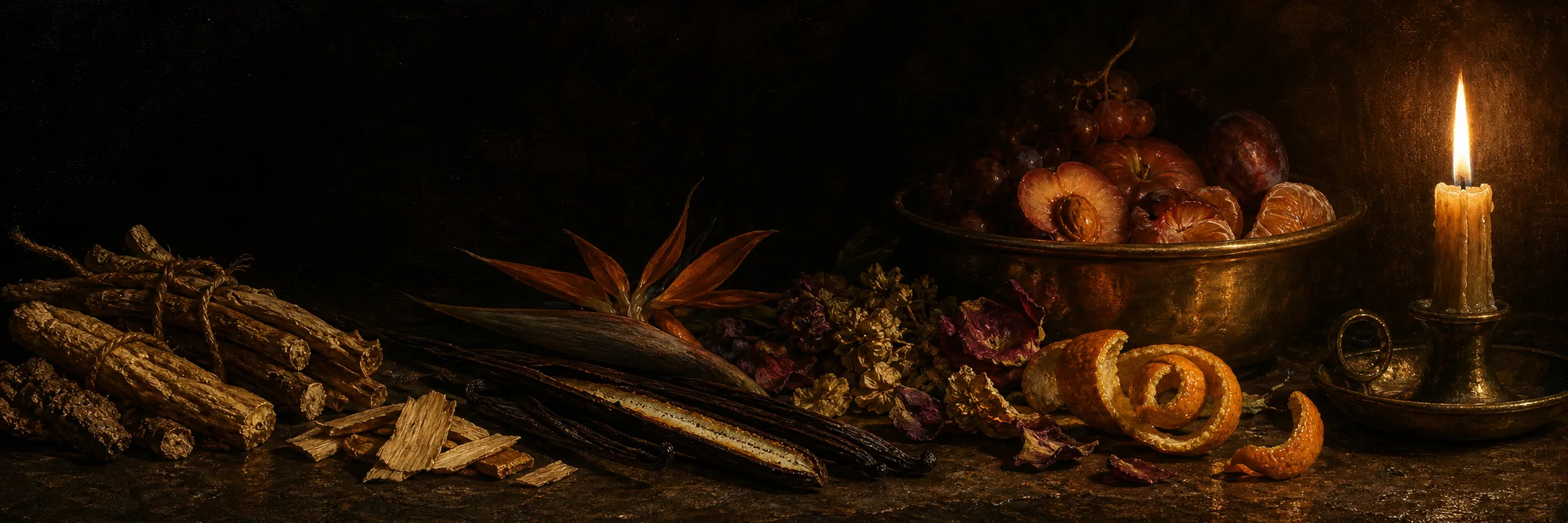
Essence
Nirmala Limited Edition (2011) is a special lacquered, brightly colored re-issue of Molinard’s long-running Nirmala, a floral-fruity scent the Grasse house has carried in various forms since 1955. In plain terms it’s a juicy tropical-fruit-and-jasmine sweet floral with a warm vanilla-tonka-woods base - the fragrance most famous for being compared to (and litigated against) Thierry Mugler’s Angel.
Scent Profile
The opening is a bright, sparkling burst of passion fruit, grapefruit and mandarin - sweet, juicy tropical fruit that several wearers find genuinely vivid and summery, though a vocal minority get a sour, sweaty, “chloride/bleach-into-cumin” or body-odor effect from the fruit-and-indolic-jasmine clash. The heart brings jasmine and strelitzia (bird-of-paradise), and the drydown settles into vanilla, tonka bean, sandalwood and cedar - warm, sweet, faintly powdery. The signature impression is “Angel minus the patchouli/chocolate,” sometimes layered with a Lancome Hypnose-like clean sweet vanilla. Linearity: it moves from fruity-sour top to sweet-woody base but the fruit dominates the identity throughout.
Performance
Multiple reviewers single out unusually good longevity even on skin types that normally eat fragrance, and several report compliments. Best in spring/summer per repeated wearers notes (the fruit “sparkles” in warmth), though some wear it cool-weather as a cozy sweet floral.
Wearing Context
A youthful-leaning but not juvenile sweet fruity-floral, worn day or evening; wearers framing ranges from “flirty sweetness for a warm summery day” to a Mugler-style statement scent. Social perception is polarized at the skin-chemistry level: on some it reads delicious, tropical and musky-feminine; on others it famously turns to “tropical deodorant on a sweaty armpit.” Sample on skin before committing.
Comparisons & DNA
The defining comparison is Mugler Angel - Nirmala is repeatedly described as Angel without the patchouli-chocolate, with the fruit (especially passionfruit) amped up. This is not coincidental: a documented Mugler-vs-Molinard dispute centered on Nirmala as an affordable Angel smell-alike (Mugler’s client-card system surfaced customer complaints about the cheaper look-alike). Molinard’s defense - that a fragrance named Nirmala existed in their catalogue from 1955 - is itself complicated. Perfume historian Elena Vosnaki’s public listings investigation, “Fragrance Sleuthing: The Three Faces of Nirmala (Mugler vs.
Reception
wearer reports is broadly positive among the fruity-floral and Angel-adjacent crowd, with strong loyalty (“can’t imagine how I lived without it”) and repeated praise for value and longevity. The consistent criticism is the divisive opening - the sour/BO/cumin facet that makes it explicitly not a safe blind buy for some skin types. There is no major critic review of the Limited Edition specifically located in Documented sources, though public listing’s editorial “Three Faces of Nirmala” feature provides serious historical context. Blind-buy verdict: risky - the love-it-or-loathe-it fruit means you should sample, but Angel fans tolerant of indolic sweetness will likely enjoy it and the price is friendly.
Versions & Reformulation
Nirmala has a tangled lineage: a 1955 original (per Vosnaki’s research, not a single fixed scent but evolving across phases), modern fruity reformulations dated variously to the 1990s/2003, the 2011 Limited Edition (lacquered colored bottle, the subject here), a 2015 Baccarat “diamond” bottle edition, and a 2017 cosmetic re-bottling (diamond-cut flacon, plum bow) that also shifted some listed notes (adding mango/hibiscus). wearer reports report the scent itself has been broadly consistent across recent bottle changes (a forum consensus that the change was “only the bottle”), but the historical record shows the juice has genuinely changed across the decades. The 2011 LE differs from the standard chiefly in presentation; its note list (passionfruit/grapefruit/mandarin; jasmine/strelitzia; vanilla/tonka/sandalwood/cedar) is slightly leaner than the standard’s mango/pomelo-inclusive pyramid.
Acquisition Notes
Documented sources don’t establish counterfeit-risk specifics or batch codes for the LE. Buyers chasing the 2011 lacquered bottle will find it secondhand; those who simply want the scent can buy current Nirmala. Note the recurring buyer confusion between bottle versions documented on public listing’s forums - confirm which presentation you’re getting.
Notable Facts & Lore
- The Nirmala/Angel rivalry is the lore centerpiece: Molinard Nirmala became a celebrated affordable Angel alternative, prompting a legal/commercial clash with Mugler (then Clarins-owned), with the twist that the vintage 1955 Nirmala did not consistently smell like the modern fruity version.
- Molinard itself is one of the oldest continuously family-run perfume houses, headquartered in a Grasse factory whose building is associated with Gustave Eiffel - house lore frequently cited in coverage.
- The brand’s marketing frames Nirmala around a “legendary goddess” and an Indian-inspired romantic narrative.