Serge Lutens — Chêne
Essence
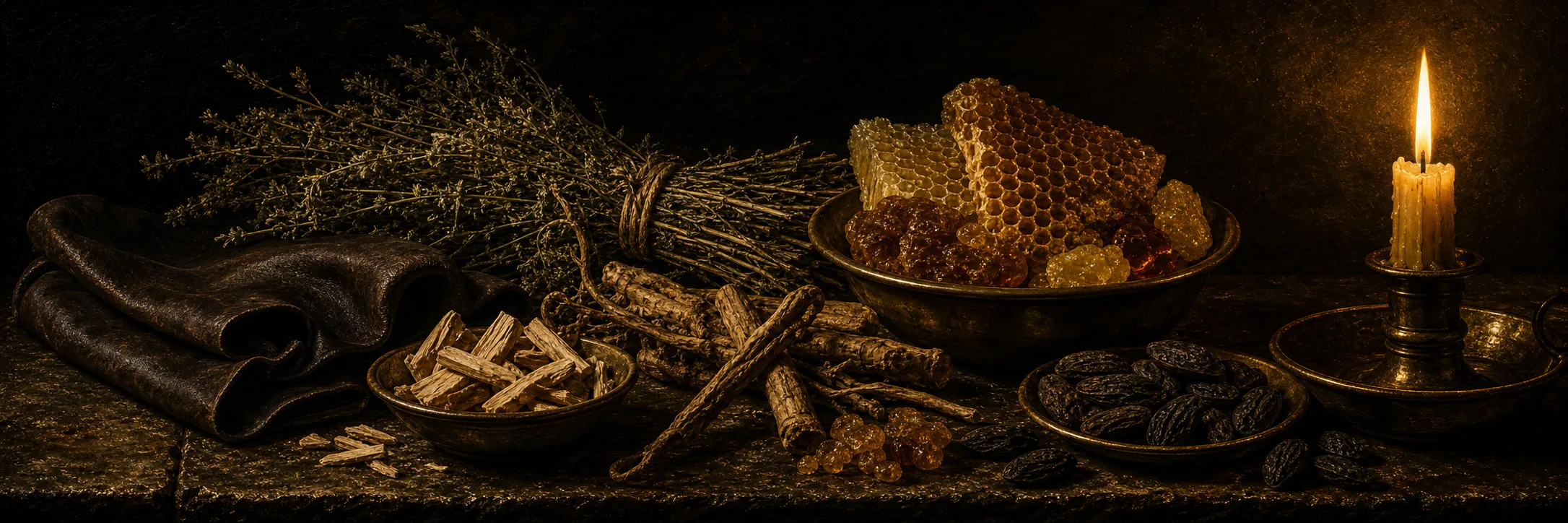
Chene (“Oak” in French) is Lutens’s attempt to bottle the smell of oak - specifically, oak as imagined through the lens of cognac casks, aged rum, beeswax, and damp forest floor. It is woodier than Cedre, drier than Chergui, boozier than almost anything else in the Lutens line, and reads as a remarkable evocation of cut oak with thyme, immortelle, and a sweet alcoholic warmth woven through. Among the eight fragrances here, Chene is the most divisive on the woody/aromatic axis: cult favorite for autumn-and-forest perfume lovers, dismissed by Turin with the harsh “pencil shavings” tag.
Scent Profile
The opening ten minutes are dominated by green-herbal thyme and a strong, almost sappy fresh-wood accord - most wearers immediately register “freshly cut wood” or “sawmill” before any other note. Some find a bitter vegetal edge (a top-rated wearers review compares it to “dark green thyme leaves sprinkled in bitter plant juice or perhaps cough syrup”); others find it invigorating and naturalistic. Almost simultaneously, a boozy lift comes through - rum absolute, used by Lutens (per the brand’s own copy) to “recreate” the oak note since real oak essence is impractical to extract.
Performance
Projection is moderate for the first hour and then drops fast - Chene becomes close-to-skin within two hours and stays there. Longevity on skin is solid 7-9 hours but mostly as a quiet skin scent after hour 3. On clothing it persists much longer. Behavior in heat: amplifies the rum and immortelle, can feel cloying; in cold, the woods and thyme dominate and the perfume sings. Dry weather suits it better than humid (the herbal notes need air). Best application: skin spray, 2-3 sprays. Spraying on a scarf or coat lapel works well in autumn - the woody-boozy character clings beautifully to wool.
Wearing Context
Autumn is the ideal season - reviewers repeatedly call Chene “autumn in a bottle.” Works in winter (especially cool, dry days) and shoulder-spring. Times of day: late afternoon through evening. Settings: country settings, fires, libraries, dinners, outdoor walks in cool weather. Lutens devotees consider it a near-religious autumn fragrance.
Comparisons & DNA
- Tauer L’Air du Desert Marocain - overlapping immortelle/desert-warm-spice territory; Tauer is drier and more incense-led where Chene is wetter and more cask-led.
Reception
Reception is sharply divided. wearers treat Chene as one of the most distinctive autumn fragrances ever composed; detractors find it medicinal, harsh, gourmand-uncanny, or simply “pencils.” The polarization is structural - the rum-immortelle-cedar combination either reads as cognac-in-an-oak-cabin (the lovers’ interpretation) or as a fenugreek-and-pencil concoction (the haters’). recurring comments include “Autumn in a bottle” and the suggestion that “this should be called Angel’s Share,” while dissent includes the sharpest dissent: “Now I remember why I never bothered with this one… smells like nothing found in nature.”
Versions & Reformulation
Launched in 2004 as a Palais-Royal exclusive bell jar (75 ml). Periodically released in the 50 ml export rectangular bottle and later in the Gratte-Ciel 100 ml flacon during the 2018 collection re-organization. As of 2024-2025 it has been moved back to bell-jar exclusive at sergelutens.eu, listed at 260 for 75 ml in the Flacons de Table collection. The various bottle formats are reported to differ subtly - collectors report the 50 ml export from the late 2000s as more vivid than recent batches, but there is no formal documented reformulation. Single concentration, EDP. The Gratte-Ciel bottle is currently a collector item since it’s been discontinued.
Acquisition Notes
Availability varies by market; sample before buying when possible.
Notable Facts & Lore
- Lutens’s own framing of Chene is the most charged of the eight fragrances here.
- The brand text on sergelutens.com reads: “The French Revolution not only cut off the king’s head, but cut down the emblematic oak…
- By inference, the king of trees.“ The conceit is that France’s great oaks were felled during the Revolution and Lutens has used rum absolute to “recreate” the lost oak note.
- Whether or not historical oak deforestation actually corresponds to that romantic framing - French naval needs, not the Revolution per se, drove the historic deforestation - the conceit gives the perfume its character: oak as a memory rather than a material.