serge-lutens — Five o'Clock au Gingembre
Essence
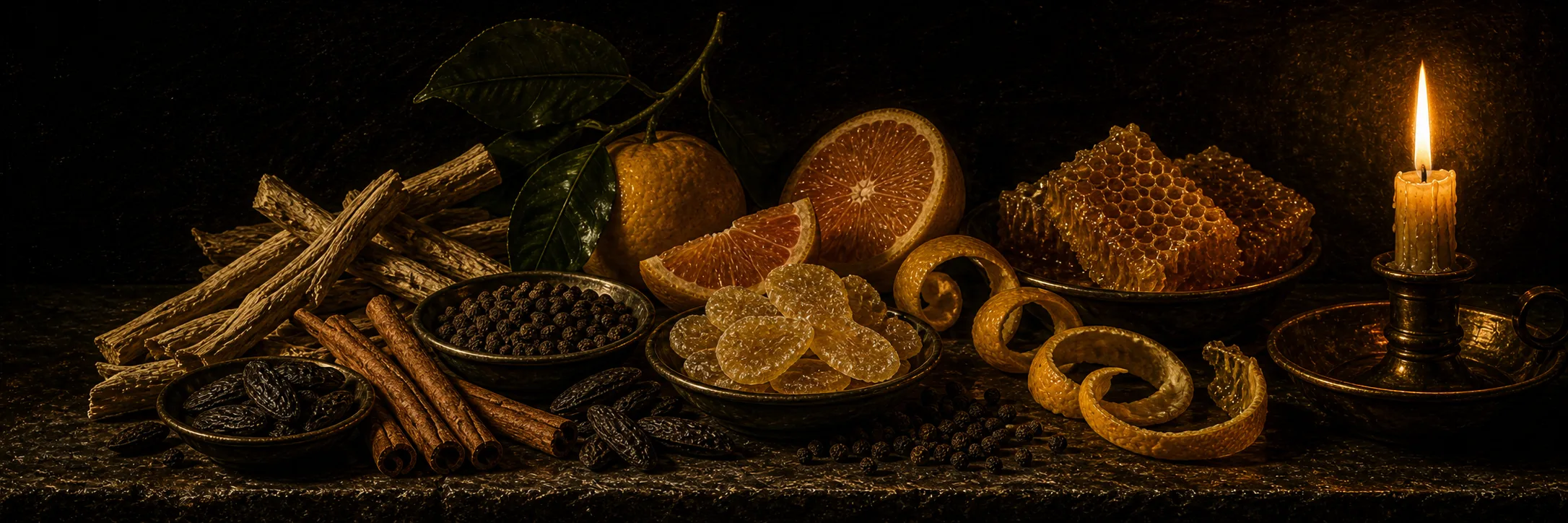
A spiced English tea-time rendered as perfume: candied ginger, Earl Grey-adjacent bergamot, cinnamon, honey and a whisper of cacao set over dry cedar and patchouli. Among the easiest, most universally wearable scents in the Lutens catalogue - neither the dark, fruited-amber baroque of the early Palais Royal years nor a typical “weird” Lutens - it is a tea-and-gingerbread gourmand that refuses to go sticky. Many house fans regard it as the gateway Serge for people who find the rest of the line “too much.”
Scent Profile
The opening reads like the first sip of a freshly brewed pot of strong black tea with a slice of crystallised ginger on the saucer. Bergamot is sharp but quickly subsumed by a peppery, root-ginger bite - closer to fresh raw ginger than to the sugared confit at first, before honey and cinnamon round it into the candied register. There is a fleeting hesperidic shimmer in the first ten minutes that has been compared by reviewers to Earl Grey because the bergamot-coumarin axis here behaves the way tea fragrances often do; there is no actual tea absolute that registers as a separate note, but the illusion of black tea is convincing.
Performance
Performance is the soft underbelly of this fragrance. Projection is moderate in the first 60 minutes - close enough that it never offends, far enough that someone in arm’s reach will register it - then settles to a tight, skin-hugging aura. Sillage is modest; this is not a clothes-trail scent. Longevity is acceptable rather than impressive: 5-7 hours on skin is the consensus on wearers and wearers, and Lutens veteran Portia at Australian Perfume Junkies, comparing a new bottle to a prior one in 2017, noted the heart “seems just a little flatter and less vivacious.” It performs best in cool, dry autumn and winter conditions. In heat and humidity the ginger sharpens and the honey can turn slightly waxy. Skin holds it longer than the spray ghost on a shirt collar. Three to four sprays to the neck and chest works; over-spraying does not push it louder, only makes the opening cinnamon-pepper more aggressive.
Wearing Context
This is an autumn/winter scent first and foremost - the gingerbread/biscuit-tin association does not read in midsummer - but its modest sillage means it works year-round in air-conditioned interiors. It is among the most office-safe Lutens releases, and that is part of its identity: many enthusiasts who find Fumerie Turque or Muscs Koublai Khan impossible at work reach for this exact bottle. Best worn 9-to-5 in colder months, or evenings to dinners and quiet gatherings where you want sophistication without dominance. It falls flat at a club or a sweaty summer party; the ginger gets steamrolled. Social-perception skew is mildly masculine to neutral on most skins; women report a more lemony-spicy reading early, men a deeper woody-spicy drydown. It pairs well with knitwear, tweed, and library hours; it actively clashes with linen and bright sunshine.
Comparisons & DNA
Closest references inside the Lutens portfolio are Chergui (2001) and Feminite du Bois (1992): Chergui is the syrup-tobacco-honey version of similar warmth, sweeter and stickier, with no real ginger; Feminite du Bois the cedar-plum spine without the spice. Borneo 1834 sits in the same Sheldrake biscuit-cocoa axis but pushes the cacao much further. The most-cited cross-house comparison is L’Artisan Parfumeur Tea for Two (Olivia Giacobetti, 2000) - louder, smokier, more lapsang, bigger on cinnamon - and many members describe Five o’Clock as a refined, drier sibling. Burberry London for Men (2006) shares the spice-cedar-cocoa shape at a designer price; Comme des Garcons CDG2 (1999) sits adjacent in the dry-spicy axis. Byredo Eyes Closed, mentioned by users, is a warmer, more feminine ginger-cinnamon alternative. There is no widely-discussed Armaf/Lattafa/Maison Alhambra clone - the niche-house Arab clone industry has largely ignored this composition, presumably because the original is itself restrained and the ginger-cedar-tea brief lacks the showy “compliment magnet” payoff cloners target.
Reception
Reception on reception is warmly positive: this is consistently named among the most wearable, most universally liked Lutens releases. Praise centres on (a) the convincing candied-ginger note, the most realistic in mainstream perfumery; (b) the office-safe restraint that does not feel boring; (c) the comfort-without-cloying balance. Criticism centres on (a) modest performance, especially on dry skin; (b) the suspicion of post-Shiseido-era reformulation having dulled the heart; (c) some reviewers find the heart “too herbal/astringent” and headache-inducing. Mark Behnke at Colognoisseur calls it “a more formal version of tea and gingerbread… high tea in a salon decorated for the holidays. The pot of Earl Grey tea is steeping right next to cakes fresh out of the oven… M. Sheldrake has created a gingerbread perfume as fragile as a crystal tree ornament.” Persolaise has been less vocal on this specific release. Polarisation is mild - most negative reviews dismiss it as boring rather than offensive. Blind-buy verdict: among the safer blind buys in the Lutens catalogue if you like spice/tea/gingerbread genres; a poor blind buy if you expect typical Lutens drama.
Versions & Reformulation
Five o’Clock au Gingembre was launched in 2008 in the Collection Noire export bottle (the rectangular flacon). It was briefly listed as discontinued from US distribution circa 2013 (covered extensively on Kafkaesque, who flagged a fire-sale at FragranceNet and Barneys) before being reinstated. The current bottle is the tall, slim Collection Noire format. Long-time wearers describe the heart as less intense than earlier batches - a subtle reformulation, never officially acknowledged. Serge Lutens himself in a 2011 wearers interview indirectly conceded that many older fragrances have been adjusted. No concentration variants - EDP only.
Acquisition Notes
Availability varies by market; sample before buying when possible.
Notable Facts & Lore
- Lutens’ own copy frames the fragrance as “Tea at Buckingham Palace…
- Centred on candied ginger, this fragrance is a ritual ceremony.
- It caters to the quicksilver in us, to our imagination dressed in white gloves.“ The Anglophile framing is unusual for a house steeped in Moroccan and Levantine imagery; this is Lutens’ explicit gesture toward an English mode, and arguably the only one in the catalogue.
- The fragrance is the source of one of the more durable collector in-jokes: a brief 2013 US-export discontinuation prompted bulk-buying and panicked discussion, before quiet reinstatement made the panic look foolish.
- It is the most-worn Lutens in the rotation of multiple veteran bloggers (Portia at APJ explicitly calls it “my all time most worn Serge Lutens fragrance”).
- Sheldrake has not given a dedicated interview about it; the fragrance was developed during the same productive Sheldrake-Lutens late-2000s stretch that also produced Mandarine Mandarin (2007) and its structural cousin Borneo 1834.
- There is no significant celebrity association and no viral TikTok moment - it remains a knowing enthusiast’s pick rather than a hype scent, which is part of why its devotees defend it so fiercely.