Acqua di Parma — Blu Mediterraneo Bergamotto di Calabria
Essence
Bergamotto di Calabria is a near-soliflore study of one ingredient: the bergamot of Calabria, the same fruit that is the structural backbone of essentially every classical eau de cologne in Europe. Released in 2010 as a late, mature addition to the Blu Mediterraneo line, it is widely regarded as the most refined bergamot-forward fragrance in commercial perfumery - a confidently minimal composition that strips the cologne formula down to its raw material. The premise is the bergamot peel itself: bitter, green, faintly floral, almost confrontational in its quietness. It smells like the fruit, not a perfume made of the fruit.
Scent Profile
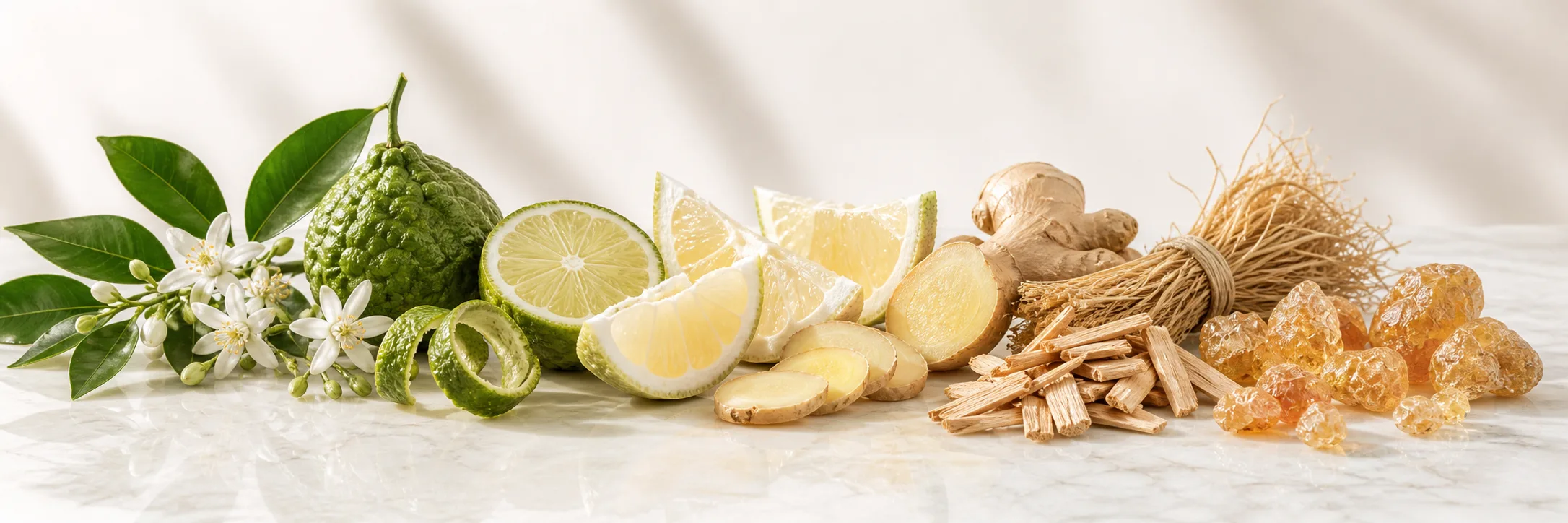
The opening is the most photographically accurate bergamot in mainstream perfumery, and it lands hard for thirty seconds: a glistening, bitter-sweet citrus zest with a faint floral suggestion underneath (the neroli-adjacent facet that bergamot has when fresh). Citron flanks it with a slightly more pithy, lime-adjacent tang — sharper and less aromatic than the bergamot itself. The first ten minutes are essentially “whole fruit” rather than “juice”: you get the rind, the oil glands bursting, a hint of leafy green from the peel’s natural petitgrain character. Multiple reviewers reach for the same phrase — “like a ripe orange picked off a leafy tree” or “smells like the fruit you’re holding in your hand” — which captures the photorealism better than any pyramid description. The heart (roughly thirty minutes to two hours) is where the supporting cast quietly steps in. Ginger is listed but is the most contested element among wearers — some get a soft, fresh-ginger snap that adds dimension, others detect none at all and describe a smooth, faintly woody transition. Cedar pulls in a dry, pencil-shavings woodiness that contextualizes the citrus and stops it from feeling like cologne water. The “flowers” entry is non-specific and reads as a clean white-floral wash rather than a discrete jasmine or neroli — it functions as a softener, not a feature.
Performance
Performance is the line’s recurring liability and Bergamotto di Calabria is among its more honest demonstrations. Projection is moderate for the first ten to twenty minutes (notable in still air at conversational distance), then drops sharply to intimate by the forty-five-minute mark. Sillage is brief and modest — you will not turn a room. On skin, longevity is typically three to five hours of perceptible scent, with the last hour or two being skin-scent. On clothing it lingers six to ten hours, sometimes detectable the next morning on cotton.
Wearing Context
Native settings: hot mornings, summer days, business-casual office environments where a fragrance that goes unnoticed by others is a feature rather than a bug, post-shower freshening, light-suit-and-loafers contexts, terraces, gardens, Mediterranean travel. It is perhaps the single most appropriate cologne in the line for “boardroom in July” — refined, undemanding, expensive-smelling without performing for the room. Where it falls flat: evenings, cold weather, any setting requiring projection or “fragrance presence,” and clubs/bars where it will be obliterated within minutes.
Comparisons & DNA
The most cited reference point is Le Labo Bergamote 22, the niche bergamot benchmark. Bergamote 22 is brighter (more grapefruit-driven), louder, and resolves into a more interesting vetiver-driven drydown that gives the wearer a “second chapter”; Bergamotto di Calabria smells more like the actual fruit and is sheerer, simpler, more photographic. Bergamote 22 lasts considerably longer. Several wearers and wearer discussions reviewers explicitly note: if you want one bergamot that does everything, Bergamote 22; if you want the fruit itself, Bergamotto di Calabria. Dior Homme Cologne (2013/2020) is the second canonical comparison — a brighter, more “iced lemonade” bergamot with the famous powdery iris underbody.
Reception
Consensus: this is the line’s connoisseur pick — less popular than Fico di Amalfi, less iconic than Arancia di Capri, but the most artistically respected of the Blu Mediterraneo citruses. On wearers, the realism praise is nearly universal. Reviewers reach for “photoreal,” “natural,” “the actual fruit,” “least chemical-smelling citrus I’ve encountered. “ Praise concentrates on: opening quality, ingredient purity, the rare floral-leafy nuance under the peel, unisex wearability, and the rare achievement of doing very little extremely well.
Versions & Reformulation
The original 2010 Bergamotto di Calabria EDT is the standard composition and has remained substantially consistent across batches, though some users note a recent reduction in the green-floral nuance in newer batches (anecdotal; not house-confirmed). Bergamotto di Calabria La Spugnatura (limited edition, multiple releases since 2017) is the principal variant — a richer, slightly fuller-bodied EDT named after the hand-pressed extraction technique. It is less a reformulation and more a deluxe parallel; the standard EDT remains the catalog mainstay.
Acquisition Notes
Pricing position: upper designer / entry niche, identical to the rest of the Blu Mediterraneo line. Retail is approximately USD $145 / 75 ml and USD $225 / 150 ml at Acqua di Parma boutiques, Nordstrom and Saks; discounters (FragranceNet, Jomashop, Notino) cut 30–40%, with 150 ml testers commonly available around USD $90–110 — a notably better value than the smaller sizes.
Notable Facts & Lore
- The perfumer for the 2010 Bergamotto di Calabria EDT is not publicly attributed in mainstream databases.
- The fragrance was launched as part of Blu Mediterraneo’s continued geographic expansion — by 2010 the line had moved through Sicily (almond/orange), Tuscany (cypress), Capri (orange) and Panarea (myrtle), and Calabria — home to roughly 90% of the world’s bergamot production — was the logical next chapter.
- Calabrian bergamot is one of the most economically valuable single-region citrus crops in the world and the dominant source for the bergamot oil used across perfumery (it is the keystone of Earl Grey tea, virtually every classical cologne, and Chanel No. 5’s opening).
- For an Italian luxury house to dedicate a soliflore to it was, in 2010, both an obvious and a quietly defiant move — a single-ingredient composition at a moment when designer fragrance was trending toward gourmand and oud-heavy directions.
- The La Spugnatura editions explicitly reference the traditional artisanal extraction method still practiced in Calabria, where the bergamot peel is pressed by hand against natural sponges to capture the essential oil without heat damage — a marketing emphasis on terroir and craft consistent with Acqua di Parma’s broader positioning under LVMH.
- Bergamotto di Calabria has no significant celebrity association, no major TikTok virality (the influencer hype in this line concentrated on Fico di Amalfi), and no controversies.