Acqua di Parma — Osmanthus Eau de Parfum
Essence
Osmanthus is Acqua di Parma’s 2019 take on the osmanthus flower, part of the house’s “Signatures of the Sun” collection that builds each fragrance around a single precious ingredient. It opens with the bright neroli-and-citrus signature the Italian house is known for, then turns somewhere unexpected: an apricot-and-suede osmanthus given a leathery, almost animalic depth. Luminous and recognizable up top, darker and more textured underneath, it is a more adventurous composition than the brand’s usual citrus-cologne template.
Scent Profile
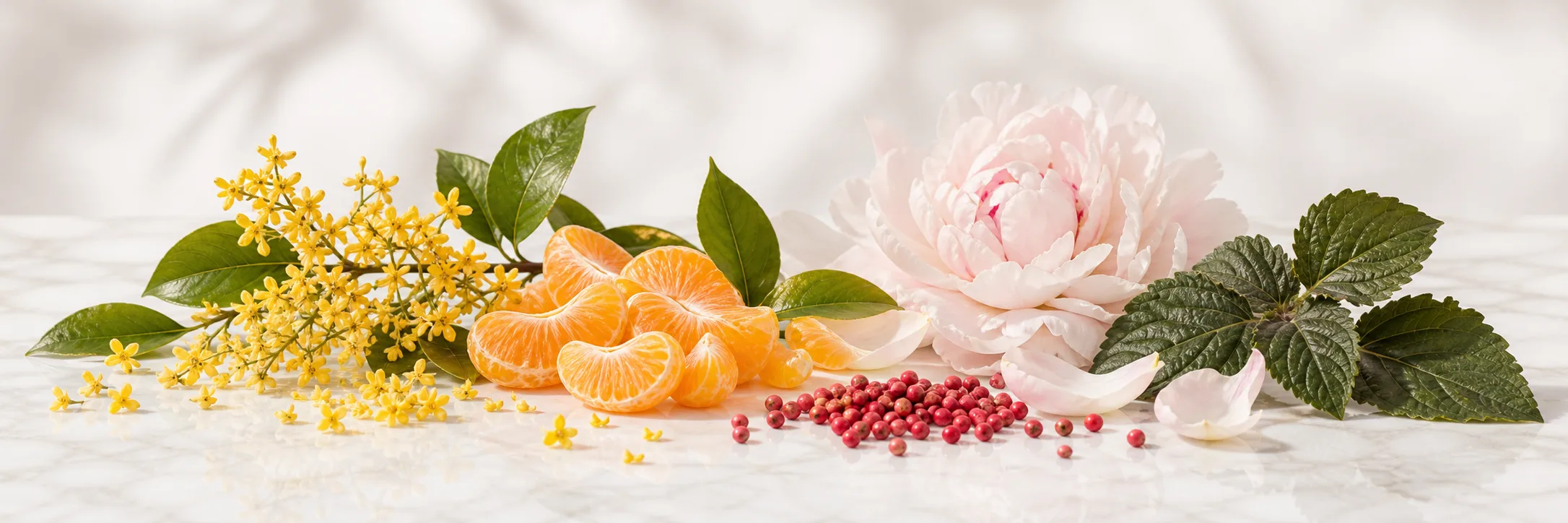
The opening is classic Acqua di Parma: sparkling neroli and green mandarin, citrusy and spritzy, with some wearers catching a faint aldehyde fizz that recalls the house’s 1916 Colonia heritage. What makes it unusual for the brand is that osmanthus, not pure citrus, is the destination.
The heart turns drier than expected. Peony reads as crisp rather than lush, pink pepper adds a tannin-like edge, and musky ambrette rounds the transition. It is a restrained, slightly tart middle that keeps the composition from tipping sweet.
The base is where osmanthus takes over and the fragrance shows its real character. The flower’s glossy apricot and peach-jam facet is present but deliberately darkened to highlight its dryness, and its natural leather facet is pushed toward something fur-like and golden, surprisingly animalic for a sunny floral. Patchouli adds an earthy, slightly syrupy anchor, and a transparent green-tea nuance threads through from the neroli before the drydown thins into soft, watery tones. The overall shape is a fruity-floral with a leathery-woody shadow rather than a sweet soliflore.
Performance
Performance is the fragrance’s weak point and its most consistent criticism. Longevity is short — many wearers report roughly two to four hours on skin, with moderate, intimate sillage that stays close. It tends to cling to clothing better than to skin, so spraying fabric and budgeting for reapplication both help. One reading frames the brevity as a deliberate consequence of Acqua di Parma’s blending style, which leans less on heavy synthetic fixatives, but in practice it asks the wearer to accept frequent touch-ups.
Wearing Context
Spring and summer daytime is the natural home. It reads fresh, luminous and sunny, inoffensive and easy to wear, and is comfortable in casual-to-smart settings and the office. Officially unisex, it skews slightly feminine to some noses, though several men wear and enjoy it as a floral that does not read borrowed-from-a-partner. Because it fades quickly, it suits situations where you can refresh better than a long formal event.
Comparisons & DNA
ADP’s Osmanthus sits at the darker, more leathery end of the osmanthus genre. Hermes Hermessence Osmanthe Yunnan is the tea-like benchmark by Jean-Claude Ellena — lighter and more transparent where ADP is fur-lined. Ormonde Jayne Osmanthus (Geza Schoen) goes the aquatic route with pomelo and water-lily and lasts noticeably longer. Atelier Cologne Gold Leather shares the golden, fur-like musk that ADP leans into. For a brighter, more open-faced osmanthus the genre points to Etat Libre d’Orange Dangerous Complicity, which throws ADP’s drier, animalic angle into relief. Across the board, ADP’s distinguishing move is the house’s citrus signature stamped over a leathery fruity-osmanthus core.
Reception
Reception is warm but qualified. Wearers consistently praise it as gorgeous, luminous and expensive-smelling, a genuine and recognizable osmanthus carrying the unmistakable Acqua di Parma signature; one long-time owner calls it among the finest, most cinematically lush florals they have encountered. The recurring criticism is weak longevity and the price-to-performance gap it creates, and a minority find the osmanthus muted or read the whole thing as a generic floral. The clear axis of disagreement is philosophical: those who accept the fade as the cost of the craft versus those unwilling to pay luxury prices for a short wear. Value sentiment leans firmly toward buying it discounted.
Versions & Reformulation
This is a single composition with no documented reformulations. It belongs to the “Signatures of the Sun” collection, where brighter scents like Osmanthus appear in clear art-deco bottles and heavier scents in darker glass. A few sources loosely file it under the house’s “Le Nobili” line, but the brand and current consensus place the 2019 EDP in “Signatures of the Sun.” No concentration variants beyond the EDP are documented, though the scent anchors a full ancillary range including body cream, hand cream and a diffuser.
Acquisition Notes
This is a luxury-tier fragrance, offered in 20ml, 50ml, 100ml and 180ml EDP in the house’s signature art-deco bottle. Full retail runs steep, roughly $267 to $486 across the larger sizes, but it is discounted often enough that the practical advice is to buy it below list. Samples and decants are widely available and a sensible first step given the performance reputation. Acqua di Parma publishes a full official ingredient list for the fragrance.
Notable Facts & Lore
- It is part of “Signatures of the Sun,” Acqua di Parma’s collection built to spotlight one precious ingredient per fragrance in a sun-drenched register.
- The brand’s framing leans on botanical romance: the tiny, intensely scented osmanthus blossoms of Southeast Asian rock forests said to bloom for a single day.
- Acqua di Parma does not disclose its perfumers, and Osmanthus is no exception — no nose is officially credited.
- Critic Eddie Bulliqi read the composition as smuggling genuine animalic, fur-like leather into what looks on paper like a sunny fruity-floral, a quiet subversion of expectations.
- The osmanthus anchors a full ancillary range, from body and hand creams to a home diffuser.