Acqua di Parma — Note di Colonia III
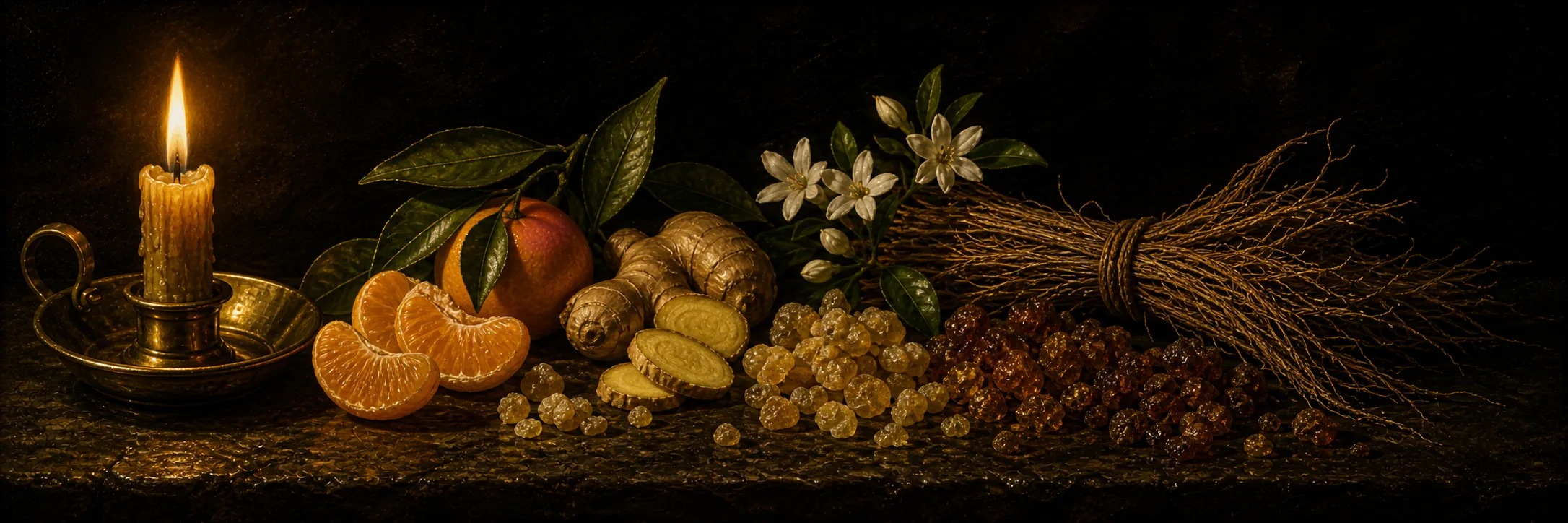
Essence
Note di Colonia III is Acqua di Parma’s attempt to fuse its signature bright Italian cologne with a warm resinous oriental — a citrus-and-ginger opening that descends into frankincense, myrrh, vetiver and tonka. Part of a 2016 opera-inspired trio marking the centenary of the original 1916 Colonia, it is conceived as the “triumphal” entry, drawing on the Marcia Trionfale from Verdi’s Aida. The result is a refined, dry, incense-tinged cologne — more sophisticated and longer-lasting than a classic eau de cologne, but lighter and more restrained than a true oriental.
Scent Profile
The catalog lists mandarin-orange and ginger up top; incense (olibanum), vetiver and jasmine in the heart; myrrh, labdanum and tonka-bean in the base, with amber, incense, spicy and woody accords. In wear, the opening is genuinely lovely and the most “Acqua di Parma” phase: a fresh, vivid burst of mandarin lifted by a piquant, slightly herbal ginger that gives it vigor without sharpness. Crucially, a thread of frankincense is woven into the citrus from the start — wearers note the incense “absolutely does not remind one of a dull church visit,” instead lending the brightness an oriental character. The jasmine is a soft, mostly textural presence rather than a distinct white floral. The heart (one to three hours) sees the citrus recede and the resinous-woody core step forward: dry, slightly green vetiver finds a counterpoint in warm olibanum, and the composition becomes “slightly warmer and slightly sweet” while never losing the green, bitter freshness of the opening. This balance — fresh-citrus brightness held in tension with dry incense and earthy vetiver — is the signature accord and the reason it reads as a “winter cologne” or all-season transitional scent. Some wearers catch a fleeting leathery impression in the transition. The drydown (three-plus hours) is resinous and softly sweet: myrrh adds a smoky, balsamic depth, labdanum brings warmth, and tonka contributes a gentle, slightly chocolatey, powdery sweetness.
Performance
For something marketed as a “Colonia,” performance is above the cologne norm — the resin-and-tonka base gives it real staying power. Wearers report longevity in the eight-hour-plus range on skin with moderate, “amber sillage with spicy aftermath. “ Projection is moderate: present and enjoyable but not a beast; one reviewer summarized “good versatile and likable… nothing ground breaking… moderate projection. “ It is more tenacious than Note di Colonia II by common agreement.
Wearing Context
This is a versatile, refined, daytime-leaning scent that also handles cool evenings. It is frequently described as the “white shirt and suit” fragrance — something to wear “when you wish to feel expensive and confident” — making it strong for office, business, smart-casual and daytime-formal settings. The fresh-incense character keeps it appropriate across seasons; many call it a fall/transitional standout and even a viable “winter cologne. “ It works where you want sophistication without aggression.
Comparisons & DNA
Note di Colonia III’s lineage runs straight from the original Acqua di Parma Colonia (1916) — it’s a centenary reinterpretation, citrus DNA intact but pushed toward resin. Within its own line, Note di Colonia I is the brighter, fresher, more straightforwardly citrus entry; Note di Colonia II is lighter and, per consensus, less successful; Note di Colonia IV is the denser opoponax-and-rose option that some call the line’s true winner, with III the resinous-incense standout. wearers frames III as “an ode to resins (frankincense, myrrh) that keeps things lemony and green in a way that suits the Acqua di Parma aesthetic. “ Several wearers triangulate it against Bvlgari Man in Black (though most find it far fresher and less spicy-sweet — the resemblance is loose) and note touches reminiscent of Roja Elysium and Guerlain frankincense-vetiver territory.
Reception
Wearers reception is positive-but-qualified. On wearers, III is widely regarded as the best or near-best of the Note di Colonia trio — “AdP has really stepped up,” “simply genius,” the incense-vetiver-citrus blend praised as “oriental and at the same time typically AdP. “ Common praise: quality of materials, the clever fresh-incense balance, the surprising warmth-without-heaviness, and improved longevity over II. The dominant criticism is value: the line carries “an outrageous pricepoint,” and several reviewers conclude it is “not worth it” at full retail, “a lovely perfume to add to your collection” only “if you can get one on sale.
Versions & Reformulation
Single composition; no significant reformulations are documented. The relevant variation is concentration and format: Note di Colonia III is a “Cologne”-strength entry in Acqua di Parma’s prestige Note di Colonia collection, distinct from the standard Colonia line. It has been sold in large faceted-glass bottles modeled on the original 1916 Colonia flacon (150 ml/5 oz), complete with the brand’s signature glass stopper — the bottle itself a frequently praised object. It is part of a fixed centenary collection (I, II, III, later joined by IV in 2017), not a fragrance with EDT/EDP/Extrait flankers.
Acquisition Notes
Pricing position: luxury/niche-prestige — the Note di Colonia line is Acqua di Parma’s highest retail position. MSRP is $670 for the 150 ml/5 oz bottle (listed at “RRP $670. 00” on Strawberrynet), discounted to roughly $355. 99 at outlets like FragranceNet — confirming the central knock on the line: the juice is good, the full price “ridiculous. “ Smart buyers wait for discounts, where it “comes back down to earth. “ The standard format is the large 150 ml faceted flacon.
Notable Facts & Lore
- Note di Colonia III is explicitly an opera homage: it draws on the Marcia Trionfale (Triumphal March) from Giuseppe Verdi’s Aida, “the fragrance of triumph, heroism and strength,” evoking, per the brand, a victory celebration on a warm night with music, dance and fires — fitting for Aida’s Ancient Egyptian setting, first performed in Cairo in 1871.
- The whole Note di Colonia collection launched in 2016 to mark Acqua di Parma’s centenary (1916–2016), each scent reinterpreting the original Colonia through a different opera: I from La Traviata (Libiamo ne’ lieti calici), II from Puccini’s Turandot (Nessun dorma), III from Aida.
- The bottles deliberately echo the 1916 original’s faceted design with glass stoppers.
- Perfumer attribution had a small mystery: the nose went uncredited on launch materials, and a wearers member reported confirming directly with Acqua di Parma that it is Nicolas Bonneville working under the creative direction of François Demachy — Bonneville being a young French perfumer who has also worked for Astier de Villatte.