Acqua di Parma — Sandalo Eau de Parfum
Essence
A polished, slightly soapy modern sandalwood-fougère hybrid that sits between a barbershop classic and an Italian-luxury citrus EDP. Released in 2019 as the sandalwood entry of the Signatures of the Sun collection, it is the EDP-concentration variant of the 2016 Colonia Sandalo Concentrée. Lemon-bergamot-petitgrain over lavender and cardamom, ending in a creamy sandalwood-tonka base — the structural template is mid-century French masculine perfumery rebuilt with modern materials, and it lands closer to a refined Drakkar-or-Azzaro descendant than to a Mysore-purist soliflore.
Scent Profile
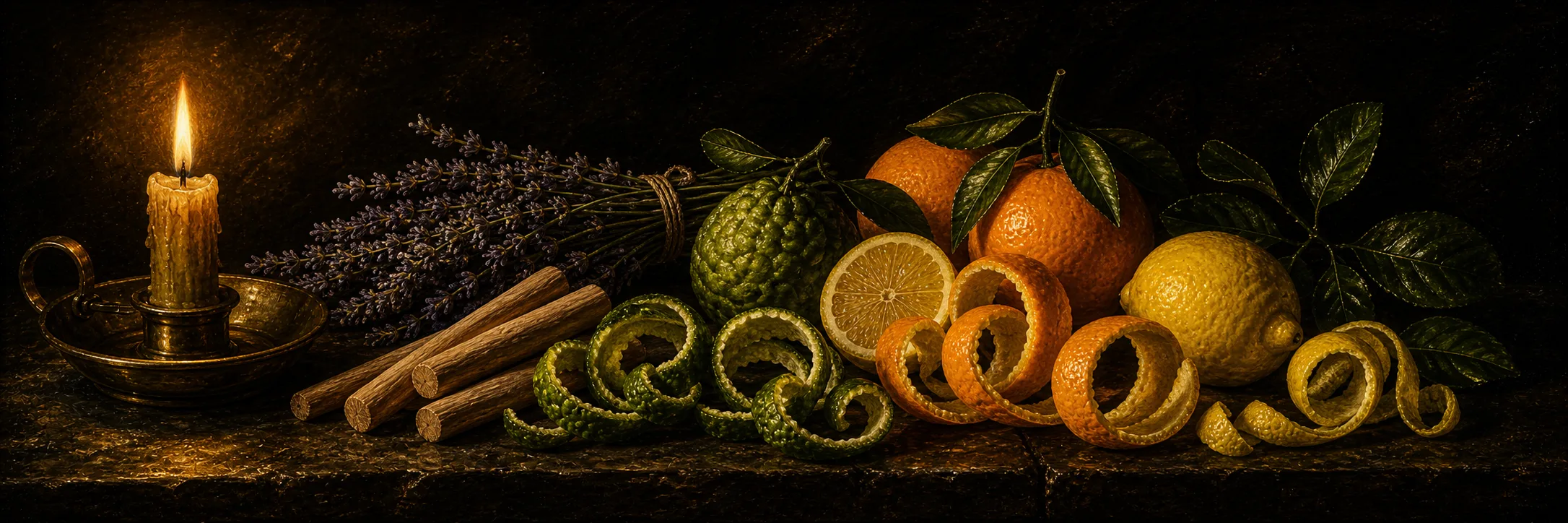
The opening (first 10–20 minutes) is unmistakably Acqua di Parma: a sharp Calabrian bergamot and Italian orange flourish, brightened by Sicilian lemon and dried slightly by petitgrain. Petitgrain in particular gives this opening a green, twiggy bitterness that distinguishes it from straight Colonia and pushes it gently toward the herbal side. Cardamom and lavender are already audible underneath, working as a connective tissue between citrus and base. The opening is not quite as luminous as Colonia or Yuzu — it’s more reserved, more “fougère opening” than “cologne opening. “ The heart (1–3 hours) is where the fragrance does most of its real work. Lavender is the dominant note for many wearers; it’s a clean, refined French lavender — not the camphorous Provençal kind, more akin to the lavender in classic post-war fougères. Cardamom adds dry spice but is restrained — it never reads cardamom-dominant the way Bois Imperial-adjacents do. The lavender-cardamom heart sits over the sandalwood for a long time before the base fully takes over, which gives the fragrance its semi-fougère character.
Performance
Projection is light-to-moderate — about half an arm’s length for the first two hours, then close to skin. Sillage is reserved. Longevity on skin runs 6–9 hours for most wearers, with some reviewers reporting 10–12 hours when applied generously to the chest. On clothing it lasts notably longer — the tonka-musk-sandalwood base survives 24+ hours on wool and cotton. Cold weather extends performance; humidity flattens it. Heat is its enemy more than dry weather is.
Wearing Context
Best seasons: spring, autumn, and mild winter — its sweet spot is cool weather where the lavender stays crisp and the sandalwood stays creamy. In summer it works in dry heat (Mediterranean climates) but underperforms in humid summer. Time of day: equally good morning, afternoon, and evening — it shifts character with light. Occasions: it is genuinely versatile across office wear, smart-casual, business dinners, weddings, dates, and even relaxed weekend wear. It is one of the few “sandalwood EDPs” that wears equally well at a board meeting and a Sunday brunch.
Comparisons & DNA
The closest sibling is, naturally, Colonia Sandalo Concentrée (2016) — generally considered the same composition rebottled at a different stated concentration. wearers explicitly tags the EDP as “a variant of the perfume Colonia Sandalo (Eau de Cologne Concentrée) by Acqua di Parma, which differs in concentration. “ Outside the house, Diptyque Tam Dao is sweeter and creamier — a single-track temple-sandalwood without the lavender-cardamom frame. Le Labo Santal 33 is far smokier, drier, leathery, and obviously synthetic-violet-laced — Sandalo is the polite, mature counter-Santal 33. Essential Parfums Bois Imperial is the more cardamom-creamy and slightly sweeter modern sandalwood that frag YouTubers compare it to constantly; Sandalo is drier and more aromatic-fougère. Hermès Eau d’Orange Verte sits adjacent on the citrus-aromatic axis but without the sandalwood depth.
Reception
Consensus is markedly more positive than for AdP Oud. On wearers, common praise centers on blending, the lavender-cardamom transition, the creamy sandalwood drydown, and the “doesn’t shout, earns it” quality. Reviewers repeatedly use words like “elegant,” “refined,” “civilized,” “noble,” and “sophisticated. “ A wearers top-rated review explicitly says: “After disappointing experiences with some other AdP colognes, I didn’t really know what to expect with Sandalo. But after the first spray — oh my — what a delight AdP has created here.
Versions & Reformulation
The 2016 release was Colonia Sandalo Concentrée, an Eau de Cologne Concentrée — confirmed by a wearer reviewer dedicated page for that predecessor. The 2019 release is the EDP-concentration variant in the Signatures of the Sun black cylindrical hatbox; consensus is that the juice composition is essentially the same, with the change being concentration and packaging rather than reformulation. The 2024–2025 packaging refresh moves Sandalo into the new transparent bottle showing the colored juice — Acqua di Parma states this is packaging-only, and unlike Oud, there are no widespread user reports of formulation change.
Acquisition Notes
Pricing position: luxury / designer-niche. Sizes: 20ml, 50ml, 100ml, 180ml. Current US retail (May 2026): roughly $267 for 100ml and ~$410 for 180ml at Macy’s, Bloomingdale’s, Neiman Marcus, Nordstrom, Selfridges and Harrods — same pricing band as the other Signatures of the Sun EDPs. UK retail is £197/100ml. Discounters routinely sell 100ml in the $140–$190 range. Decant ecosystem: Surrender to Chance, Scent Split, MicroPerfumes and The Perfumed Court all carry it; samples from ~$4–$6/ml. The 180ml is the per-ml value play. The black cylindrical hatbox is hard to replicate convincingly.
Notable Facts & Lore
- Perfumer: per Mark Behnke’s Colognoisseur attribution, François Demachy composed all ten Signatures of the Sun fragrances, including Sandalo — though the house does not credit him on packaging.
- The 2016 Colonia Sandalo Concentrée is widely attributed to Demachy across wearers sources.
- Sandalo sits in the “Italian luxury Mysore-tribute” lineage that Acqua di Parma cultivates in its marketing: the brand explicitly references the rarity of true Mysore sandalwood and positions the fragrance as an artful reconstruction that captures the spirit rather than the ingredient — a familiar framing post-2007 CITES restrictions on Indian sandalwood.
- No notable celebrity association, viral TikTok moment, or controversy.
- A characteristic Acqua di Parma “quiet luxury” release rather than a marketing event.
- The fragrance has accumulated a steady cult following on wearers — its top reviews consistently rate it as the brand’s most underrated EDP, with one reviewer specifically noting that they walked into a store with no intention of trying it (already owning a sandalwood) and walked out with a bottle.