Acqua di Parma — Colonia Intensa
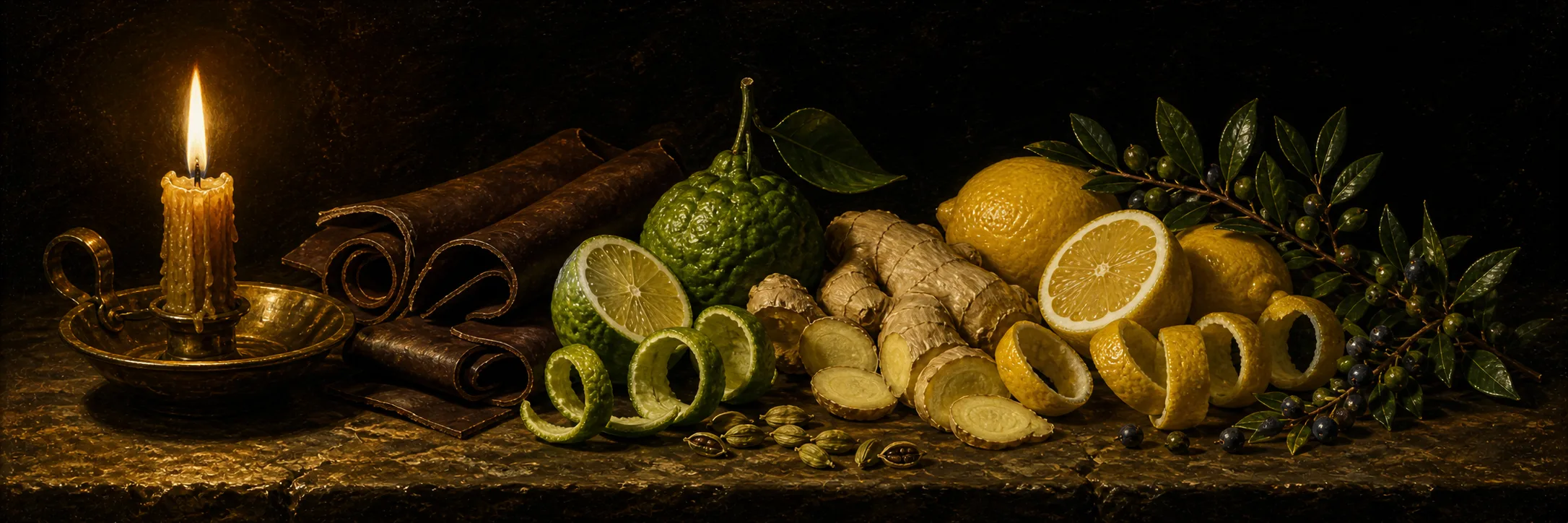
Essence
Colonia Intensa is the 2007 woody-leathery masculine flanker of the 1916 Colonia, co-signed by Alberto Morillas and François Demachy and intended as the “darker brother” of the original — the same Sicilian citrus opening grafted onto a leather-cedar-benzoin base via a spice bridge of ginger and cardamom. It remains the most divergent of the in-line Colonia flankers (excluding the Ingredient Collection) and, for many wearers, the single best Acqua di Parma masculine — a classy, restrained business scent with an unexpectedly long, smooth leather-musk drydown.
Scent Profile
The opening is unmistakably AdP DNA: a clean, polished blast of Calabrian bergamot and Sicilian lemon, but where the original Colonia goes immediately powdery, Intensa pivots within sixty seconds into spice. Cardamom is the dominant of the two listed spice notes — warm, green-cool, slightly soapy in the Morillas idiom (compare his cardamom work in Bvlgari Black). Ginger is the subtler partner, contributing a peppery lift more than a true root warmth. There is also a tangential anise or fennel impression that several reviewers (correctly or not) report; this is likely the cardamom-myrtle-artemisia interaction. By minute twenty the citrus has fully retreated and the heart emerges: neroli is the most prominent floral, sun-warm and slightly indolic but never over-bright, supported by artemisia (mugwort) and myrtle, which together give a green, slightly bitter herbal contour. This is where Intensa most clearly diverges from Colonia — there is no rose, no verbena, no soap-lily anchor. Instead the herbs telegraph the woody/leather base to come. From roughly the ninety-minute mark, the base does its slow reveal.
Performance
Projection is moderate at most — a 40–60 cm bubble for the first two hours that contracts to skin-scent thereafter. Sillage is restrained; this is the kind of scent where colleagues notice it when they lean in but cannot smell you from across a meeting room. Longevity on skin runs six to eight hours typical with multiple reports of phantom drydown still detectable past twelve hours; on clothing (wool, leather, scarves) it persists twenty-four hours or more. The Eau de Cologne label is misleading — Intensa performs more like an EDT.
Wearing Context
Office, boardroom, dinner, daytime-into-evening transitions — Intensa is the canonical “Italian businessman” scent in the AdP lineup. Wedding guest, formal dinner, classical concert, art opening. It works as both a daytime cologne (citrus-spice phase) and an evening scent (leather-cedar phase), which is unusual versatility. Pairs best with tailored clothing — wool suit, navy blazer, white shirt, leather shoes; it can feel slightly overdressed with casual sportswear. Where it falls flat: club, beach, gym, anywhere requiring projection or sweet-creamy modern compliment-getter chemistry.
Comparisons & DNA
Acqua di Parma Colonia (1916) — same DNA, darker register. If Colonia is white linen, Intensa is the same suit in charcoal flannel with a leather belt. - Chanel Pour Monsieur (1955) — multiple reviewers cite the citrus-into-civilized-base parallel; Pour Monsieur Concentrée is the closer cousin (more leather, less powder). - Hermès Eau d’Hermès (1951) — the cardamom-cumin-leather-citrus genome; Eau d’Hermès is more animalic and cumin-forward, but the family resemblance is real. - Armani Acqua di Giò Profumo (2015) — the obvious modern parallel for the citrus-into-clean-woody-incense arc, though Profumo’s incense and salty marine are absent in Intensa and Intensa has more cardamom. - Bvlgari Black (Alberto Morillas, 1998) — shares Morillas’ signature cardamom handling, though Black’s rubber-tea register is far darker. - Hugo Boss Bottled — distantly related in the cardamom-apple-warmth structure, but Bottled is sweeter and more synthetic.
Reception
Long-term consensus is unusually positive. wearers currently lists Intensa around, with notably high satisfaction in the wearers polls comparing AdP masculines. Praise: smooth blending (“a perfect balance between fresh, woodsy and subtle spices”), Italian-elegance signaling, surprising longevity for a so-called cologne, partner/spouse approval (“my partner has been wearing it as long as I’ve known him”). Criticism: small sillage bubble relative to price, divisive cedar note that some find synthetic, the conservative profile that polarizes younger wearers.
Versions & Reformulation
The fragrance has remained as a single composition since 2007, sold as “Colonia Intensa Eau de Cologne” in the standard cylindrical AdP carton. A 2012 flanker, Colonia Intensa Oud Eau de Cologne Concentrée (sometimes catalog-listed as Colonia Oud), grafted an oud accord onto the Intensa skeleton and is treated under its own dossier. Available sizes: 50 ml, 100 ml, 180 ml in the original yellow-carton/clear-bottle presentation.
Acquisition Notes
Pricing position: designer-luxury. Authorized US retail is in the standard AdP price band (50 ml roughly mid-$100s, 100 ml roughly $180–200, 180 ml roughly $250 at Nordstrom and AdP boutiques — verify current pricing direct, as AdP has raised prices repeatedly since 2021). Grey-market discounters consistently list 100 ml in the $70–100 range; FragranceNet and Jomashop are typical, and 180 ml deals near $130 are not unusual.
Notable Facts & Lore
- Co-author credit on Intensa is itself a notable item: Alberto Morillas (then at Firmenich, responsible for Bvlgari Aqua, CK One, Mugler Cologne) and François Demachy (then ascending as Dior’s in-house “Director of Olfactory Development”) collaborating on a brand flanker is rare in mainstream perfumery, where a single perfumer normally signs a release.
- Neither has published extensive on-the-record commentary about Intensa specifically, but Demachy’s broader interview record makes clear that the Acqua di Parma brief was always to extend, never to disrupt, the original Colonia DNA — Intensa’s restrained leather is the cleanest evidence of that brief in practice.
- Launch context: 2007 was the peak of the post-2001 LVMH integration of Acqua di Parma.
- The Della Valle / Montezemolo / Borgomanero consortium that had revived the brand in 1993 began selling to LVMH in September 2001 (initial 50% stake per contemporaneous DFNI Online press coverage) with full ownership completed by 2003 per FashionNetwork.
- By 2007 LVMH was actively flanker-extending the Colonia line to give boutique and department-store presence to a brand that until then had only one major masculine SKU.
- Intensa was the first masculine flanker in this LVMH-era expansion that genuinely worked critically and commercially.