Acqua di Parma — Blu Mediterraneo Fico di Amalfi
Essence
Fico di Amalfi is Acqua di Parma’s most popular fragrance, full stop — outpacing even the 1916 Colonia in wearers votes and engagement — and the entry that brought fig out of the niche-perfume reserve and into mainstream summer rotation. Launched in 2006, it pairs a bright Italian citrus opening with a luminous green-fruity fig accord and a creamy fig-wood drydown. Within the established fig canon (Philosykos, Premier Figuier, Marc Jacobs Men), Fico di Amalfi is the citrus-led, woody-vanillic interpretation — less aquatic-green than the Diptyque, less coconut-creamy than the L’Artisan, and the most extroverted fig in the segment.
Scent Profile
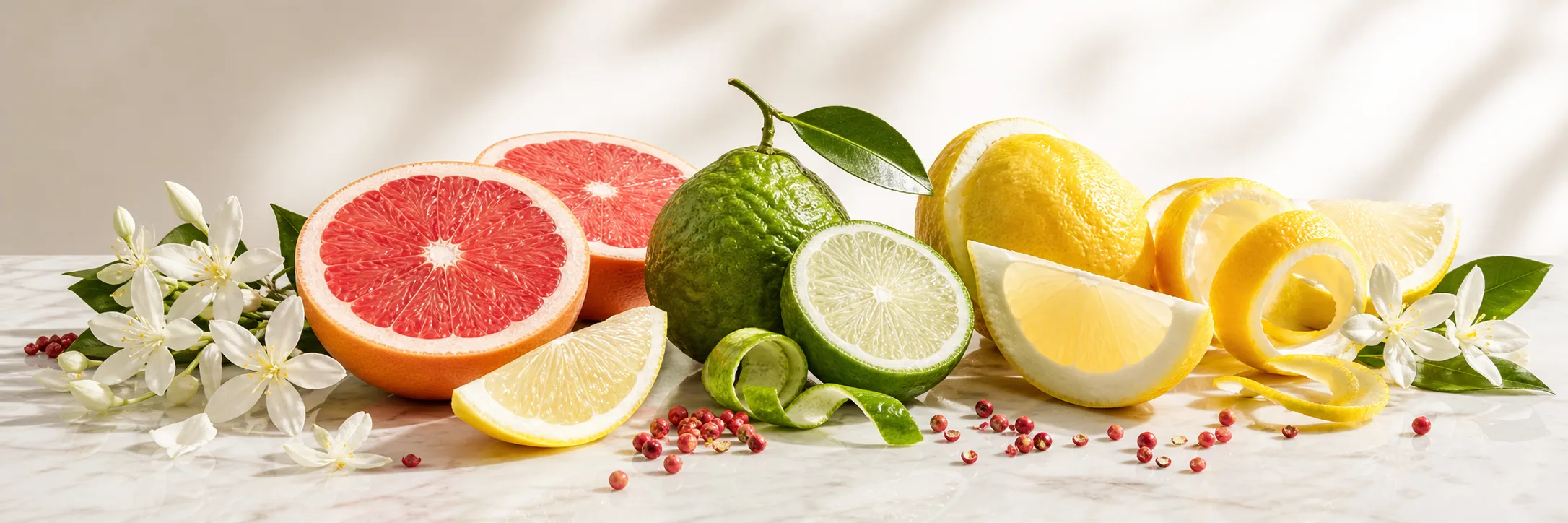
The opening is, despite the name, primarily a citrus accord — and this surprises first-time wearers expecting “fig” up front. Grapefruit pulls in a bittersweet pink-yellow brightness; bergamot supplies the structural Italian-cologne backbone; citron adds a leafy-pithy sharpness; lemon contributes zesty lift. For the first three to five minutes this could be a Blu Mediterraneo citrus soliflore. Around the four- to seven-minute mark, the fig begins to ghost in underneath — initially as a green, slightly metallic, almost grassy facet that reads as fig leaf rather than fig fruit. Some reviewers detect a faint sulfurous greenness in this transition (it is a known facet of fig leaf accords); it disappears quickly. The heart (roughly twenty minutes to two hours) is where the fragrance becomes itself. The “fig nectar” listed in the pyramid is rendered as a luminous, juicy, slightly sweet pulp accord — neither candied nor milky-coconut, instead reading as ripe fig flesh with a faintly pulpy texture. Pink pepper adds a dry-spicy lift that prevents the fig from going syrupy — this is the structural counterweight that keeps the composition cold rather than warm.
Performance
Performance is the chronic Blu Mediterraneo liability and Fico di Amalfi is its most-discussed example because of the fragrance’s broader popularity. Projection is moderate (arm’s-length-plus) for the first hour, dropping to intimate by ninety minutes and skin-scent by two to three hours. Sillage is light-moderate up front and short. On skin, longevity is the most variable in the line — a wide reported range of two to six hours depending on chemistry and weather; the median is approximately four hours.
Wearing Context
Native habitat: hot summer days, vacations, beach clubs, garden parties, outdoor brunches, terrace dinners before the temperature drops, hotel-pool afternoons, and any setting where the goal is to smell like a luxurious version of the place rather than a presence in the room. It is perhaps the canonical “feel good immediately” fragrance — multiple bloggers explicitly note its mood-lifting effect on application. Where it falls flat: cold weather (loses its dimensionality completely), formal evening wear (under-projects for the context), nightclubs, and any cold-month or heavy-clothing scenario.
Comparisons & DNA
Fico di Amalfi is one of the four canonical mainstream fig fragrances, and its place in the canon is best understood through deltas: Diptyque Philosykos (1996, Olivia Giacobetti) is the green-creamy benchmark — fig leaf, fig fruit, milky-coconut undertone, more cold/aquatic green. Fico is less green, less coconut-creamy, more citrus-forward and more woody-vanillic in the base. Philosykos lasts modestly better; Fico has the more interesting opening. A widely-shared one editorial framed the contrast directly: “the stand-out feature of Fico Di Amalfi, in contrast to classic fig fragrances like Philosykos, Premier Figuier, or Jardins de Kerylos is that the Acqua Di Parma is less aquatic and green, and more woody-vanillic. “ L’Artisan Premier Figuier (1994, Olivia Giacobetti) is the original fig fragrance in commercial perfumery — more milky, more almond-coconut, more lactonic and powdery in the drydown. The Extrême version is heavier and woodier.
Reception
Consensus places Fico di Amalfi as the most popular and highest-voted Acqua di Parma fragrance overall, with a wearers score around across 7,000+ votes and a wearers score in the strong-positive range. A one editorial (“A Figgy Favourite In Context”) explicitly argued that Fico deserves its place over the Colonia line for its accessibility: “moreish and unique, without any challenging facets whatsoever; a kind of Goldilocks fruity fragrance with everything just in place and nothing wrong. “ Praise concentrates on: natural-feeling fig accord, mood-lifting summer character, unisex wearability, sophisticated minimalism, the “vacation in a bottle” quality, and the way the citrus and fig integrate without one dominating.
Versions & Reformulation
The original 2006 Fico di Amalfi EDT is the standard composition. No major reformulation event has been publicly confirmed by the house, though some longtime wearers anecdotally report the recent batches feeling marginally less sweet or slightly altered in the citrus top — not corroborated by any official source. Fico di Amalfi La Riserva (2025) is the principal concentration variant: an EDP-strength flanker produced via a two-month maceration. Acqua di Parma’s own description emphasizes a heart of orris concentré with fig and lemon infusions and a fig pulp accord, supported by tonka beans, ambrettolide and orcanox in the base.
Acquisition Notes
Pricing position: upper designer / entry niche. Retail at boutiques and full-price retailers (Nordstrom, Bloomingdale’s, Saks) sits roughly at USD $145 / 75 ml and USD $225 / 150 ml. La Riserva EDP retails at a premium — around USD $200+ for 50 ml. Discounters (FragranceNet, FragranceX, Jomashop, Notino, Maxaroma) regularly cut 30–40% on the standard EDT; 150 ml testers commonly appear in the USD $90–115 range, the best value-per-ml in the line.
Notable Facts & Lore
- Fico di Amalfi was Acqua di Parma’s 2006 expansion of the Blu Mediterraneo line beyond pure citrus into fruit-and-tree territory, and it became commercially the most successful entry the line has ever produced — the only Acqua di Parma fragrance that consistently outranks the original 1916 Colonia in wearers popularity metrics.
- The perfumer is not publicly attributed in standard databases.
- The composition’s structural cleverness is that it solved the central problem of mainstream fig fragrance — fig had been a niche signature (Philosykos, Premier Figuier) since the mid-1990s but had not crossed into broad luxury-designer success — by wrapping the fig in a Mediterranean citrus opening that mainstream wearers already understood and accepted.
- The fig became, in effect, the surprise rather than the demand.
- The fragrance has had a strong second life via influencer-era marketing: Fico became one of the most-recommended “different summer fragrance” picks across YouTube fragrance channels from roughly 2018 onward, with Jeremy Fragrance, Mike Pretto, Wilberto Mejia, Curly Fragrance and dozens of moderate reviewers featuring it in summer rotation lists.
- Gear Patrol’s lifestyle editorial called it the writer’s “go-to summer fragrance” and emphasized its uniqueness: “Summer colognes typically fall into a few broad categories.