Amouage — The Library Collection Opus X
Essence
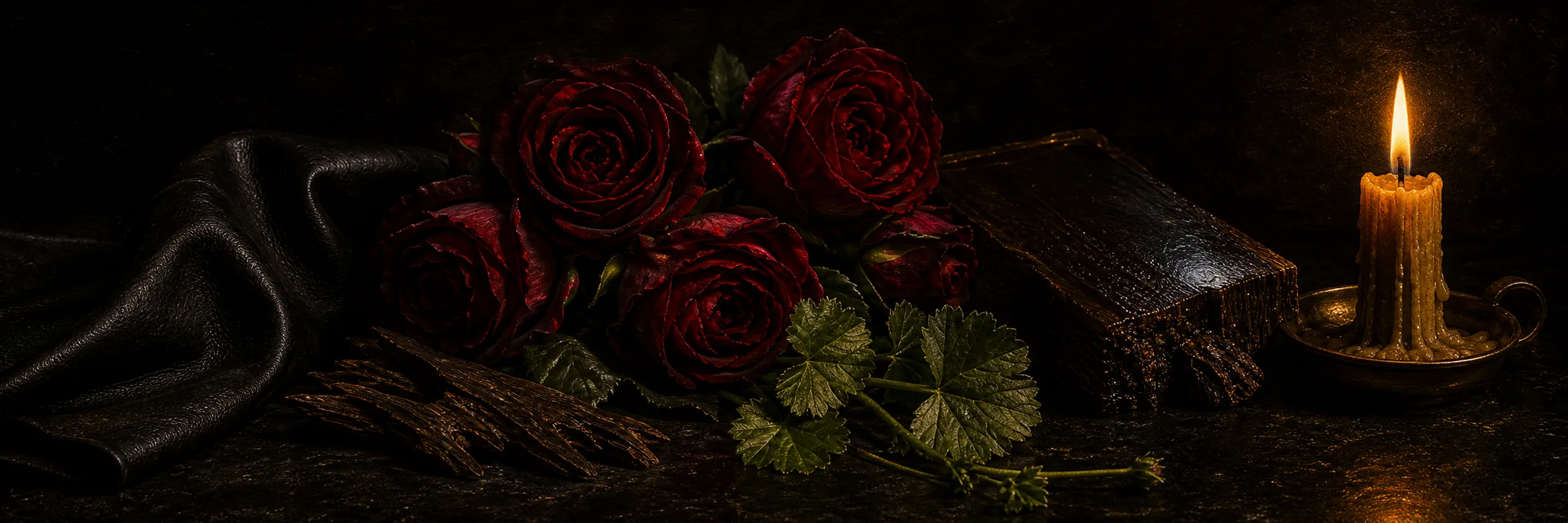
Opus X is Amouage’s lacquered, metallic rose - less a romantic soliflore than a deliberately stylized study in blood-red petals, varnished wood and leather. It is distinctive because the rose is never allowed to stay natural or plush for long: a metallic rose-oxide facet, geranium’s polish-like edge, leather and oud keep bending it toward something uncanny and architectural. In its best readings it is thrillingly strange; in its worst, the furniture-polish effect breaks the spell. That divide, in a sense, is the fragrance.
Scent Profile
The opening is rose-forward, but not dewy or gardenlike. The whole idea of Opus X, as Christopher Chong documented it, is a multi-faceted rose built from several rose effects, rose oxide among them, and that metallic veil is perceptible almost immediately. The first ten to twenty minutes give you the flower in high relief - red, radiant and loud - but already stained with something cold and artificial. Wearers repeatedly describe old church varnish, polished wood, an industrial or aseptic undertone, even a faintly bloody effect, which tracks with the official blood-and-varnish imagery around its Red Violin inspiration. The threefold rose top is very present; leather and oud are not yet dominant, but the varnish accord is impossible to miss. As it moves into the heart, geranium and varnish pull the composition out of floral territory and into its real identity: a polished, lacquered, almost ecclesiastical rose-leather. This is where people fall for it or recoil. The critic Persolaise describes the furniture-polish aspect as troublesome but also the source of its edge, and that is fair - the rose never collapses into potpourri because the synthetic sharpness keeps it taut. Leather grows steadily stronger from about the one-hour mark, adding body and seriousness rather than biker-jacket roughness, while oud and ambrarome read less as animalic barnyard and more as a metallic-ambered gravity beneath the rose. The signature accord is unmistakable: metallic rose over varnished wood and leather. The drydown is drier, darker and more leathery than the opening implies. The rose survives well into the late stages, but less as a fresh flower than as oil rubbed deep into wood or fabric. The metallic edge softens without disappearing; leather and a warm ambery body do most of the work after three hours, with oud staying stylized and supporting rather than central. It is not especially linear, but it is coherent: rose first, lacquered rose-leather in the middle, then a darker, quieter leather-amber residue still lit by metallic rose reflections.
Performance
Opus X is remembered more for its cling than for room-filling force. It projects clearly in the opening, with a noticeable aura in the first couple of hours, but the rose-metallic top has presence while the leather-amber base is what stays attached. A fair estimate is workday longevity on skin and longer wear on clothing, since varnish and leather accords tend to persist after the brighter rose phase drops back. Think moderate projection rather than powerhouse - a pronounced personal bubble around arm’s length early, then a steadier close-to-moderate trail. Heat can exaggerate the metallic and varnish edges and make the whole thing feel more severe, while colder weather disciplines the composition and lets the leather read smoother. Apply moderately and deliberately: enough for the structure to unfold, but not so much that the polish note dominates everything.
Wearing Context
Opus X is best in cooler weather, transitional seasons, and any situation where an assertive, unusual rose makes sense. Evening wear suits it naturally, as do galleries, concerts, formal dinners and contemplative solo wear; it can work in daytime if you are comfortable smelling like a ritual object rather than a generic rose perfume. The recurring church and old-wood imagery is not accidental - this fragrance feels ceremonial, historical and faintly haunted. Where it tends to fail is in casual heat, easy office wear, or affectionate social settings that want softness. The rose here is not cuddly, juicy or flirtatious; it is stylized and a little forbidding. People who like odd, conceptual scents may read it as sophisticated and memorable, but anyone expecting a sensual rose may simply smell polish, metal or medicinal wood. That makes it one of the least safe blind-buy roses in the Amouage catalog.
Comparisons & DNA
The in-house reference point is Amouage Lyric. Persolaise says Opus X takes a rose material Chong had already handled in Lyric and turns it into the “mad sister”: fiercer, stranger and less willing to flatter. If Lyric is dramatic but recognizably beautiful rose, Opus X is that beauty passed through lacquer, blood and metal. Beyond the house, comparisons reach toward dense florientals like Tom Ford Black Orchid and Amouage Fate Woman, but Opus X is less plush and sweet than Black Orchid and far more explicitly metallic, and narrower in palette than Fate Woman, centered on a treated rose-leather chord rather than dark-spiced complexity. One later write-up described it as a vibrant, polarizing metallic rose meant to reference blood and varnish, and paired it usefully with Charenton Macerations Asphalt Rainbow - the greener, more playful urban rose, where Opus X is richer, darker and far more ritualized. No credible clone pattern has surfaced. The deeper lineage here is conceptual rather than commercial: the Red Violin story explains the blood-and-varnish trope and the layered rose structure, and is why Opus X reads less as a mainstream rose-leather and more as a Library-series art object that happens to use rose as its medium.
Reception
Reception is sharply split, but not random. Persolaise respects the fragrance precisely for the thing that bothers detractors most - the furniture-polish facet - arguing that while it sometimes pushes too synthetic, it is also what gives the scent its bite. Wearers reactions echo that almost exactly: admirers talk about old churches, polished pews, rose soaked into wood and a memory-rich atmosphere, while detractors say the same polish-leather effect turns dense, foreign or simply unpleasant. What people praise is specificity. Opus X does not smell like a generic niche rose, and even those who dislike it often admit they have not smelled much else like it. The criticisms are equally concrete: too synthetic, too much varnish, too austere, too little softness. Enthusiasm is therefore intense but narrow - this is not the rose Amouage fans hand to newcomers. Blind-buy verdict: emphatically no. It demands a tolerance for metallic effects and for a rose that keeps one foot in polish, blood and leather from start to finish.
Versions & Reformulation
A single composition, with no known reformulations.
Acquisition Notes
Opus X sat in Amouage’s upper luxury tier at launch and followed the Library Collection’s premium positioning. The practical reality now is scarcity: wearers describe sampling first and then hunting bottles through collectors or the secondary market, since retail stock has largely dried up. Decants do circulate. Because the scent is so stylized, condition matters more than usual - a worn or heat-damaged bottle can exaggerate the metallic-varnish harshness and make even a legitimate bottle smell wrong - so prioritize provenance: full presentation, seller history and clear photos.
Notable Facts & Lore
- Opus X’s launch story is unusually specific.
- Christopher Chong conceived it from the 1998 film The Red Violin, using the violin’s blood-tinted finish as a metaphor for rose’s many guises.
- He described the perfume as four rose “strings” - centifolia, a bloody rose accord, rosebud and rose oxide - with geranium adding the varnish aspect and leather deepening the heart.
- That is not generic house storytelling; it maps directly onto how the perfume actually smells.
- It is also why Opus X occupies such a peculiar niche in the catalog: one of the clearest of Chong’s “art object” releases, deeply referential, intentionally polarizing and uninterested in smoothing out its own edges.
- The blood-and-varnish reading became its whole calling card in niche circles, and even brief commentary years later still reduces it to that precise image - a metallic rose with blood and varnish in the frame - because the perfume made the concept impossible to forget.