Roja Dove — Danger Pour Homme Parfum Cologne
Essence
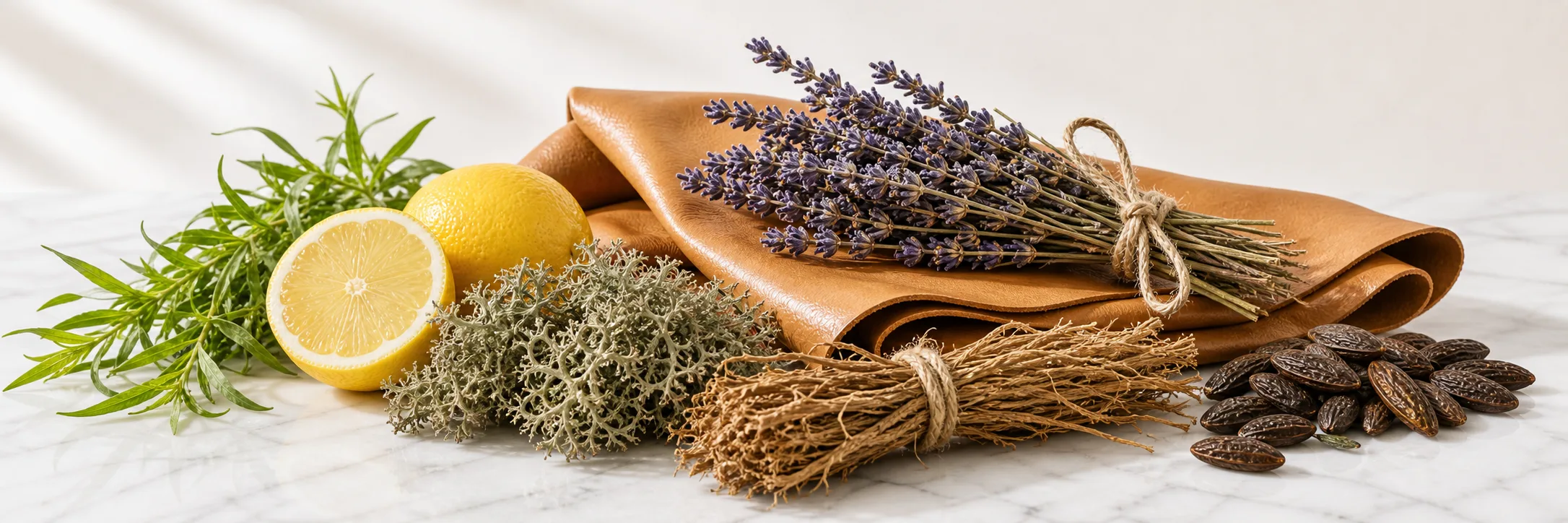
Danger Pour Homme Parfum Cologne is the 2019 eau-de-parfum-strength expression of Roja Dove’s Danger Pour Homme line - a classical fougere reconceived at high niche density, blending lavender-citrus-tarragon aromatics with a leather-oakmoss-vanilla base. The “Parfum Cologne” designation is Roja’s house term for a concentration that feels slightly lighter than full parfum but is built with parfum-grade materials. It reads as a luxurious modern take on barbershop-classical structure, with cumin and rhubarb adding unexpected character.
Scent Profile
The opening is recognizably fougere but louder and more layered than most modern compositions in the family. Lavender hits first - herbaceous, slightly camphoraceous, true-to-the-flower rather than synthetic - with bergamot and lemon adding citrus lift. Tarragon contributes an anise-licorice green-herb thread that sits alongside the lavender and gives the opening more depth than the typical lavender-citrus fougere start, while rhubarb (listed in the base but felt early) adds a faint sour-green tartness and galbanum a bitter-green resinous edge. The first ten to twenty minutes read as a sophisticated herbal aromatic, telegraphing the fougere intent before the warm leather backbone appears. In the heart, across the first one to three hours, the composition shifts toward its dominant character. Violet emerges with a powdery, slightly metallic floralcy that stays away from feminine thanks to the herbal context, while jasmine and lily of the valley function as airy support rather than featured florals. The warm-spicy element kicks in through clove and the early bloom of cumin from the base. This is where it makes or breaks for an individual wearer: cumin in a fougere is a divisive choice, and on warm skin it pushes toward a sweaty register - most find it well-integrated, but the cumin-sensitive perceive it strongly. The drydown, from about three hours on, brings the signature accord: a leather-oakmoss-vanilla-tonka core with patchouli, vetiver, cedar, and ambergris supplying the structural woody warmth. The leather reads polished and slightly smoky rather than raw suede, and the oakmoss comes across cleaner than vintage chypre oakmoss. Vanilla and tonka soften the leather without sweetening it or tipping the composition gourmand, and ambergris and musk give the late drydown the characteristic Roja salty-skin sheen. Evolution is moderate - a clear arc from herbaceous opening to leather-warm base over three to four hours, essentially a luxurious extrapolation of classical fougere architecture at higher density with the leather amplified.
Performance
Projection is strong in the opening - on par with other Roja releases at this density - and stays moderate well past the fifth hour. The “Parfum Cologne” label is a little misleading; in wear this performs closer to a parfum than to a cologne or even most eau de parfums. Sillage in the first three hours is generous, with the leather-spice base radiating well in cool, dry conditions. Longevity is consistently nine to twelve hours on skin and twenty-four to forty-eight on fabric. It behaves better in cool weather than in warm humidity, which pushes the cumin and indoles harder, while cold dry air lets the leather and oakmoss carry beautifully. One or two sprays is plenty, and a jacket lapel works especially well, since the woody-leather base develops nicely on fabric.
Wearing Context
This is primarily a fall and winter fragrance, with spring workable in cooler weather and summer generally inadvisable because of how the cumin and leather behave in heat. Evening is the natural slot, though cool-weather daytime professional use works at a single spray - the fougere structure stays professionally legible in a way an oriental or gourmand would not. It is at its best in cooler-weather business and formal occasions, dinners, theatre, and traditional masculine settings, and falls flat in tropical heat, the gym, and anywhere understatement is the point. Socially it reads masculine in the classical sense, a male-coded composition that does not try to be unisex.
Comparisons & DNA
Within the house, the base Danger Pour Homme is the closest sibling - slightly lighter and less leather-amplified than the Parfum Cologne - while Enigma Pour Homme shares some leather-amber DNA but runs far more spice- and tobacco-driven, and Vetiver and the Aoud line sit in adjacent masculine territory with different cores. Outside the house, the natural comparisons are luxury modern fougeres: Penhaligon’s Sartorial shares the modern-fougere interpretation but is more powdery-beeswax and less leather-heavy; Houbigant Fougere Royale, in its modern reissue, is the drier, more austere historical reference for the whole category; and Guerlain Jicky is the spiritual ancestor. Closer contemporaries include Amouage Beach Hut Man for overlapping aromatic-leather territory and Tom Ford Beau de Jour for a more classical lavender-fougere reading, drier and less leather-driven, while Dior Eau Sauvage Parfum is a useful reference at a much lower price for the lavender-citrus-fougere DNA. There is no specific budget clone - the fougere category attracts fewer of them than oud or amber does - though Yves Saint Laurent Y EDP is the nearest cheap stand-in for the aromatic-leather thesis, much fresher and less rich. Its lineage runs straight from Houbigant Fougere Royale (1882) and the fougere canon, modernized through Roja’s high-density approach.
Reception
Reviews skew positive, though from a smaller and more reserved pool than Roja’s Aoud line draws - the masculine-fougere category tends to get a quieter wearer response. The praise centers on the quality of the lavender-tarragon opening, the polish of the leather drydown, the performance, and the way it reads as luxurious but classical. The recurring criticisms are the cumin (the most common reservation), the sense that it is expensive for a fougere given how many strong designer options the category offers, and a subset of wearers who find it close enough to the base Danger Pour Homme not to justify the step up. More detailed enthusiast write-ups rate it among Roja’s better classical-structure releases, with occasional comparisons to Penhaligon’s Sartorial and Tom Ford Beau de Jour. No major critic has covered this 2019 release at length. As a blind buy the answer is no - the cumin alone makes sampling essential, and at this price tier sampling is the default anyway.
Versions & Reformulation
Danger Pour Homme Parfum Cologne is a sibling concentration to the original Danger Pour Homme - related compositions in the same family, but the Parfum Cologne has its own formula rather than being a simple concentration step up. No major reformulations of this specific release have been documented since 2019.
Acquisition Notes
This sits in the ultra-luxury tier, retailing roughly $400 to $500 for 50ml and $700 to $800 for 100ml - slightly under the Aoud line. The decant ecosystem is workable, with small houses carrying samples in the 1 to 2ml range. For full bottles, buy from Roja’s boutique and authorized retailers such as Harrods, Luckyscent, Osswald, and Skins.
Notable Facts & Lore
- The Danger Pour Homme line has been positioned by the house as Roja’s classical-masculine architecture statement, with the Parfum Cologne variant marketed as the more concentrated, evening-leaning version.
- No public quotes from Roja Dove specifically addressing this 2019 release have entered the wider fragrance conversation the way the Diaghilev or Amber Aoud stories have, and it carries no celebrity associations, viral moments, or controversies.
- It exists in the catalog as a high-quality classical fougere for those who specifically seek the category at niche pricing - never quite breaking into mainstream visibility nor acquiring cult status.
- The “Parfum Cologne” naming convention itself is a small curiosity within the Roja lexicon, sitting between eau de parfum and parfum in a category largely of the house’s own making.