Roja Dove — Scandal Pour Homme
Essence
Scandal Pour Homme is Roja Dove’s homage to the great aromatic fougeres of the 1960s through 1980s - a parfum-concentration take on the Eau Sauvage, YSL Pour Homme and Guerlain Heritage axis, built to feel both photorealistic and excessive. Lemon and lavender lead, but the structure is barbershop fougere written in extrait: a herbaceous citrus head over a heart of indolic white florals, then a thick mossy-resinous base. It is widely cited as one of the few modern luxury fougeres of consequence, polarizing not because it is strange but because it is so unapologetically traditional at a price many consider absurd.
Scent Profile
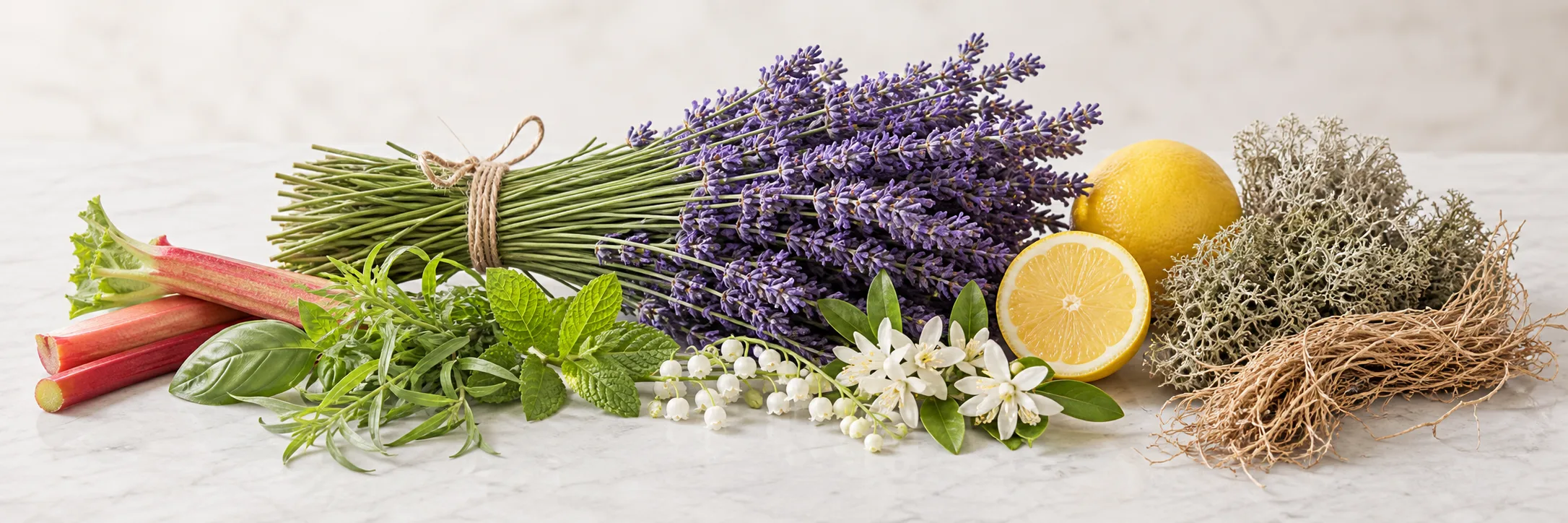
The first ten to twenty minutes are loud and unmistakably classical. A high-pitched, photorealistic Amalfi-style lemon hits first, almost sour, propped up by aromatic lavender and a green spike of tarragon, petitgrain, basil and mint. The rhubarb that Roja names as the signature curveball reads less as fruit than as a wet, tart, almost stem-like greenness that thins the citrus and gives the opening its slight oddness. Bergamot is present but dominated by the lemon, and the mint reads spearminty rather than peppermint. This is the shaving-foam, barbershop phase nearly every reviewer keys on, often compared to Dior Eau Sauvage, the 1971 YSL Pour Homme, Acqua di Parma Colonia or Chanel Pour Monsieur. By the sixty-to-ninety-minute mark the heart pushes forward and surprises most wearers: a soft, slightly indolic floral wash of lily-of-the-valley, jasmine, May rose and a powdery violet sits squarely in the middle of the composition. More than one wearer has complained that nobody mentions how dominant the floral notes are - and they are right. The lily-of-the-valley is the loudest single voice here, joined by jasmine in an almost feminine register before the spices and base catch up. From hour three onward the drydown takes over and Scandal moves into its trademark mossy-powdery-woody territory. Oakmoss does most of the work - green, leathery, slightly bitter - supported by labdanum (the source of that amber-leather hum), patchouli (dialed back, more earthy chocolate than dirty), nutmeg, clove and cardamom for warmth, and a cashmeran-led blonde-wood accord that several critics flag as a synthetic tell. Tonka, vetiver and sandalwood give it a creamy, slightly powdered finish, and the base persists eight to twelve hours or more as a soft, almost lavender-soap residue laced with moss and labdanum. The signature accord is lavender-citrus over oakmoss with a powdery white-floral middle - a classic fougere-royale silhouette rendered in heavy, parfum-strength materials. It is largely linear in mood, though the floral mid-stage and the cashmeran-tinted late heart give it more evolution than a typical citrus-fougere.
Performance
Projection is moderate, occasionally strong in the first hour - roughly arm’s length on most skins, with some reporting only one to two hours of strong sillage before it pulls in close. Sillage tapers fast: by hour three it is about a one-foot aura, and by hour six often a skin scent. Longevity is the area of greatest disagreement - some report ten to twelve hours of skin life from the parfum, with cloth retention reaching a day or two, while others get four to six hours and read it as underperforming for the price. Heat pushes the lemon and lavender forward and dries the base; cold suppresses sillage but the moss-labdanum drydown stays intact; humidity intensifies the indolic floral middle, sometimes off-puttingly for those who do not expect the jasmine. Two to four sprays to neck and chest with one to clothing is the consensus, since oversprayed it becomes very perfumed-gentleman in a dated sense.
Wearing Context
Spring and early summer are the obvious targets - the citrus-lavender-mint opening is built for daytime warmth - but the rich base lets it carry into autumn evenings. Office, weddings, formal daywear and smart-casual dinners are where it shines. It is decidedly not a club or gym fragrance, not a beachy summer scent, and not a date-night seduction perfume in the modern smell-sweet-and-addictive sense. Wearers under thirty sometimes report feeling like their grandfather in it, which is rather the point. The social impression skews mature, traditional and old-money - an asset at formal events and in conservative environments, a liability among younger crowds and in casual settings. On a woman it is often read as masculine but elegant, and several reviewers note that the heavy white-floral heart makes it more unisex than the marketing implies.
Comparisons & DNA
The most-cited reference is Guerlain Heritage. One blogger calls Scandal almost a play-for-play repackaging of Heritage but at an exponentially higher price, and advises just buying Heritage instead. Dior Eau Sauvage is the second most invoked - Scandal is sharper, mossier and far richer, where Eau Sauvage is leaner and more transparent - and Eau Sauvage Parfum is closer in body but lacks Scandal’s white-floral middle. The 1971 YSL Pour Homme is the spiritual ancestor of the citrus-herb-floral arc, Chanel Pour Monsieur shares the dignified-gentleman register but is drier and less floral, and Azzaro Pour Homme sits in the same fougere family but is sweeter, more anisic and far cheaper. Creed Original Vetiver and Bois du Portugal are the closest luxury competitors, both simpler, and Penhaligon’s Sartorial chases the same barbershop archetype with more beeswax and metal-shavings character. There is no widely recognized budget clone of Scandal specifically. As for lineage, it belongs to the trilogy Roja launched in 2007 - Scandal, Unspoken and Enslaved, covering floral, chypre and oriental - and arguably defined the modern luxury fougere niche before the wider fougere revival of the late 2010s.
Reception
The wearer feedback is roughly objectively beautiful, debatably original, indefensibly priced. Admirers call it very elegant and a manifestation of elegance and class while acknowledging it is polarizing. The blogger varanisridari, writing as The Scented Devil, pans it as Tom Ford levels of cynicism - reselling the rich their dad’s cologne in a fancier bottle - and another critic rates the parfum a neutral middle score, praising the blending but criticizing the cashmeran blonde-wood accord as synthetic and unnecessary at this tier. Elsewhere the dominant praise is for the realism of the lemon and lavender, the quality of the oakmoss and the luxurious shaving-cream register, while the dominant criticisms are the price, the moderate sillage relative to that price, and the recurring this-is-just-Heritage complaint. The white-floral middle is the surprise divider - admirers find it elegant, detractors find it feminine. Blind buy only if you already love classical aromatic fougeres such as Heritage, Eau Sauvage and YSL Pour Homme and accept Roja pricing; for anyone else, sample first.
Versions & Reformulation
Scandal exists in two parallel current versions: the 2011 parfum at extrait strength, the subject here, and a 2019 Parfum Cologne flanker at EDP strength, which has its own profile. The two share DNA but diverge meaningfully. The 2011 parfum is darker, mossier, more white-floral and significantly more perfumed; one wearer pegs the two at ninety-five percent identical but identifies a darker, more sour citrus opening in the parfum and a longer-lasting mossy-clovey drydown. The Parfum Cologne is brighter, fresher, more lemon-and-verbena-led and lighter in the base, sitting closer to a classic eau de cologne in spirit. The parfum was originally sold under Roja’s pre-2011 paper-label packaging and relaunched as part of Roja Parfums in 2011, later updated to the current presentation. No major scent-altering reformulations are widely reported, though the bottle and packaging have changed; the extrait upgrade over earlier versions is generally felt to add weight, longevity and base richness, even if one critic argues the upgrade mainly justifies a higher price.
Acquisition Notes
This sits in the ultra-luxury tier, available in 50ml and 100ml parfum directly from Roja’s own channels and the major luxury retailers. Decant availability is strong, so sampling is easy. Authentic bottles have heavy weighted glass, a faceted gem cap, an engraved baseplate with batch code, and a satin-lined box; discounters frequently list authentic testers in the low-to-mid hundreds, which many consider the smart-buy pathway.
Notable Facts & Lore
- Scandal Pour Homme is documented, in a 2018 piece by the critic Michelyn Camen, as Roja Dove’s tribute to the classic aromatic fougeres his father Samuel wore in the 1960s, 70s and 80s - a story Roja himself expands on in a video about the five fragrances his father wore.
- That paternal, nostalgic framing of citrus-and-fern barbershop colognes encountered in childhood is the documented intent for this specific composition, not a general house origin story.
- In an interview, Roja confirmed Scandal was part of the original 2007 trilogy he designed to cover the three main fragrance families, deciding he needed to make a floral, a chypre and an oriental, which became Scandal, Unspoken and Enslaved; Scandal was originally classed as the floral entry and later recoded as a fougere-aromatic masculine as the line evolved.
- It is consistently cited as a benchmark modern luxury fougere alongside Bois du Portugal and Parfums de Marly Galloway, with no significant viral moment or celebrity ambassador - its cultural weight is enthusiast-driven.
- Luca Turin and Tania Sanchez gave the house broadly cool treatment in Perfumes: The Guide 2018, and Scandal Pour Homme was not among their top-rated entries, consistent with their wider skepticism toward Roja.
- The most-quoted single negative take remains the blogger varanisridari’s framing of Scandal as the exemplar of selling the rich their dad’s cologne in a fancier bottle - a line that has become the canonical counter-take in enthusiast discussion.