Chanel — Allure Homme Sport
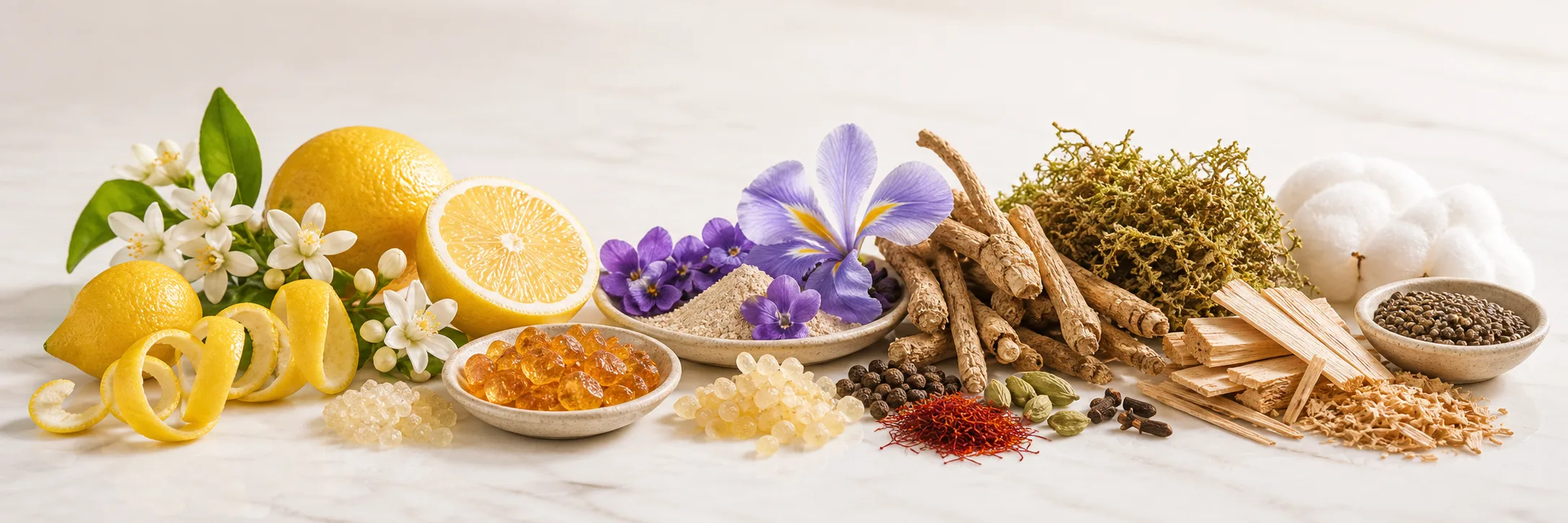
Essence
Released in 2004 and composed by Jacques Polge, Chanel Allure Homme Sport is a paradigm-defining woody-aromatic fragrance that fundamentally altered early-2000s designer perfumery. It relies on a stark, deliberate duality: a hyper-luminous, metallic citrus-aldehyde opening that forcefully transitions into a dense, semi-gourmand base of tonka bean and white musk. Distinctive for its massive commercial success despite aggressive critical panning, it codified the modern “creamy-aquatic” masculine archetype, prioritizing functional, mass-appealing versatility over classical olfactory evolution.
Scent Profile
The olfactory architecture of Allure Homme Sport is notoriously disjointed, structurally designed to prioritize a high-impact opening and a comforting base with minimal blending between the two extremes. The initial spray is aggressive, synthetic, and highly radiant. The listed mandarin and orange notes are immediately stripped of their natural succulence. Instead, they are rendered sharp and metallic by an overwhelming wave of aldehydes and abstract ozonic sea notes. This phase is exceptionally loud; critical analysis has described the opening as “nostril-searing” and reminiscent of artificially scented rubbing alcohol. The aquatic accord does not present as natural brine, but rather as a hyper-clean, detergent-like ozone. As the highly volatile aldehydes evaporate during the heart stage, a dry, spicy-woody core emerges. Black pepper provides a persistent, dusty texture, while neroli attempts to bridge the caustic top notes with the heavier base. The listed cedar note is highly abstract, functioning more as an Iso E Super-driven scaffolding than a distinct, sappy wood. The heart stage is linear and characterized by a persistent tension, as the fading aquatic accords clash directly with the rising warmth of the base. The defining characteristic of the fragrance reveals itself in the late drydown, contradicting the “Sport” moniker entirely. White musk, tonka bean, and vanilla completely submerge the remnants of the citrus. The vetiver listed in the pyramid is barely perceptible; it serves only to provide a microscopic level of rooty dryness to temper the sweetness. The resulting skin-scent character is dense, powdery, and noticeably semi-gourmand. The composition does not evolve so much as it collapses from sharp freshness into heavy sweetness, establishing the widely copied fixed template of a “creamy aquatic”. | Phase | Timeframe | Dominant Perceptible Notes | Submerged/Absent Notes | | — | — | — | — | | Opening | 0-20 min | Aldehydes, Synthetic Orange, Sea Notes | Vanilla, Amber | | Heart | 1-3 hours | Neroli, Black Pepper, Abstract Cedar | Vetiver | | Drydown | 3+ hours | Tonka Bean, White Musk, Vanilla | Mandarin, Sea Notes |
Performance
The performance profile of Allure Homme Sport relies heavily on high-impact synthetic fixatives, ensuring it pushes far beyond the typical metrics of a traditional fresh fragrance. Projection is strong for the first two hours, driven by the heavy use of aldehydes that lift the scent off the skin, creating a distinct, thick sillage trail of approximately four to six feet. Longevity is exceptional for an EDT, reliably persisting on skin for 7 to 9 hours. On clothing, the vanilla-musk remnants embed deeply into fabrics and can be detected days later, often smelling akin to a powdery incense cone. Behaviorally, the fragrance is paradoxical. In high heat and high humidity, the heavy tonka-vanilla base expands rapidly, often becoming cloying, suffocating, and distinctly un-sporty. It performs optimally in moderate, dry climates or slightly cool spring weather, where the sharp citrus can pierce the air without the base becoming oppressive. Due to the abrasive nature of the synthetic opening, a conservative application strategy of 2 to 3 sprays is recommended; over-spraying exacerbates the chemical harshness and can lead to immediate olfactory fatigue.
Wearing Context
Allure Homme Sport functions as an archetype of the “dumb reach” category-a fragrance engineered for absolute versatility and effortless mass appeal. It is optimally suited for spring and early summer days, though the heavy tonka base renders it surprisingly competent for casual evening wear. It shines in informal settings, open-air gatherings, and casual office environments where projecting an aura of aggressive cleanliness is the primary objective. Conversely, the composition falls entirely flat in formal, black-tie, or highly intimate settings, where its loud, synthetic structure feels unsophisticated. Furthermore, despite its nomenclature, it is a poor choice for actual high-exertion sports; the sweet base turns heavy and sickeningly powdery when mixed with elevated body heat and perspiration. Socially, the scent profile is universally recognizable. It projects a generic, socially acceptable attractiveness that reliably triggers positive reinforcement and compliments from the general public. However, this ubiquity signals a distinct lack of sartorial imagination or olfactory curiosity to fragrance enthusiasts, skewing its perception among aficionados as basic or overly commercial.
Comparisons & DNA
Allure Homme Sport exists at the center of a massive web of flankers and designer clones, having established a highly lucrative market template. Lineage-wise, the fragrance is technically descended from the original Allure Homme (1999), but retains virtually none of its predecessor’s complex peach, ginger, and woody character. Instead, Allure Homme Sport defined the early-2000s trend of “creamy fresh” aromatics, shifting the designer paradigm away from the strict, transparent aquatics of the 1990s toward heavier, denser formulas. | Fragrance | House | Proximity | Key Deltas & Distinctions | | — | — | — | — | | Versace Pour Homme | Versace | Very Close | Substitutes orange for lemon. Drier, more floral, and feels like a true fresh scent. Crucially lacks the heavy tonka/vanilla base, resulting in a significantly less creamy drydown. | | Missoni Wave | Missoni | Clone/Hybrid | Widely regarded as a hybrid clone. Marries the sharp, sparkling opening of Versace Pour Homme with the creamy, musky drydown of Allure Homme Sport. Significantly cheaper. | | Allure Homme Sport Eau Extreme | Chanel | Flanker | Minimizes the sharp citrus and adds a prominent mint note. Massively amplifies the tonka bean and white musk. Heavier, sweeter, and even less “sporty”. | | Allure Homme Edition Blanche | Chanel | Flanker | A gourmand interpretation focusing on lemon and vanilla. Much smoother, perceived as higher quality, and lacks the abrasive aquatic harshness of the original. | | Allure Homme Sport Cologne | Chanel | Flanker | A completely different structural composition. Focuses almost entirely on naturalistic grapefruit and lemon, completely omitting the heavy tonka base. |
Reception
The reception of Allure Homme Sport is defined by a massive, unbridgeable chasm between critical authorities and mass-market consumers. The axis of polarization lies squarely between commercial efficacy and artistic merit. Among the wearers on wearer discussions, the consensus is overwhelmingly positive. It is consistently praised as an elite compliment-getter, a highly versatile daily driver, and a perfectly safe “blind buy” for entry-level enthusiasts. Consumers highly value the energetic opening and comforting drydown, frequently citing its reliability. However, a vocal minority in wearer discussions criticizes the opening as astringent, cheap-smelling, and cloying when oversprayed. Conversely, the critical consensus is viscerally opposed to the composition. In Perfumes: The A-Z Guide , Luca Turin and Tania Sanchez awarded it a dismal one-star rating. Turin famously condemned it, stating it is “still unsurpassed in my experience as the worst-ever masculine”. The guide further likened wearing it to “being stuck in an elevator for 12 hours with a tax accountant”. Former New York Times scent critic Chandler Burr dismissed the composition entirely, referring to it as fundamentally “unwearable”. Now Smell This described it as “dull,” characterizing it as a “mishmash accord that is unvarying in its simplicity” with a “nostril-searing” opening. Critics universally view it as a cynical, chemically harsh product engineered solely for profit.
Versions & Reformulation
As a mainstream Chanel release spanning two decades, Allure Homme Sport has undergone subtle adjustments, primarily driven by IFRA regulations concerning sensitizers like lilial and lyral. Older vintage bottles-specifically pre-2010 batches, physically distinguished by a silver cap with a solid black rubber ring-are anecdotally reported by the enthusiast wearers to feature a denser, more robust base and a less volatile aldehyde opening. Current formulations maintain the exact same structural profile and signature accord, but are frequently perceived by collectors to have slightly diminished longevity and a harsher initial alcohol blast. However, the overarching “creamy-aquatic” DNA remains functionally intact. The fragrance exists primarily as an Eau de Toilette (EDT). It must be explicitly noted that the similarly named Allure Homme Sport Cologne is not a concentration variant of this fragrance, but rather a completely different olfactory composition entirely devoid of the tonka and musk base, acting more as a traditional citrus splash. Allure Homme Sport Eau Extreme, despite the name, is an Eau de Parfum flanker that heavily alters the note pyramid rather than simply increasing the oil concentration of the original EDT.
Acquisition Notes
Chanel Allure Homme Sport operates strictly within the designer pricing tier, but Chanel heavily controls its distribution network. It is commonly available in 50ml, 100ml, and 150ml bottle sizes. Despite retail strictness, the fragrance is a staple of the decant ecosystem due to high baseline consumer demand; it is reliably stocked by major decanters such as Scent Split and MicroPerfumes.
Notable Facts & Lore
- The inclusion of the word “Sport” in the title is widely considered by analysts and critics to be a profound misnomer.
- The fragrance is frequently cited by industry historians as the prime example of the 2000s trend where the “Sport” designation was co-opted simply to mean “a casual flanker marketed to younger men,” permanently divorcing the term from its original association with light, bracing, perspiration-friendly colognes.
- Chanel’s in-house perfumer, Jacques Polge, explicitly constructed the fragrance around the concept of extreme contrast.
- His documented intent was to force a deliberate collision between a refreshing, energizing accord (orange, neroli, sea notes) and a sweet, creamy foundation (sandalwood, vanilla, tonka bean).
- The aldehydes were specifically utilized to act as an envelope, giving the synthetic marine notes the soapy, luminous lift required to cut through the heavy base.
- Culturally, Chandler Burr utilized Allure Homme Sport in The New York Times as the ultimate academic example of perfume as a purely “commercial product”.
- He contrasted it against artistic or intellectual perfumery, positioning it as the olfactory equivalent of focus-grouped, mass-market pop music.
- Its place in perfume lore is also permanently cemented by Luca Turin’s visceral, public hatred of it.