Chanel — Boy Eau de Parfum
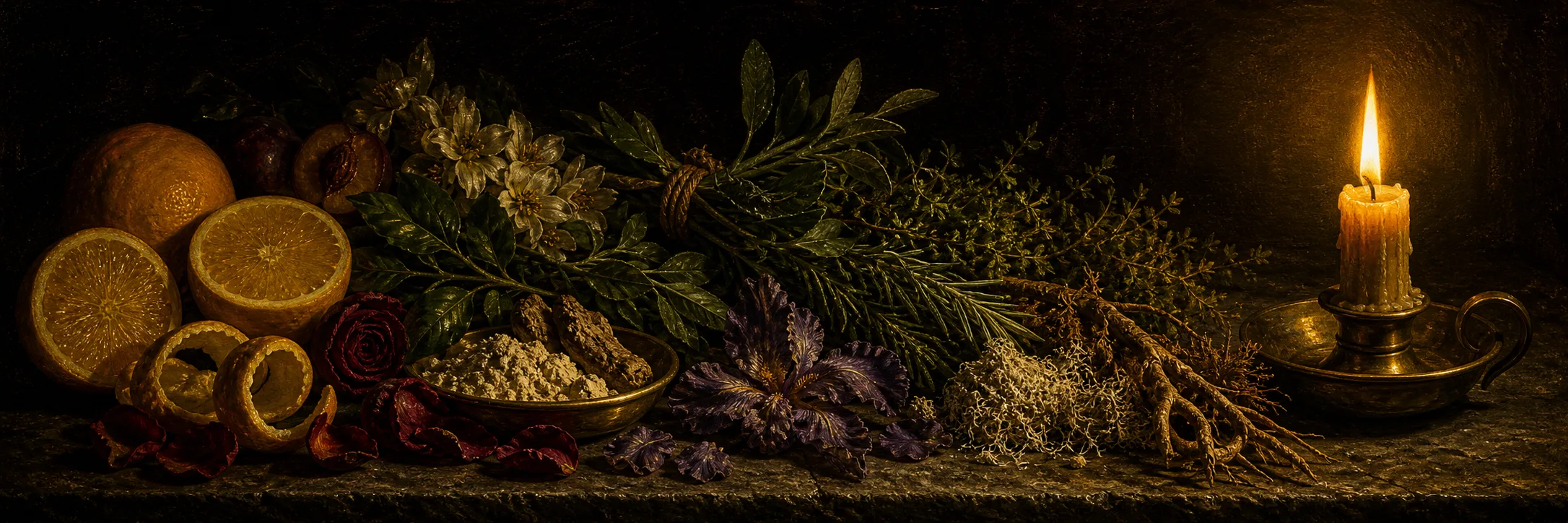
Essence
Boy is Olivier Polge’s 2016 entry to Les Exclusifs and his second composition for the line after Misia - a deliberately revisionist fougere that takes the lavender-coumarin-oakmoss architecture of a 1920s barbershop scent and softens its edges with rose, geranium, and heliotrope so that the genre, traditionally male-coded, becomes plausibly unisex. The signature smell is clean lavender wrapped in a powdery, almond-tinted heliotrope-vanilla, with the herbal teeth of a classical fougere deliberately filed down. It is Chanel’s gentlest fougere and one of the most quietly intelligent flankers in the brand’s modern catalog.
Scent Profile
The opening (first ten to twenty minutes) is a sparkling lavender lifted by lemon and grapefruit - clean, dusty, with the faintly minty-metallic edge of true lavandin rather than fluffy gourmand lavender. The aldehydes that Olivier Polge habitually deploys at Chanel are present as a barely-there fizz rather than a No. 5-style flourish; reviewers in wearer discussions reach for the word “sparkling” rather than “soapy.” Grapefruit is more textural than juicy - it contributes a bitter-skin bite that keeps the lavender from going floral too quickly. In the heart (one to three hours) the geranium-rose pairing becomes the dominant face: peppery, mineral-green geranium dancing with a dewy, transparent rose, while orange blossom adds a faintly honeyed indolic warmth. The Candy Perfume Boy’s image of “an exceptionally-tailored jacket, cut to perfection in the finest green tweed” maps usefully onto this phase; it is fougere architecture made of cooler, more chic materials than the soapy barbershop default. This is also where the heliotrope (an “almond-cherry-marzipan” molecule in Polge’s practical palette) starts to ghost under the florals. The drydown (three hours onward) is where Boy distinguishes itself most clearly from peer fougeres. The base is heliotrope-driven - sweet, powdery, almost a baby-skin warmth - over a creamy, restrained sandalwood, soft vanilla, white musk, oakmoss, and coumarin. Chantal-Helene Aubin’s review at CaFleureBon called the overall character “light, green, powdery, bready.” That “bready” cue (heliotrope + coumarin reading as fresh dough) is the most useful single descriptor. Persolaise nailed the spiritual reference point: “with its softness, its soapy inflection and its refusal to stray far from the wearer’s skin, it comes closer than anything I’ve smelt for years to Houbigant’s original Fougere Royale” - i.e., Boy reads more like the 1882 founding fougere than like any modern descendant. Oakmoss is present but legal-IFRA-restrained; it provides shadow rather than the bitter mineral floor of a vintage chypre. Linearity vs evolution: Boy evolves in three legible acts but the overall mood is consistent and close to the skin. The signature accord is the lavender-heliotrope-musk triangle - that is what people will smell if they get close enough.
Performance
Projection is modest. Boy is engineered as a personal-bubble scent; Persolaise observed that “its volume control is never turned too high,” and reviewers consistently report a one-arm projection radius for the first two to three hours, then a true skin-scent phase. Sillage is light - this is not a fragrance that announces a wearer’s arrival in a room. Longevity on skin is 5-8 hours for most wearers, with the heliotrope-musk base trailing in faint form into hour 9 or 10. On cotton shirts and wool collars it lasts 24+ hours and is, if anything, more legible at that distance than on skin. Heat helps it bloom modestly; cold weather can mute it further. Humidity flatters the lavender and rose; arid conditions dry it out to mostly musk. Best application strategy is generous (4-6 sprays) and includes spraying clothing - this is a fragrance that wears more clearly on fabric than it does on the wrist. As a “personal-aura” fragrance rather than a sillage monster, restraint is misread as weakness; the design intent is intimacy.
Wearing Context
Best worn in spring through early autumn - Boy’s lavender-citrus opening is engineered for warmth, and Anne-Marie at Australian Perfume Junkies’ framing of it as a fragrance for “warmer weather” with winter “hibernation” is a fair guideline, though contrarian wearers (her included) find it pleasing on cold rainy days exactly because the powdered-warm base contrasts the chill. Daytime is its natural slot - office, lunch, weekend daytime social - and it pairs especially well with linen, tweed, and tailored shirting. It is dressy without being a “going-out” perfume; for nightlife and date contexts there are louder Chanels (Coromandel, Egoiste, the original Chance EDP) that fit better. Socially it reads quietly expensive and slightly androgynous; women wearing it are often perceived as wearing a partner’s cologne (Polge’s stated brief was a woman in her boyfriend’s shirt) and men wearing it are perceived as choosing the road less traveled relative to standard masculine designer pillars. It falls flat in any context requiring projection: clubs, large rooms, gyms, and humid summer crowds.
Comparisons & DNA
Boy belongs to the “modern revisionist fougere” subgenre. Caron 3eme Homme is the most direct ancestor - same softened-lavender-rose-vanilla architecture, but Caron is sweeter, more powdery, less green; Persolaise drew the line explicitly in his review. Houbigant Fougere Royale (the modern reissue) is the historical reference point and shares the lavender-coumarin-oakmoss skeleton, but the Houbigant is dirtier, more leathery, more clearly mid-19th-century in feel. Jicky (Guerlain, 1889) is the spiritual grand-parent - Jicky and Boy are both “civilized aromatic” compositions in the bottom of the wardrobe sense - though Jicky leans more on vanillic-animalic interplay. Chanel Jersey, another lavender-led Exclusif, is sweeter and fruitier (pear and vanilla forward) where Boy keeps the lavender herbal and lets geranium-rose take the floral role. Chanel Pour Monsieur is the brand’s classical reference masculine; Persolaise placed Boy alongside Pour Monsieur and Bel Respiro as the “guy-friendly” Exclusifs trio. Atelier Cologne Trefle Pur and L’Artisan Fou d’Absinthe touch the green-lavender register but at a lighter cologne weight. There is no widely-recognized Lattafa/Armaf/Maison Alhambra clone of Boy specifically; the closest accessible “soft fougere” analogues in the mass market are Penhaligon’s Sartorial (mossier, more retro), Dior Eau Sauvage (drier, jasmine-forward), and - at a much greater stretch - Jean Paul Gaultier Le Beau Le Parfum’s coconut-tonka thread.
Reception
Critical reception was warm and slightly puzzled - Boy was widely admired by critics, less widely embraced by buyers. Persolaise’s verdict: “the exercise works well… restrained elegance is the modus operandi here. This may come as a disappointment for those hoping for a release with more clout, but it’s entirely in keeping with the perfume’s subject.” The Candy Perfume Boy named it the year’s best niche feminine. The Scented Salamander praised “this plume effect replacing the splash-in-the-face one” of standard fougeres and noted the perfume’s “passeist,” nearly Belle-Epoque musky-floral character. CaFleureBon’s review described it as a “wry, unexpected take on a classic men’s style.” On wearer discussions the rating sits comfortably above - well-liked but not adored. The most common wearer praise: the “shimmering softness,” the unexpected geranium-rose lift, the elegance of the base. The most common wearer criticism: poor projection and longevity by Chanel pricing standards (“for the right ‘Les Exclusifs’ fragrance, it is worth it purely for the scent. Longevity is a slight let down as this fragrance lasts 6-7 hours max” is a representative sentiment). Polarization centers on whether the soft-fougere premise is sufficient at the Les Exclusifs price point - those who already love understated classics tend to love Boy, while shoppers expecting “wow” from a $200+ Chanel often feel underserved. Blind buy verdict: yes for collectors of classic-style masculines (Pour Monsieur, Antaeus, Caron 3eme Homme, Houbigant Fougere Royale, Penhaligon’s Sartorial) and for women who routinely steal their partner’s cologne; no for projection-focused buyers and for anyone seeking originality at the Chanel price point.
Versions & Reformulation
Single composition. Boy was launched in 2016 as an eau de parfum within the Les Exclusifs lineup and has been offered in the standard 75 ml and 200 ml bottle sizes. No formal reformulation has been announced; wearers batch-to-batch variation reports are minor and within normal Chanel quality-control tolerances. There is no eau de toilette, parfum, body lotion, or other concentration variant - Boy exists in one form. The matching hair mist that briefly appeared in some markets in 2017-2018 (a softer, alcohol-free format) used the same accord but does not constitute a separate composition.
Acquisition Notes
Boy sells at the standard Les Exclusifs tier - 75 ml and 200 ml EDP, distributed only through Chanel boutiques, chanel.com, and a small set of luxury department stores (Saks, Bergdorf, Neiman Marcus, Harrods, Liberty, KaDeWe, Selfridges). Decant ecosystem is healthy: Surrender to Chance, Scent Split, and MicroPerfumes all carry Boy in 1-8 ml splits, with sample vials a low-risk way to test before committing to the full bottle. (Persolaise dated his review 28 June 2016).
Notable Facts & Lore
- Boy is named for Arthur “Boy” Capel, the English polo-playing aristocrat and businessman who was Gabrielle Chanel’s lover and financial backer in the 1910s; he bought her the Deauville boutique in 1913 and was, by widespread biographical consensus, the great love of her life until his death in a car accident in 1919.
- Capel is the second specific person to inspire a Les Exclusifs scent (Misia, Olivier Polge’s 2015 debut for the line, was named for Misia Sert, Chanel’s confidante after Capel’s death).
- Olivier Polge’s stated brief, per multiple interviews summarized at CaFleureBon and launch coverage, was to express “the mark of a man on the skin of a woman” - to evoke the feminine appropriation of menswear codes that defined Chanel’s couture practice from the start.
- The Scented Salamander quoted Polge as wanting to investigate “the notion of gender as applicable to perfume” not by compromising toward unisex but by going deeper into masculinity and pulling femininity out from inside it.
- Persolaise identified the historical resonance: Boy is the modern Chanel scent that comes closest to Houbigant’s 1882 Fougere Royale, the actual perfume Capel himself might plausibly have worn.
- There is no significant celebrity face - Boy never received the kind of campaign anchor that Chance Eau Tendre’s Sigrid Agren or N5’s Marion Cotillard provided - and no viral moments.
- It is a connoisseur scent that sells modestly and is collected by people who already know what they want.