Chanel — Coco Mademoiselle Eau de Toilette
Essence
Coco Mademoiselle is Jacques Polge’s 2001 mega-seller - for years a top-selling women’s prestige fragrance in the US - and one of the most influential and most-imitated feminine releases of the 21st century. It’s a bright, “amped-up” patchouli built in the lineage of Thierry Mugler Angel: a fruity-floral-patchouli that’s been called a modern (if controversial) chypre. The EDT is the lighter, zingier, more citrus-and-fresh-leaning concentration of the line - sharper-edged and more “sparkling” than the richer EDP, sharing the same orange-rose-jasmine-patchouli DNA.
Scent Profile
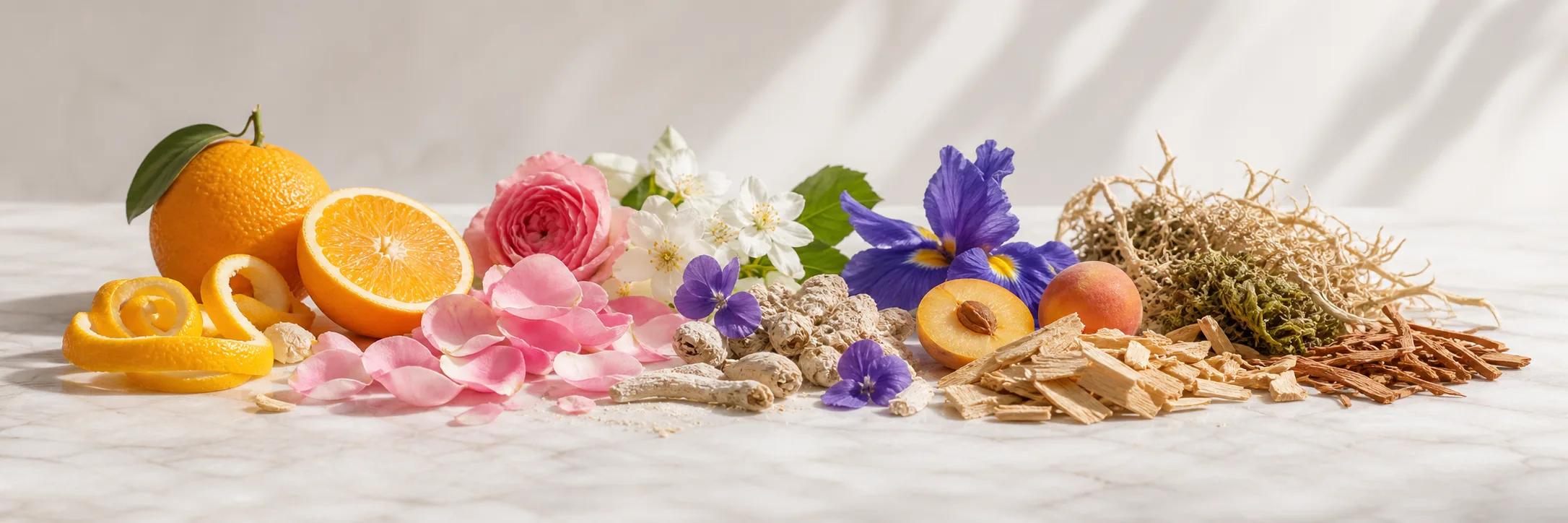
The EDT opens loud and citrus-forward: a bright burst of orange, mandarin, bergamot and grapefruit, with the grapefruit and a zingy citrus edge more pronounced than in the EDP. Critics and wearers note the EDT’s opening citrus is “zingier and longer-lasting,” giving it “the most angles and sharp edges” of the line. There’s an immediate “high-pitched floral smack” - Now Smell This’s Angela memorably found it screeched “like driving with a loose fan belt” on her skin, fine for seconds but grating longer. Orange blossom bridges into the heart. The heart (one to three hours) is an abstract, technicolor floral - Turkish rose and jasmine the most legible, with mimosa and ylang-ylang rounding it. Bois de Jasmin’s Victoria Frolova pinpoints the core mechanism: a radiant hedione-lifted jasmine juxtaposed against a “dusky chypre accord,” with the heightened artificiality of the rose-jasmine abstraction deliberately glittering off the skin. In the EDT this floral middle arrives bright and somewhat sharp rather than dense; the rose can dominate on some skins to the point the whole thing reads “white floral.” The drydown (three hours plus) is the famous Coco Mademoiselle base: a greenish, herbal-but-sticky patchouli melted under vanilla, tonka, white musk, vetiver and opoponax. This patchouli - the same sort used in Chanel Chance - is the spine of the fragrance; Luca Turin described the whole genre as “a greenish, herbal patchouli over which have been melted vanilla and the type of fruit syrups used to flavor water.” The EDT drydown is “a tad greener” and the white musk more prominent (the EDT adds grapefruit and musk notes the EDP structures differently), versus the EDP’s rounder, sweeter, more rose-and-vanilla finish. The signature accord is that sweet-fruity-patchouli-vanilla “champagne-and-flowers” effect. Notably evolving rather than linear, with a clear citrusfloralpatchouli arc. Perceptible: citrus, rose, patchouli, vanilla-musk. Submerged: opoponax, vetiver, individual white florals (rendered abstract).
Performance
Strong for an EDT, and famously potent across all concentrations of this line. Projection is moderate-to-strong in the opening citrus-floral blast - a real “scent bubble” - settling to moderate. Sillage is generous; this is a fragrance frequently smelled across a room and on passers-by, and over-spraying is a real risk (multiple wearers warn to use a light hand). Longevity on skin commonly runs 6-8 hours for the EDT (versus the EDP’s frequent 10+); on clothing it’s tenacious and can last a day or more - “sticks on clothes like glue.” It performs best in cool weather, where the patchouli-vanilla base is comforting rather than cloying; in heat the sharp citrus-patchouli can turn strident. Spray, don’t rub. wearer reports on current batches is that the EDT holds up better in warm weather than the heavier EDP. A caveat: some wearers find recent reformulated batches noticeably weaker.
Wearing Context
Versatile and broadly office-safe, skewing daytime and three-season (the lighter EDT is the warm-weather pick of the range, better in spring/summer than the EDP). It works for work, daytime events, and casual elegance; the EDP is the better evening/cold-weather choice. It shines as a polished “put-together” signature - wearers repeatedly describe feeling “elegant, sexy and sophisticated.” Where it can feel wrong: it’s so ubiquitous and so strongly coded as a mainstream feminine signature that it lacks distinctiveness for enthusiasts seeking originality; the sharp citrus-patchouli opening reads harsh or even “masculine/aftershave-like” on some skins and can trigger sinus/headache reactions in the sensitive. Socially it has a slight skew - frequently complimented by men, and several wearers note it reads “mature” and nostalgic (a “mom getting ready for work” scent for some).
Comparisons & DNA
The defining lineage is Thierry Mugler Angel (1992): Bois de Jasmin and Luca Turin both place Coco Mademoiselle squarely in Angel’s fruity-patchouli “techno-gourmand” species - Angel is the groundbreaking ancestor, far sweeter, darker and more divisive; Coco Mademoiselle is its polished, crowd-friendly bestseller descendant. Within Chanel, Chance is the closest sibling (same Polge sticky-patchouli signature, lighter and fruitier - Turin/Frolova regard Chance as the lesser “striving” version), and Coco (1984) is related only by marketing, not scent. Coco Mademoiselle Intense (2018, Olivier Polge) is the patchouli-amped, more gourmand-amber “neo-chypre” flanker. The clone/dupe ecosystem is enormous: Zara is the budget powerhouse, with Red Temptation, Cashmere Rose, and Fleur de Patchouli all pitched as alternatives (Red Temptation captures the citrus-and-patchouli arc at ~80-85% with weaker performance). Dossier’s Gourmand Patchouli is a closer ~85-90% match in the drydown (slightly more patchouli-forward), and budget options like Lidl Suddenly Madame Glamour and Milton-Lloyd Miss Tutu are long-running cheapies. Best dupes hit ~85-90% in drydown; the proprietary opening is hardest to match. Stylistically it sits beside other Angel-lineage fruitchoulis and modern fruity-floral chypres like Dior Miss Dior Cherie.
Reception
Among the most-reviewed feminine fragrances in existence; consensus is that it’s a beautifully made, versatile, iconic crowd-pleaser - and, to a vocal enthusiast minority, an over-exposed, somewhat synthetic patchouli that “smells like every perfume shop.”: Luca Turin gave it four stars in Perfumes: The Guide while concluding with the backhanded “Mercifully, this style is on its way out,” and noting its historical debt to Angel and the difficulty of telling these scents apart (“all tan, makeup, and hair”).: Bois de Jasmin’s Frolova admires the radiant jasmine-against-chypre construction but found the “sharp cotton candy-patchouli” hard to wear on her own skin (preferring the discontinued dry-oil and Touche Scintillante versions); Now Smell This’s Angela enjoys catching it on others but “would be happy never to wear it again,” singling out the screechy floral and the woody-musky base. Common praise: elegance, projection/longevity, the creamy patchouli-vanilla drydown, compliment performance. Common criticism: ubiquity, the synthetic/sharp opening, reformulation-driven weakening, sinus-irritating musk. Polarization runs along the casual-wearer-loves-it / critic-finds-it-loud axis. Blind buy? Reasonably safe for the target wearer given how well-known and broadly-flattering it is - but sample the specific concentration, as EDT and EDP genuinely differ.
Versions & Reformulation
This is a multi-concentration line and the versions genuinely smell different, not just stronger/weaker. The EDT (this entry) is brighter, zingier, sharper-edged and more citrus/grapefruit-and-musk-forward, with a greener drydown; it’s the lightest and most warm-weather-friendly. The EDP is richer, rounder, sweeter, denser on florals and vanilla, with stronger projection and 10+ hour longevity - the most popular version. The Parfum/Extrait wears softest and closest but is still potent, heavier on florals and vanilla. There’s also a 2018 EDP Intense (Olivier Polge) and L’Eau lighter flankers. Reformulation is a real and recurring wearer concern: Chanel reset its batch-code system at the end of 2015 (older 4-digit codes are decodable via the Raiders of the Lost Scent system, e.g. 70xx October 2013), and many wearers report current batches perform notably weaker than older ones - one forum claim that current Coco Mademoiselle is “literally scented water, 2-3 hours tops” overstates it but reflects the sentiment. Reformulations from 2004 onward can be inferred from changes in the box’s allergen-listing order.
Acquisition Notes
Designer/prestige pricing. Widely available in 35ml, 50ml, 100ml (and minis); the EDT, EDP, Parfum, Intense and body products are all sold through Chanel boutiques, department stores and Chanel.com. Decants are easy to source for sampling. MicroPerfumes and the major splitters carry it.
Notable Facts & Lore
- Per Turin, Coco Mademoiselle was reportedly a “quickly assembled flanker” whose success surprised Chanel, though Women’s Wear Daily reporting before launch had Chanel executives predicting it could double Coco’s business.
- Women’s Wear Daily later reported Coco Mademoiselle made $21 million in its first year and broke FiFi records across Prestige Fragrance categories.
- It went on to become a top-selling women’s prestige fragrance in the US for years, with The NPD Group listing it as the #1 US women’s prestige fragrance brand by dollar sales by 2013 and among the top five in 2008.
- The advertising is iconic in its own right: the Keira Knightley campaigns, earlier Kate Moss imagery, and a 2008 FiFi for Best National Advertising Campaign/TV are all part of its cultural footprint.
- Polge built it as a deliberately “perfumey,” sophisticated scent for the 20s-30s market, slotting between Chance for the youngest audience and Coco/No. 5 for the mature market; even detractors like Turin granted it four stars.