Chanel — Bleu de Chanel Eau de Parfum
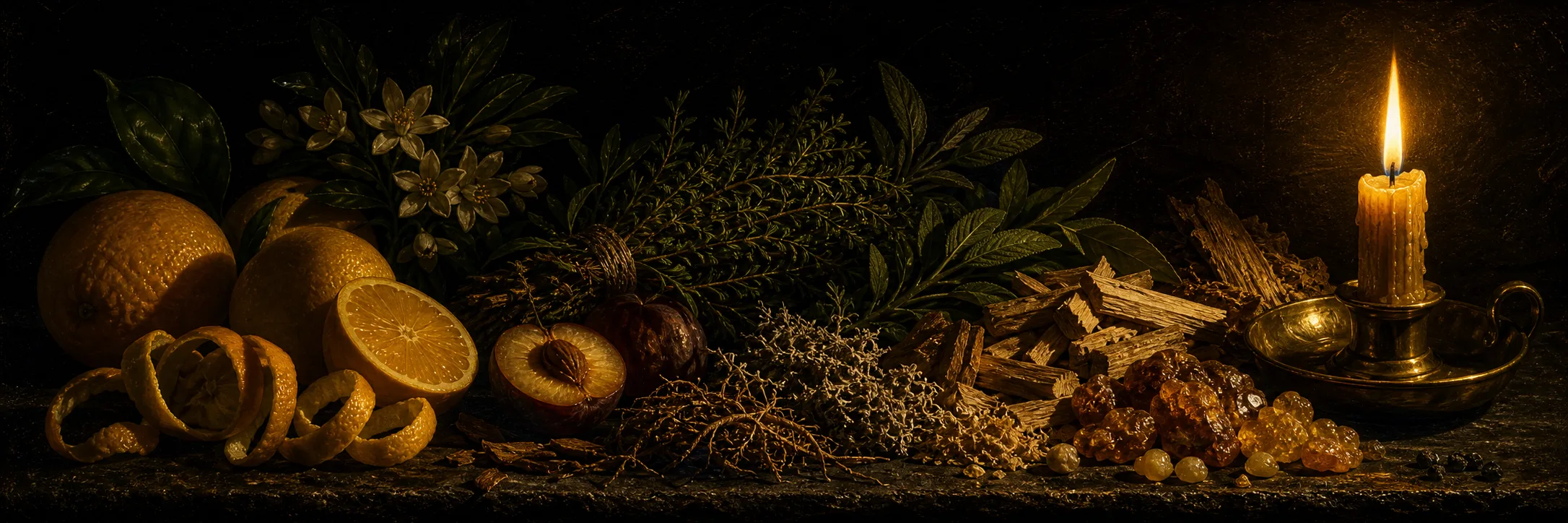
Essence
The 2014 Eau de Parfum is the version of Bleu de Chanel that enthusiasts generally agree Polge meant to make. Where the EDT is bright and citrus-forward, the EDP is warmer, woodier, and longer-lasting - the same DNA pushed into evening-and-cold-weather territory while remaining workable year-round. It introduces aldehydes, coriander, melon and amber-amberwood to the formula, deepening the base and adding a polished, slightly smoky character. Widely considered the best all-around Bleu and the version most enthusiasts recommend as the single bottle to own.
Scent Profile
The opening shares the EDT’s grapefruit-lemon-mint-pink-pepper opening, but the citrus is less explosive and the aldehydes contribute a softer, more refined shimmer rather than the EDT’s pure citrus snap. Coriander adds a subtly green-spicy lift; bergamot rounds out the citrus accord. A faint melon note is present - Olivier Polge has confirmed it in interviews - but it functions as a moistening juiciness rather than as Calone-style watermelon obviousness. The first ten minutes read as a more dimensional version of the EDT. Within twenty to thirty minutes the EDP diverges meaningfully from the EDT. Pink pepper hands off to ginger and nutmeg, but a smoky-incense facet emerges much earlier - within the first hour rather than the EDT’s two-hour mark. Jasmine is still submerged, functioning as a smoother. By ninety minutes the citrus is gone and the fragrance settles into a denser woody-amber accord that the EDT never reaches: cedar, sandalwood, patchouli and amberwood weave around incense, with labdanum’s resinous warmth more pronounced than in the EDT. The middle and base stages (one to four hours) define the EDP’s character: a smooth, slightly smoky, warm woody-amber with citrus echoes and a clear modern-masculine polish. Amberwood is the key addition versus the EDT - it provides a slightly resinous, almost candy-like warmth that the EDT lacks. The drydown is a long, well-blended woody-amber skin scent with incense, cedar and white musk; less clean than the EDT’s drydown, more atmospheric. Signature accord: grapefruit and pink pepper over a smoky cedar-amberwood-incense core. The EDP is more linear than the EDT after the first hour - once it settles into the woody-amber base, it stays there for the long haul.
Performance
Projection is moderate-to-strong, an improvement over the EDT - a clear arm’s-length presence for two to three hours, retracting gradually. Sillage is noticeable; the EDP is the most “you can smell it across the table” of the regular Bleu lineup (the Parfum projects less, surprisingly). Longevity on skin is seven to nine hours; on clothing, twelve to eighteen hours. Year-round wearability is the EDP’s defining performance trait. It handles heat better than the Parfum (which can feel heavy in summer) and cold better than the EDT (whose citrus collapses in winter air). Humidity is fine. Application: three to five sprays. Wearer response is that the EDP is the most versatile concentration in the lineup, working across more weather and contexts than any of the others.
Wearing Context
The most versatile Bleu. Year-round, day-and-night, office-to-dinner-to-date. The EDP is the single recommendation if you want one bottle that handles all contexts. It is slightly more evening-coded than the EDT but daytime-appropriate; slightly less night-coded than the Parfum but evening-appropriate. Spring and autumn are its sweet spot; it works in summer with restraint and in winter with confidence. Settings where it falls flat: extreme heat with humidity (the amberwood can turn cloying); ultra-formal black-tie where Pour Monsieur or Egoiste would be more elegant. Social perception is the same as the EDT - universally well-received, recognized as Chanel by those who know, recognized as expensive by those who don’t. Less of a “first cologne” signal than the EDT; reads as a more confident, mature choice.
Comparisons & DNA
Within Bleu’s lineup: brighter than the Parfum (which buries the citrus under sandalwood and lavender), warmer than the EDT (which keeps the citrus in front longer), less dense than L’Exclusif (2025). The EDP is the median Bleu. Outside Chanel: Dior Sauvage EDP is the closest commercial competitor - sweeter, ambroxan-heavier, less polished but louder. YSL Y EDP is the cleaner, more aquatic peer - same professional-modern signature, less woody. Versace Dylan Blue is the cheaper, sweeter cousin. Armani Code EDP sits in similar territory. Prada Luna Rossa Black is another peer in the modern woody-musky-citrus genre. Clones: Armaf Club de Nuit Blue Iconic (2022) targets the EDP specifically and is widely cited as 90%+ similar. Reviewers report the Iconic clone as a noticeably better EDP dupe than EDT dupe - the woody-amber base of the EDP is more readily replicated than the EDT’s clean citrus. Lattafa Vintage Radio has been mentioned in clone discussions but is further from the original. French Avenue Zenith Deep has been cited as the closest authentic-feeling clone for the EDP’s opening minutes specifically. Lineage: the EDP is the version that consolidated Bleu’s influence on the modern masculine. After 2014, virtually every aspirational designer release in the woody-citrus genre - Y EDP, Dylan Blue, Sauvage EDP - was implicitly competing with Bleu EDP rather than the original EDT.
Reception
Wearer response is the most positive of the three Bleus. Common praise: improved depth, the smoky-amber drydown, year-round wearability, projection upgrade. Common criticisms: still derivative, expensive at roughly $130-$170 for 100ml, the synthetic woody-amber base reads cheap to enthusiasts who recognize Iso E Super and Norlimbanol. Critical reception is split. Persolaise has been the most positive source voice - measured but acknowledging the polish. Bois de Jasmin’s earlier dismissal of Bleu in general extends to the EDP. reviewer Darvant wrote a notably acid take: “The EDP version of Bleu de Chanel opens with citrus-green notes, a bold metallic-woody-spicy synthetic accord (norlimbanol and fellows) which shall recreate a sort of ‘woody-spicy’ base… all the intolerable cheapness and dullness of possibly one of the worst Chanel’s ever made is masterfully treasured here as well.” That’s the enthusiast hate position; it is not the mainstream view. wearer discussions is split on the “best Bleu” question between EDP and Parfum, with EDP usually winning the versatility argument. Blind buy verdict: strongly yes - the safest premium-tier blind buy in masculine perfumery, and the one I would recommend as the single bottle if someone were buying one Bleu.
Versions & Reformulation
Single composition since 2014, with batch variation but no significant published reformulation. Per Wikipedia’s “Bleu de Chanel” article, the 2014 EDP was formulated by Jacques Polge - the same perfumer who created the 2010 EDT - making the EDP specifically Jacques Polge’s own reworking of his original composition (the later 2018 Parfum was the first Bleu reformulation handled by his son Olivier). The EDP is structurally different from the EDT (adds aldehydes, coriander, melon, amber, amberwood) rather than being a higher-concentration version of the same composition. This is genuine compositional change, not merely concentration adjustment.
Acquisition Notes
Designer tier pricing, slightly above EDT: approximately $130-$170 for 100ml, $100-$130 for 50ml, $190-$220 for 150ml as of 2026. Universal distribution. The 300ml is occasionally available. Decant ecosystem identical to EDT - Surrender to Chance, MicroPerfumes, Scent Split, The Perfumed Court all stock it.
Notable Facts & Lore
- The 2014 EDP was Jacques Polge’s deliberate reworking of his own 2010 EDT - a rare case of a perfumer reformulating his own composition into a sibling rather than a flanker.
- Polge has said in trade interviews that the EDP was designed to give Bleu a “fuller masculine intensity” while preserving the original’s freshness signature, and that the amberwood addition was the critical structural change.
- The EDP shared the Gaspard Ulliel campaign with the EDT through 2022 and has appeared in the Chalamet/Scorsese 2024 campaign material as the implied primary version.
- The Bleu campaign positioning is articulated explicitly by Olivier Polge in coverage of the Chalamet film: “Bleu de Chanel has just the right amount of conviction and intensity to represent a man who refuses to be typecast… a man who dismisses facades and who is not afraid to let vulnerability show through his tough, disarming exterior.”
- No celebrity-association controversies, no viral TikTok crash, no reformulation scandal.
- The EDP has been the quiet workhorse of the Bleu lineup - most reviewed, most recommended, most worn.