Chanel — Les Exclusifs de Chanel Cuir de Russie
Essence
Cuir de Russie (“Russian Leather”) is Chanel’s legendary 1924 Ernest Beaux leather, reissued in 2007 within Les Exclusifs in this Eau de Toilette (reorchestrated over the years by Jacques Polge). It is a classical aldehydic-floral-leather: a fizzing aldehyde-and-citrus top over the Chanel No. 5 floral triad (jasmine-rose-ylang), bridged by a cool, powdery iris into a birch-tar leather, blond-tobacco and styrax base. Widely considered one of the greatest leathers ever made - “an undamaged monument of classical perfumery” (Luca Turin, five stars). This EDT is now discontinued, superseded by the 2016 EDP.
Scent Profile
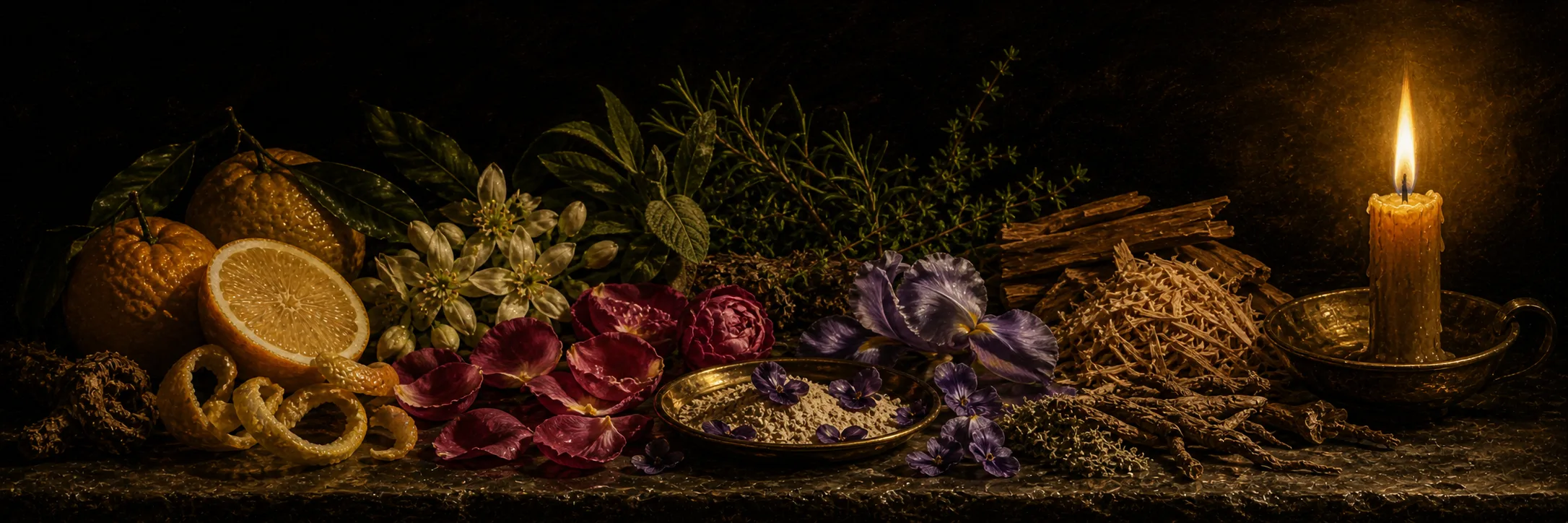
The opening proclaims its Chanel-No.-5 lineage: a crisp aldehydic flurry - soapy, waxy, lemony, sparkling - over bergamot, mandarin and clary sage. Detractors (and some honest skins) read the aldehydes as heavy soap; on most, within minutes a soapy-leather impression surfaces, and the famous birch-tar smokiness begins to climb. A small but recurring minority get a brief, vivid “sweaty saddle / horse / barnyard” animalic phase here (Kafkaesque’s well-known dissent), the funkier face of the birch tar and indolic florals. The heart (1-3 hours) is the No. 5 floral triad - jasmine, rose, ylang-ylang - rendered “darker and more indolic than usual,” pushed by orange-blossom indoles into the leather. The defining move is the iris: a “chilly,” powdery, faintly cool orris that “undulates” through the heart and “builds a bridge between the flowers and the dark-animalic, birch-tar-tanned leather,” softening it to something almost buttery. Bois de Jasmin’s image - “an elegant woman reaching into a black leather handbag… red lipstick, powder compact, a silver cigarette case” - captures the mid-stage: leather, powder, soft tobacco and florals interlaced. The drydown (3+ hours) is supple, dry, powdery leather: birch-tar smoke (toned down versus vintage), blond/sweet tobacco, styrax, amber, a whisper of vanilla, cedar and vetiver, with orris carrying through. Cafleurebon: “plush leather as supple as well-worn gloves wrapping around wisps of sweet blonde tobacco smoke and soft, decadently powdery orris.” It is comparatively close to the skin in EDT form - “incredibly close to the skin” within 30 minutes for some - a translucent rather than dense leather. Linearity vs evolution: a smoothly evolving classical structure where, per Bois de Jasmin, “it is almost impossible to identify where one accord ends and the other begins.” The signature accord is the iris-leather-birch-tar chord - cool powdery orris over smoky, tobacco’d, styrax leather, on a No. 5 floral-aldehyde armature. Perceptible: aldehydes, the floral triad, iris, birch-tar leather, tobacco, styrax. Submerged/contested: overt sweetness (kept restrained in the EDT); the animalic “horse” facet is skin-dependent.
Performance
The EDT is famously refined-but-quiet, which is frequently mistaken for weakness. Reports range widely: some get “very good projection and longevity,” while others find it “incredibly close to the skin” within half an hour, requiring generous application to read the full development (one reviewer only got proper sillage after applying “triple the previous amount”). A common figure is around 7 hours on skin with “decent” projection and sillage. The vintage and early-2007 EDT were smokier and arguably stronger; later EDT batches were tweaked lighter and more floral. Behavior: the smoky-leather core warms and blooms in cold/cool and damp conditions - multiple reviewers call it ideal for cold or “monsoon”/wet weather, where leather and tobacco gain depth; in heat it can turn sharper and the aldehydes/soap more prominent. Best application strategy: apply generously (this is an EDT that rewards a heavier hand to surface the base), and consider clothing for longevity. Note for buyers: longevity has been a complaint on later/discontinued stock - one Bois de Jasmin commenter lamented how “flat and short-lived it has become” in recent boutique testers.
Wearing Context
Best in autumn and winter, and cool damp days; daytime or evening, skewing sophisticated/dressy. It shines as an elegant, classical statement leather - “a 50s/60s starlet in a technicolor film shot on location in a European capital” - for cultured, formal or intimate settings, and on anyone who wants vintage-Chanel gravitas. It can fall flat in heat (sharp/soapy), and is “not for wallflowers” per some, while paradoxically being a quiet skin scent on others. Gender/social-perception skew: officially feminine, but the leather-tobacco-iris profile reads strongly unisex-to-masculine-leaning in the wearers; many men wear and recommend it, and it is frequently compared to masculine leathers. Its powdery-aldehydic-vintage register can read “old-fashioned” to younger noses.
Comparisons & DNA
Cuir de Russie is itself a foundational leather, so most comparisons are to peers and descendants. Within Chanel, it is structurally a variation on the No. 5 DNA (like No. 22 and Bois des Iles), and reviewers cross-reference Chanel Antaeus for animalic leather (Antaeus rawer/“bearskin”; CdR softer, “soft and clean” castoreum-like facet) and Coromandel/Bois des Iles as Exclusifs kin (CdR is the “displaced,” brooding, animalic one of the line, per eauxSILLAGE). Classic-leather neighbors named by the wearer discussions: Dior Cuir Cannage and Parfum d’Empire Cuir Ottoman (“rubs shoulders” with both; CdR’s iris keyed down, styrax less sharp, more genteel), Etro Gomma (“the closest… similar soapy leather infused with jasmine”), and Lancome Cuir de Lancome (a later EDT reminded one reviewer of it). Turin’s A-Z places it in the leather category “right next to the rather more jovial Tabac Blond (Caron).” It is also likened to Dior Fahrenheit as a “milder cousin” (a floral-leather softened “to a whisper”) and, in spirit, to Guerlain Mitsouko for its grande-dame complexity. No designer clone meaningfully replicates it; it is the reference others (Cuir Ottoman, Cuir Cannage, Knize Ten in spirit) are measured against. Lineage: descended from the late-19th-century “Cuir de Russie / Russian leather” theme (versions also existed from Guerlain and L.T. Piver); Beaux’s 1924 Chanel version became the genre benchmark and influenced essentially every subsequent iris-leather.
Reception
Critical reception is rapturous at the top tier. Luca Turin & Tania Sanchez awarded the (reissued) Cuir de Russie five stars in The Perfumes A-Z Guide, calling it “the real deal, an undamaged monument of classical perfumery, and the purest emanation of luxury ever captured in a bottle… sumptuous leather, light and balsamic, forgoing any sugary compromise,” likening its scent to “running the hand over the pearl grey banquette of an Isotta Fraschini while forests of birch silently pass by.” Bois de Jasmin (Victoria Frolova) reveres it - the EDT “perhaps even edgier than the parfum” - and Tania Sanchez’s own much-quoted account of being “paralyzed… on the verge of tears” at the Chanel boutique appears in the comments. Cafleurebon called the Les Exclusifs Polge version “one of the best fragrances I have ever smelt.” Persolaise, reviewing the extrait, re-examined it “as an iris constructed out of strips of the most luxurious suede.” wearer discussions (wearer discussions) treats it as a near-sacred classic and one of the best Les Exclusifs, beloved for the iris-leather elegance and “high-definition” quality. Axes of polarization: (1) the soapy-aldehyde opening and a divisive “horse manure/barnyard” animalic phase that a minority strongly dislike (Kafkaesque’s famous dissent: the legend that proved, for her, “closer to a myth”); (2) “too similar to other Exclusifs / to No. 5” for some; (3) modern-vs-vintage performance disappointment. Blind-buy verdict: as a now-discontinued EDT, it’s a buy-if-you-can-test classic - sample (or buy a decant) first, because the soap/animalic opening genuinely doesn’t work for everyone, and confirm you’re getting the EDT and not the different-smelling EDP.
Versions & Reformulation
This dossier’s catalog entry is the 2007 Les Exclusifs EDT (Jacques Polge’s reorchestration of Beaux’s 1924 original; the perfume was first revived in 1983), now discontinued. There are several distinct versions and the differences are significant: - Vintage / pre-Exclusifs (1924 original; 1983 revival): smokier, more aggressive birch-tar leather, woodier (oak/cedar/sandalwood), no/less vanilla; widely considered the deepest. - 2007 Les Exclusifs EDT: Polge’s softer, iris-forward, more genteel reorchestration; the birch tar was progressively toned down across batches; this is the version most “iris-leather” lovers prize. Discontinued around 2016. - 2016 Les Exclusifs EDP (the current replacement): a “soapy reinterpretation” - brighter, more aldehydic, much more floral/jasmine-forward, with the “center of gravity shifted” to leather-plus-dry-woods on a sweeter ambery base; birch tar minimal. Many EDT loyalists consider it a downgrade (“what was a lion is now a perfectly trained house cat”), though some newcomers find the EDP an easier, “well-mannered” beauty. - Extrait de Parfum: the most prized by several critics (Bois de Jasmin: “undoubtedly my preferred formulation… an almost tactile butteriness”); darker, smokier, drier, more leather, less aldehyde/floral than the EDP - “high definition,” “more unisex.”
Acquisition Notes
Luxury tier (Les Exclusifs boutique-line pricing; historically sold in large 200ml bottles for the EDT, with smaller boutique-only sizes later). The current EDP (200ml) is available new from Chanel boutiques and Chanel.com. Decant ecosystem: historically carried by Surrender to Chance and The Perfumed Court (split decants of EDT/EDP/extrait circulated widely); these are the practical way to compare versions. To verify an EDT vs EDP: the concentration is printed on the back of the paper label (read through the juice); EDT juice tends paler/yellow, and color/strength shifts indicate batch/version.
Notable Facts & Lore
- The launch lore is integral to the perfume’s identity: Cuir de Russie is tied to Coco Chanel’s early-1920s affair with Grand Duke Dmitri Pavlovich Romanov (cousin of Tsar Nicholas II), one of the Russian emigres who flooded 1920s Paris; Chanel’s biographer reportedly called it the bottled “essence of her romance with the Grand Duke.”
- Cafleurebon’s romantic framing has it capturing “the lingering scent of N5 on the sheets they made love in… and the birch-tar-polished boots of the Grand Duke that stood at the foot of their bed.”
- The “Russian leather” effect itself references birch-tar-tanned boots worn by Russian cavalry.
- Ernest Beaux, also the creator of No. 5, built it; Jacques Polge later stewarded it into Les Exclusifs.
- Per Chanel’s own narrative and biographers, it was among Mademoiselle’s “big five” 1920s perfumes.