Chanel — Bois des Iles Eau de Parfum
Essence
The 2016 Eau de Parfum is Chanel’s current production version of Bois des Iles, replacing the 2007 EDT when the entire Les Exclusifs collection moved from EDT to EDP concentration. Credited to Jacques Polge (in his final period before fully handing the house to Olivier), it is a “recontextualization” of the 2007 EDT - lighter, less powdery, less aldehydic in the opening, with sandalwood still creamy but with reduced opoponax depth in the base. wearer reaction was sharply split between “successful modernization” and “crime against perfumery,” with the truth somewhere between - a softer, more contemporary expression of the Bois des Iles DNA that loses some vintage opulence in exchange for cleaner clarity.
Scent Profile
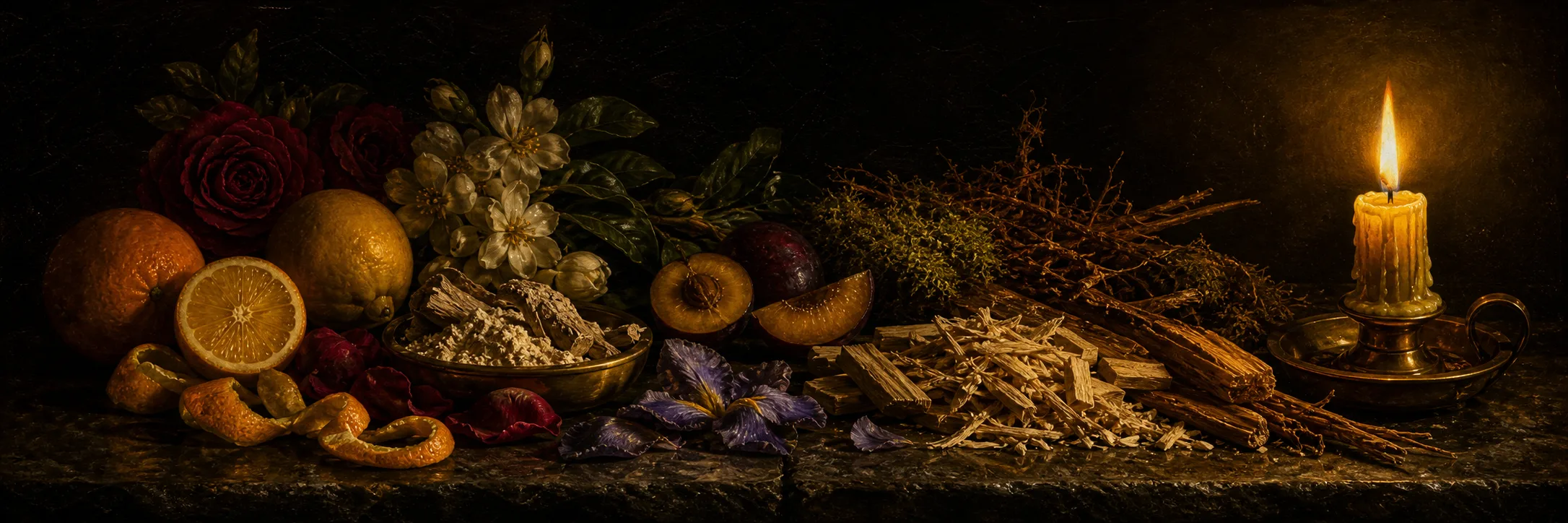
The opening is notably quieter than the 2007 EDT. Aldehydes are present but dialed down further - the soapy Chanel shimmer is gentle rather than declarative. Bergamot and neroli provide the citrus lift; the peach note that was a small but distinctive Beaux signature in the EDT is significantly reduced or absent on most skins (a frequent EDP criticism: “the stunning peach note in the EDT which hits you only when you really inhale - gone, MIA in the EDP”). The opening reads cleaner, slightly greener, more contemporary. By twenty minutes the floral heart emerges. Jasmine, rose, lily-of-the-valley, iris and ylang-ylang are the listed notes, and they cohere into a soft floral bouquet very similar to the EDT’s heart - slightly less powdery, slightly more dewy. Ylang-ylang is still the most assertive floral. Iris contributes powder, jasmine and rose contribute body. The transition into the woody-amber base is faster than in the 2007 EDT - within an hour rather than ninety minutes. The base is where the EDP diverges most clearly from the 2007 EDT. Vetiver, sandalwood, benzoin and musk are listed; opoponax and tonka bean, present in the 2007 formula, are removed or significantly reduced. The result is a lighter, cleaner sandalwood drydown without the rich gingerbread-balsamic depth that defined the EDT’s late stages. Some reviewers describe the EDP’s base as “Iso E Super-heavy” with a synthetic sandalwood thinness; others - wearer discussions higher-rating reviewers - find the EDP’s cleaner profile a successful modernization, “more dry and woody and in others more floral.” Signature accord: aldehydic floral over creamy sandalwood with a softer, less balsamic base than the EDT. The EDP is more linear than the EDT after the first hour - it settles into a sandalwood-floral skin scent and holds there. Some reviewers love the simplification; others find the EDP a watered-down Bois des Iles.
Performance
Projection is moderate, similar to the EDT in actual projection despite the EDP concentration - Les Exclusifs reformulations have been observed not to project louder despite higher oil content. Sillage is gentle. Longevity on skin is approximately seven to ten hours; on clothing, twelve to sixteen hours. Some reviewers report the EDP outlasting the EDT slightly on the skin scent base, others report the opposite. Cool and cold weather are prime. Heat and humidity reduce projection further. Application: three to five sprays for proper presence. Many EDP reviewers report needing more sprays than they did with the EDT to achieve the same effect, suggesting the formulation is denser but less diffusive.
Wearing Context
Same wearing contexts as the 2007 EDT - autumn and winter, evening more than daytime, formal and semi-formal occasions, dinner and opera and cool-weather social gatherings. The EDP is slightly more daytime-workable than the EDT because of its cleaner, less heavy opening. Marketed feminine, easily unisex. Settings where it falls flat: hot weather, casual daytime, club environments. The EDP is less obviously “vintage” than the EDT, which makes it slightly more wearable by younger women and men who might find the EDT too cosmetic or aldehyde-heavy. Social perception is “well-bred, expensive, soft” - quieter than No. 5 in social signal, less “perfume” and more “scent.”
Comparisons & DNA
Within Chanel: closest to the 2007 EDT but lighter; tonally similar to No. 22 (powdered aldehydic floral) and Coromandel EDP (spicier, woodier). The EDP shares more DNA with No. 5 L’Eau (2016) - Olivier Polge’s lightened modernization of No. 5 - than with the 2007 EDT, suggesting an intentional “lightening” of Chanel’s archival fragrances around 2014-2016. Outside Chanel: Guerlain Samsara remains the closest creamy-sandalwood-floral comparison - Samsara is louder, sweeter, longer-lasting. Frederic Malle Dries Van Noten is a modern peer. Lutens Santal Majeur is the niche sandalwood. Tom Ford Santal Blush is the gourmand-rose-sandalwood relative. Clones: none of significance. Les Exclusifs EDPs are not commonly cloned. Dua Brand offers a Bois des Iles dupe that uncertain reviewers describe as closer to the EDT than the EDP. The EDP’s lighter, more abstract profile is harder to clone than richer fragrances. Lineage: the EDP is the latest descendant of Beaux’s 1926 original. It is, debatably, the fourth or fifth distinct iteration depending on how one counts intermediate reformulations of the parfum extrait, which Chanel has continuously sold since 1926 with adjustments tracking Mysore sandalwood availability.
Reception
Wearer reception is mixed-to-positive. The most-quoted negative wearer review: “Having tested the EdP, I can say that the reformulation of BdI is a crime against perfumery. The hours-long progression of the EdT was a thing of majestic contrasts, from the coloratura opening of the aldehydes to the custardy heart of ylang and the buttery, spicy sandalwood base. The wonderful complexity and aldehydic rush of the opening are gone, leading immediately into a completely flat base of Iso-e Super.” The most-quoted positive review: “Sandalwood and ylang-ylang are still present in the drydown… the whole composition of notes smells classy, elegant and refined. It is definitely in my top 5 perfumes.” Critical reception has been quieter on the EDP than the 2007 EDT. Bois de Jasmin had already given Bois des Iles five stars in 2008 (in Perfumes: The Guide via Tania Sanchez) but has not published a dedicated 2016 EDP review. Kafkaesque wrote that her experience with the EDP was disappointing relative to the EDT she loves. Persolaise includes Bois des Iles in his best-of-Chanel lists and treats the EDP as a worthy current bottle, if not the equal of the older EDT. Blind buy verdict: defensible for newcomers to the Chanel feminine canon; cautious if you’ve smelled or owned the 2007 EDT. The EDP is genuinely good but is not the equal of the EDT, which itself was a respectable but not original-equal modernization of Beaux’s 1926 composition.
Versions & Reformulation
The 2016 EDP is the current Chanel boutique version. The 1926 parfum extrait remains in production as a separate, ultra-luxury 15ml format (Chanel reference 120011) sold at boutiques and on chanel.com, with the original (or near-original) Beaux composition adjusted only as required by ingredient availability - the parfum extrait is considered the closest to Beaux’s original on the current market and is the choice of serious collectors who prioritize Mysore-sandalwood character. The 2007 EDT is discontinued; the 2016 EDP is the EDT replacement.
Acquisition Notes
Luxury tier within Chanel pricing: approximately $300 for 75ml EDP and approximately $470 for 200ml as of 2026. The 1926 parfum extrait (separate product) runs approximately $400+ for 15ml. Distribution is restricted: Chanel boutiques, chanel.com, and select luxury department stores. Decant ecosystem: Surrender to Chance, The Perfumed Court, Scent Split, MicroPerfumes stock the EDP; the parfum extrait is much harder to find in decant form.
Notable Facts & Lore
- The 2016 reformulation was part of the line-wide Les Exclusifs EDT-to-EDP conversion, which Chanel quietly executed beginning in September 2016.
- Per a Chanel sales associate quoted in wearer discussions forum at the time, the house did not use the word “reformulation” but described the change as an “adjustment” intended to make the perfumes last longer (most originals being considered too weak) and to bring them into compliance with current IFRA restrictions on certain raw materials.
- The practical effect on Bois des Iles was a noticeably lighter, cleaner composition.
- Fragrance enthusiasts in wearer discussions mounted a small consumer panic in mid-2016 as news of the EDT discontinuation circulated, with stocking-up purchases of remaining EDT inventory documented in forum threads from May through September 2016 (“I have just talked to someone at the Chanel boutique in Toronto who told me that this whole special collections series is being discontinued… there are no more EdT bottles left to buy in Canada”).
- The EDT prices on the secondary market rose sharply after 2016 and have continued upward.
- No celebrity association, no TikTok moment.
- The most notable cultural fact about the 2016 Bois des Iles EDP is the centennial of the original 1926 fragrance, which fell in 2026 - wearer discussions Octavian Coifan covered the centennial in an essay arguing the formula may actually date to 1927-1928, with the earliest verifiable press mentions in 1928 trademark records, but Chanel itself did not officially celebrate the centennial in 2026, which Coifan suggested may indicate the brand’s own ambivalence about historical date claims around its Beaux-era fragrances.