Chanel — Chance Eau de Parfum
Essence
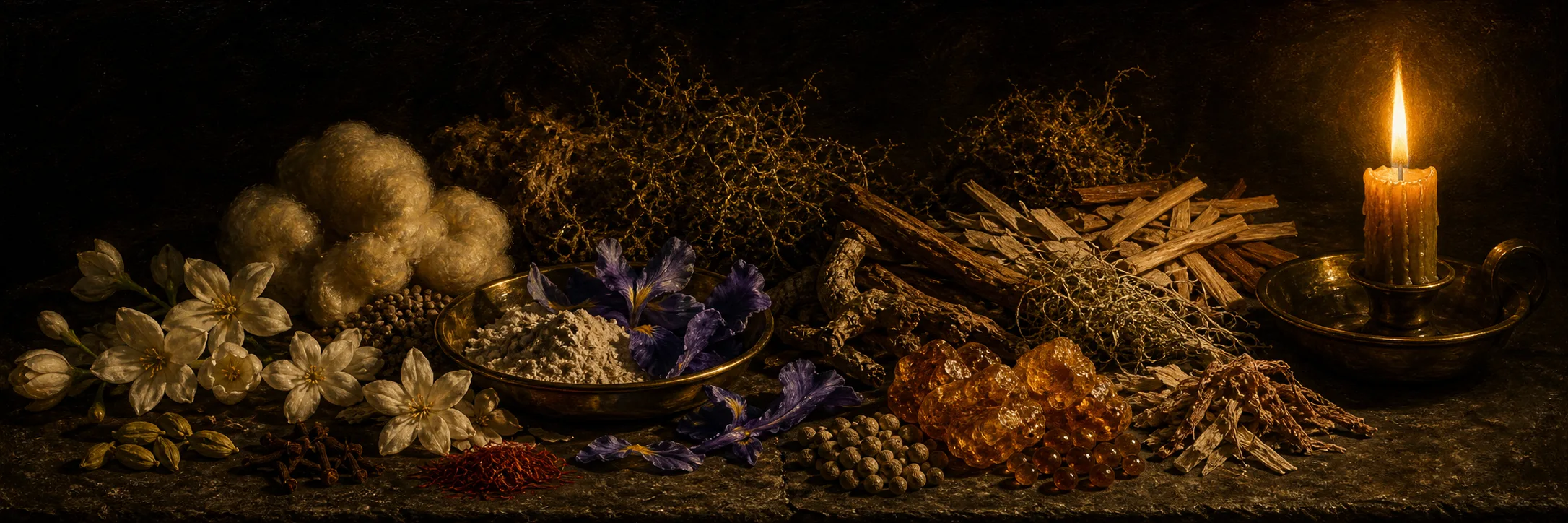
Chance EDP (2005, Jacques Polge) is the warm, deepened, more “evening” reading of Chance - the version Chanel built to give the line a more substantial body suitable for cooler weather and dressier contexts. Where the EDT bites with pink pepper and pineapple, the EDP smooths the citrus down to a faint hum and pushes the jasmine, iris, patchouli, and a soft vanilla forward. The signature smell is patchouli-musk-vanilla draped over a soft floral heart, with the pink pepper acting as accent rather than headliner. It is closer to a polished floral chypre than the EDT’s sporty floral.
Scent Profile
The opening (first ten to twenty minutes) is markedly subtler than the EDT - the published pyramid lists only pink pepper at the top, and on skin the EDP opens with that pepper plus an aldehydic shimmer, settling almost immediately into the heart. There is no pineapple, no overt citrus, no green hyacinth bite; reviewers who come to the EDP expecting EDT signals often report the EDP as feeling “muted” or “synthetic” in the first minutes precisely because the burst phase has been engineered out. The heart (one to three hours) is jasmine and iris with patchouli already speaking from underneath. The jasmine is creamier and slightly more indolic than in the EDT, and the iris contributes a buttery, powdery weight that the EDT version lacks. Pink pepper persists as a thin trail throughout the heart. Multiple wearers describe the heart as “Chance EDT plus Allure Sensuelle” - a useful triangulation: the EDP imports some of Allure Sensuelle’s powdery-vanilla-amber gravity into the Chance framework. The drydown (three hours onward) is the EDP’s defining phase. Patchouli (cleaner and brighter than vintage), white musk, vanilla, and amber form a soft, polished base that reads as “evening jewelry” rather than the EDT’s “daytime polo shirt.” Vanilla is doing real work here - it is the largest single point of difference between the EDT and EDP. The patchouli is the modern, fractionated kind (no mustiness, no hippie); it provides depth, not earthiness. White musk anchors everything and is the note most likely to dominate on skin types that amplify musk; one frequent wearer discussions complaint is that the musk “distorts the whole thing.” Iris adds a powdery, slightly cosmetic dimension that gives the EDP a more grown-up register. Linearity vs evolution: high linearity. The EDP keeps its character throughout, sliding gently from a slightly peppery floral into a soft patchouli-musk-vanilla without dramatic transformation. Signature accord: jasmine-iris-patchouli-vanilla, glued by white musk.
Performance
Projection is markedly lower than the EDT - this is the consistent and somewhat counterintuitive complaint. The published Chanel-EDP pattern (Bleu EDP vs EDT, Gabrielle vs Essence, Coco Mademoiselle vs Intense) is that the EDPs in the modern Chanel lineup project less than the EDTs while lasting longer, and Chance EDP follows the pattern. One frequent wearer discussions observation: “EDTs project waaaaay more and are universally complimented, while EDPs are barely detected.” Sillage is close to skin after the first 30-60 minutes; longevity on skin runs 6-9 hours, and on clothing 24-48 hours. Heat does not flatter the EDP - the patchouli-musk-vanilla base can read cloying in summer humidity. Cold dry weather is its best context; the warm base blooms on chilled skin. Best application strategy: spray onto clothing more than skin to maximize trail, and use the EDP for evening or cool-weather wear rather than as a daytime sport scent.
Wearing Context
Best worn in autumn and winter, evening and night, dressier social and date contexts. The EDP is the version to reach for at dinner, in a restaurant booth, on a cold walk home - close-wearing, sensual, slightly nostalgic. It falls flat in the same contexts where the EDT shines: hot summer days, outdoor sporty settings, large open rooms requiring projection. Social-perception skew: more “mature” than the EDT and the Eau Tendre flankers; a frequent wearer discussions observation is that the EDP suits wearers in their 30s and beyond more easily than its sibling versions, partly because of the vanilla-iris weight and partly because the close-to-skin sillage reads as confident rather than insecure.
Comparisons & DNA
Chance EDP sits squarely in the early-2000s pink-pepper-patchouli pillar with Coco Mademoiselle (2001), Narciso Rodriguez For Her EDT (2003), and Lancome La Vie Est Belle EDP (later, 2012) as the closest peers; multiple reviewers note that Coco Mademoiselle and Chance EDP, side by side, are recognizably from the same designer hand. The EDP is the Chance most likely to be mistaken for Coco Mademoiselle in passing - the soft patchouli-vanilla-musk base is the shared DNA. Within the Chance lineup itself, the EDP is the warmest and most “complete” of the original Polge generation; the Eau Fraiche (2007) is the cool-weather cousin built on cedar/teak rather than vanilla, the Eau Tendre (2010) is the fruity-soft sister, the Eau Vive (2015) is the citrus-forward grandchild. Allure Sensuelle and Coco Mademoiselle Intense are useful cross-references for anyone who likes Chance EDP and wants to explore Chanel’s broader powdery-oriental zone. No major Lattafa/Armaf/Maison Alhambra clone exists for Chance EDP specifically; the closest accessible analogue is Gucci Flora EDT or Lancome La Vie Est Belle, both of which share the patchouli-floral-vanilla architecture.
Reception
Wearer response is more positive for the EDP than for the EDT - many wearers who started with the EDT later “graduate” to the EDP, and wearer ratings for the EDP sit at or above the EDT’s. Praise centers on the warmth, the depth, the office-to-evening versatility, and the powdery-vanilla finish. Criticisms cluster around projection (“you have to spray a lot to get any trail”) and the persistent comparison to Coco Mademoiselle (“Coco Mademoiselle with the balls removed” is a representative wearer discussions jab). Critical reception is harsher than wearer reports - Turin and Sanchez’s broader low marks for the Chance line apply, and Robin Krug at NST has consistently treated the entire Chance pillar as Chanel’s most generic. Polarization centers on whether the EDP justifies its higher price (50-100 ml runs $130-170) over the EDT given the lower projection, and on the patchouli-vanilla base, which some find chic and others find heavy. Blind buy verdict: yes for fans of Coco Mademoiselle and the early-2000s polished-patchouli aesthetic; no for anyone seeking what the EDT actually delivers (pink pepper, hyacinth, sporty energy) - those people will be disappointed by the EDP’s softer register.
Versions & Reformulation
Chance EDP was launched in 2005 as the second concentration of the Chance pillar after the EDT/Parfum (both 2003). It is offered in 35, 50, 100, and 150 ml. wearers batch-to-batch comparisons over twenty years suggest minor reformulations consistent with IFRA-driven adjustments to pink pepper and patchouli percentages, but Chanel has not announced a formal reformulation. The “Chance Eau de Parfum Intense” sometimes referenced in marketing is actually the standard EDP - there is no separate “Intense” SKU as of 2026. The Parfum (2003), still sold in 7.5 ml splash, is a related but distinct composition (different listed notes, more ambrette/cedrat/jasmine absolute) and is the most concentrated, most close-to-skin Chance form.
Acquisition Notes
Chance EDP sells at the standard Chanel feminine tier: 50 ml roughly $135-145, 100 ml roughly $160-175, 150 ml roughly $200 at full retail in the US (Sephora 2025 pricing). Distribution: Sephora, Ulta, department stores, chanel.com, and Chanel boutiques. Decant ecosystem is strong - Surrender to Chance, Scent Split, and MicroPerfumes all carry 1-8 ml splits.
Notable Facts & Lore
- Jacques Polge’s stated intent in creating Chance EDP, per the Chanel press materials reproduced widely at launch, was to give the Chance idea “more boldness” and “more enveloping floral depth” - i.e., to address the most common criticism of the EDT (that it felt thin or sporty for a Chanel feminine).
- The 2005 launch was less heavily advertised than the 2003 EDT debut; Chanel relied on the existing Chance brand equity rather than a fresh Goude campaign.
- There are no significant celebrity associations specific to the EDP (the campaign imagery is largely shared with the EDT) and no viral moments.
- The most-circulated cultural fact about Chance EDP is the line “Chance is a way of being” attributed to Gabrielle Chanel and used across all Chance marketing since 2003; whether Coco Chanel actually said it in those words is undocumented in primary sources, but the slogan has acquired permanent status in the brand’s narrative.
- The EDP is regularly cited in online “first Chanel” recommendation threads alongside Coco Mademoiselle as the gateway Chanel for women in their late 20s and 30s.