Chanel — Les Exclusifs de Chanel 28 La Pausa
Essence
The reference iris soliflore of the late2000s niche moment: a cool, powdery, slightly rooty orris built around iris pallida butter, lightly framed with vetiver and white musk, and almost devoid of supporting florals. Released in February 2007 as one of the six new compositions in the original Les Exclusifs launch - and one of the Polgeera works in which Christopher Sheldrake’s hand is publicly acknowledged through his onrecord launch interviews - 28 La Pausa is widely considered the most accessible “real iris” fragrance ever made by a major house. Luca Turin gave it four stars in Perfumes: The Guide (2008) and tagged it simply “woody iris,” placing it in a class only with Serge Lutens Iris Silver Mist (which Turin awarded five stars).
Scent Profile
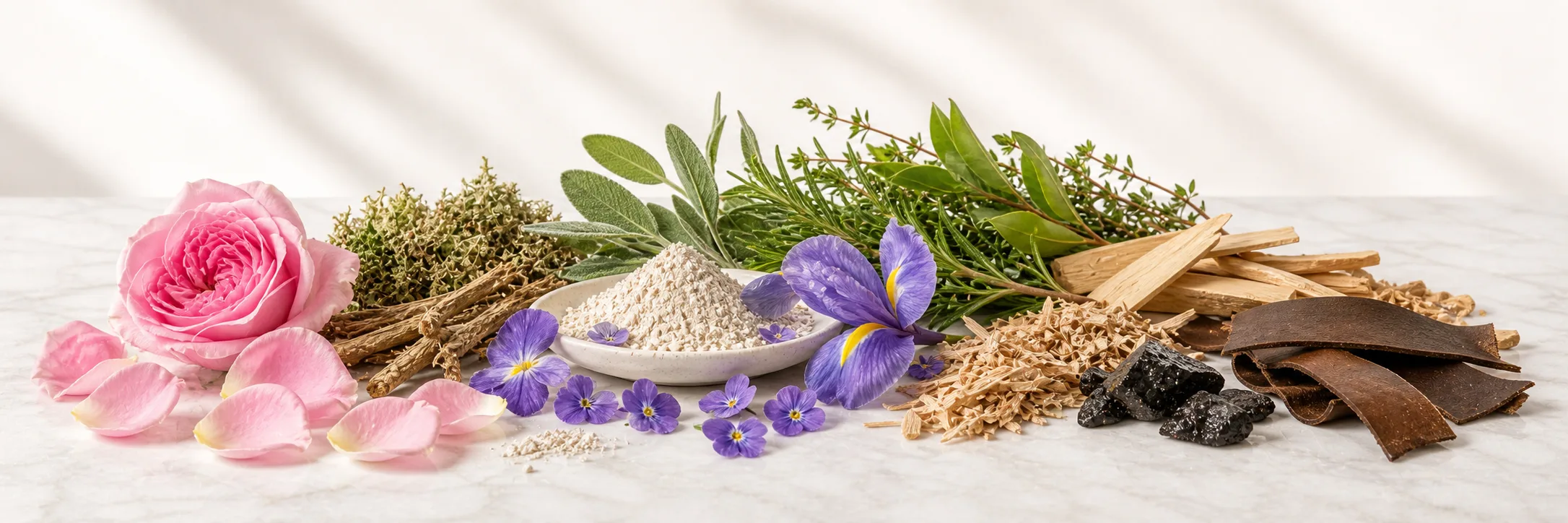
The opening is unusually pure for a niche launch of its era. There is no proper “top accord”; instead the bottle opens directly onto a cool, slightly bitter, faintly metallic iris - the smell of fresh orris butter as it sits on a Chanel boutique’s perfumer’s organ. Robin at Now Smell This: “the top notes are bright and mildly citrusy. It is cold, but doesn’t quite reach the metallic heights of some iris fragrances.” There is a whisper of pepper and bergamot lifting it - Pat Borow at Cafleurebon described this as “glittering like a diamond, with pepper and bergamot adding gleaming metallic facets that are the synesthetic equivalent of the ringing fine crystal makes and freshly polished silver clinking at a state dinner.” For ten or fifteen minutes the iris is at its most rooty and chalky, with a faint vegetal coolness reminiscent of cucumber peel. By the thirtyminute mark the composition softens audibly. Victoria Frolova at Bois de Jasmin: “the smoothness of iris is almost a textural sensation on the skin. The chilly undertones are subdued and warmed up delicately, rendering 28 La Pausa a living flower, rather than the exquisitely frozen petal of Serge Lutens Iris Silver Mist, the black velvet of Frederic Malle Iris Poudre, the green roots of The Different Company Bois d’Iris or the powdery cloud of Hermes Hiris.” The irisviolet core (ionones and irones) thickens to a buttery, lipstickadjacent texture; a thin thread of violet leaf is present but does not project. The listed notes include orrisroot, violet, and vetiver - and the vetiver does the structural work here, providing a quiet woody undertow that keeps the orris from going saccharine. Luca Turin specifically flagged this vetiver base in The Guide - a detail that took Australian Perfume Junkies’ Dionne years of wear to verify on skin. The drydown - what there is of it - is a soft, slightly warm woody musk against fading iris powder. Frolova: “if 28 La Pausa unfolded as a blooming iris, it dries down to a scent of warm skin and lipstick.” A faint sandalwood smoothness emerges; the composition fades rather than transforms. Linearity is high - this is almost a soliflore - but the textural shift from cool/rooty to warm/buttery within the first hour is real and is most of the perfume’s narrative arc. The signature accord is iris pallida butter over pale vetiver and skin musk. What projects: the orrisviolet center, the faint metallic pepper of the opening, and (in the drydown) a residual skin musk. What submerges: vetiver as identified element, violet as floral, and any sense of “top” or “base” as structural categories - the composition is essentially midnote throughout.
Performance
28 La Pausa is the canonical example of an Exclusifsera Chanel that is famously, frustratingly fleeting. Robin at Now Smell This was explicit: “Like Bel Respiro, it needs several sprays (ok, more like 5 or 6), and even then, don’t expect it to last longer than a few hours.” Frolova flagged the same issue as her sole criticism: “the overt simplicity and lack of sillage.” On most skins, expect two to four hours of legible scent and a close skinbubble drydown for another two or three. In a later Bois de Jasmin comment thread, Frolova put a specific number on her own EDT wear: “1520 minutes, maybe.” Other skin chemistries report total disappearance within twenty minutes; a small minority report eight hours of waft. Projection is intimate - eight to twelve inches in the first hour, then strictly skin. Sillage is minimal even from heavy application. On cotton and wool, it lasts considerably longer and can leave a faint orris trail until the next wash. Heat brings out the iris’s rooty earthiness and amplifies the violet facet - counterintuitively, the fragrance is at its most beautiful in mild warmth, not cold. Cold air flattens it almost immediately. Humidity gently extends wear; dry winter air kills it. Application strategy: apply liberally (5-8 sprays) to throat, behind ears, and into hair if possible; spray into the lining of a wool coat or silk scarf to extend it; layer with Chanel’s matching Les Exclusifs cream, which Frolova specifically tested and found measurably extended wear (largely via the cream’s own musk). Many devotees decant into a small atomizer for repeated reapplication throughout the day, treating 28 La Pausa more like an iris cologne than a parfum.
Wearing Context
28 La Pausa is a yearround fragrance with seasonal sweet spots in spring and early autumn - its rooty cool fits dewy mornings and cool afternoons rather than summer heat or deep winter. Time of day skews daytime: morning, brunch, afternoon, gallery. As an evening fragrance it underperforms because of sillage; the night fades it out within an hour. Where it shines: spring office wear, artworld contexts, situations where a subtle, recognizably expensive scent of “natural iris” is the goal. It is one of the very few fragrances that genuinely projects “quiet money” rather than performing wealth - Cafleurebon nailed this with “the difference between new and old money - the latter whispers class while the former raises its voice.” For iris lovers, it is a foundational reference fragrance. Where it falls flat: in any context demanding presence - first dates where you want to be noticed across a table, club or evening events, large group gatherings, hot weather. If anyone is going to smell it, they need to be within an arm’s reach, by design. Genderwise, the listing is feminine but the wear is essentially unisex; this is one of the most easily crossworn fragrances in the Exclusifs line. Persolaise notes the entire Exclusifs range is “the least exclusively male or female of any of those made by Chanel,” and 28 La Pausa specifically reads as genderneutral on most wearers.
Comparisons & DNA
28 La Pausa is the central node in the modern iris fragrance map; nearly every “best iris” list places it within the top five. Direct comparisons: - Serge Lutens Iris Silver Mist (Maurice Roucel, 1994) - the genre’s reference. ISM is colder, rootier, more carroty and more melancholic; Turin gave ISM five stars to La Pausa’s four. Frolova: ISM is the “exquisitely frozen petal,” La Pausa the “living flower.” - Hermes Hiris (Olivia Giacobetti, 1999) - closer in spirit than ISM; Hiris is more watercolor and tender, La Pausa more rooty and buttery. Frolova on Hiris: “a watercolor etude of iris.” - Frederic Malle Iris Poudre (Pierre Bourdon, 2000) - Malle is “black velvet” (Frolova), much more vanillasandalwood and retroaldehydic; La Pausa is barer and cleaner. - The Different Company Bois d’Iris (JeanClaude Ellena, 2000) - “green roots” (Frolova), spicier and drier; La Pausa is buttery where Bois d’Iris is herbal. - Prada Infusion d’Iris (Daniela Andrier, 2007) - versatile and citrusorangeblossom inflected; La Pausa is purer iris and lacks Prada’s neroli sparkle. - Le Labo Iris 39 - woodier, more incenseforward; La Pausa is purer irispallida butter. - Aedes de Venustas Iris Nazarena (Ralf Schwieger, 2013) - leathery, smoky iris; La Pausa is more straightforward. - Guerlain Apres l’Ondee (1906) - historical reference and Turin’s other 5star iris pole; Apres l’Ondee is melancholic and heliotropeforward, La Pausa is dryer and woodier. - Chanel No. 19 / No. 19 Poudre - sister Chanel iris; No. 19 wraps iris in galbanum and leather, No. 19 Poudre in soft musk; La Pausa strips both adornments away. No credible Armaf/Lattafa/Alhambra clone exists. Iris pallida butter is far too expensive to replicate at clone prices; the closest “value” iris from the budget tier is Zara Iris Aubepine (a cheap riff on Infusion d’Iris) or Maison Alhambra’s irislabeled releases, none of which approximate 28 La Pausa’s specific butterypallida quality. Glossier “You” is sometimes recommended in wearer discussions as a budget irisadjacent, but it is muskforward rather than iriscentral. Lineage: 28 La Pausa descends from the 1990s niche iris revival (ISM, Hiris) and shaped what came after (Iris Poudre’s commercial success, Infusion d’Iris’s mainstream breakthrough). Within Chanel’s own history, it is the modern descendant of Henri Robert’s No. 19 with the chypre apparatus removed.
Reception
Reception was rapturous on launch. Luca Turin’s Les Exclusifs survey appeared in his NZZ Folio column in 2007 (not, as sometimes misattributed, the New York Times Magazine); per The Perfume Society’s preserved quotation, his verdict was: “In my opinion, these six permanently change the landscape of perfumery by proving that there is, after all, a modern Grand Manner… [31 Rue Cambon is] the best chypre in 30 years. If you only have room for six perfumes in your life, clear your shelf.” 28 La Pausa was singled out by nearly every critic as the iris highlight of the launch. Frolova at Bois de Jasmin awarded it four stars; Robin at Now Smell This admitted it was the bottle she came “closest to reaching for my wallet” for in the entire collection; Cafleurebon’s Pat Borow wrote that “with every breath you seem to be inhaling money.” Persolaise was a measured fan, ranking it as the “extreme right” pole on his Chanel iris spectrum. Polarization runs along three axes: (1) longevity - almost everyone agrees it is too short, with even devoted fans (Olfactoria, Robin, Frolova) writing dedicated complaints about its fade; (2) iris purity - a vocal minority in wearer discussions finds it “too plain,” “too dry,” even “celerylike” or “stale”; the majority finds the purity of the iris its core virtue; (3) EDT vs 2016 EDP - the 2016 reformulation/rebrand to “La Pausa Eau de Parfum” (the only Exclusif to have its catalog name changed in the transition, with the “28” dropped) is widely regarded by EDT loyalists as “a completely different scent” - one reviewer called it “an aquatic freshie flanker to 28 La Pausa,” and another, “in horror: 28 La Pausa is dead.” A smaller faction prefers the EDP for its better longevity and warmer skinmusk drydown. wearer response sits in the high 4s on a 5point scale; wearer response is dragged down by longevity complaints. Among critics, the consensus is unmistakable: this is one of the best modern iris fragrances ever made, undermined by Chanel’s deliberate Exclusifsera choice to keep concentrations low. Blindbuy verdict for iris lovers: yes, but only the EDT and only if you have realistic longevity expectations. For nonirislovers, the consensus on wearer discussions is that this is the dullest of the Exclusifs and not worth Exclusifs money.
Versions & Reformulation
Original launch: 2007, Eau de Toilette only, 200ml format primarily (later 75ml added). Composition credited to Jacques Polge with Christopher Sheldrake contributing the public framing: “Irises grew in the garden and the iris is also a very round, calm and soft fragrance.” Per the wearer reports “Chanel Exclusifs in EDP from 2017; no more EDT production after Sep 2016,” Chanel discontinued the 28 La Pausa EDT in September 2016 and replaced it later in 2016 with “La Pausa Eau de Parfum” - a reformulation that dropped the “28” prefix from the name and substantially altered the composition. The 2016 EDP foregrounds vetiver, pink pepper and a greener, smokier profile; the original EDT’s buttery irispallida purity is markedly diminished. This is the only Les Exclusifs fragrance that received a name change in the 2016 transition, a fact still occasionally cited as evidence that Chanel itself acknowledged the two were not the same fragrance. The 2016 EDP itself has not been further reformulated as of 2026, though wearer reports as recently as 2023 have noted batchtobatch performance drops at department store testers. No documented IFRAdriven reformulation of the original EDT exists in public reporting; the 2016 change appears to have been commercial/regulatory rather than purely IFRAforced. EDT vs current EDP in wear: the EDT is buttery, rooty, cool, shortlived (2-4 hours), and clearly soliflore; the current EDP is greener, more peppery, longer (5-7 hours), and reads as a more conventionally structured iriswoody composition.
Acquisition Notes
The original 28 La Pausa EDT is discontinued and now exclusively on the secondary market. Heavy collector interest among iris devotees keeps prices firm. The 2016 La Pausa Eau de Parfum remains in current Chanel distribution at boutiqueonly points: Chanel.com (US, UK, EU), Chanel boutiques, and select Chanel counters at Bergdorf Goodman, Saks, Harrods, and Selfridges. Per Chanel.com US (May 2026), current retail is $355 for the 75ml / 2.5 fl oz EDP and $595 for the 200ml / 6.8 fl oz EDP - roughly 35% above the prices the original Exclusifs EDTs carried before the 2016 transition.
Notable Facts & Lore
- The naming is doubly specific.
- “La Pausa” is Coco Chanel’s villa above RoquebruneCapMartin on the French Riviera, built 1928-1929 by architect Robert Streitz on a fiveacre clifftop plot Chanel bought for 1.
- 8 million French francs in February 1929 (financing largely from her thenlover, Hugh Grosvenor, 2nd Duke of Westminster).
- The villa’s design was modeled on the 12thcentury Cistercian conventorphanage at Aubazine where Chanel spent her childhood - Streitz reproduced the abbey’s stone staircase exactly, and the house’s fivewindow motif is a tribute to Chanel No.
-
- The garden contained, per a 1938 American Vogue profile, “groves of orange trees, great slopes of lavender, masses of purple iris, and huge clusters of climbing roses.”
- It was these garden irises that Christopher Sheldrake cited in the launch interview: “Irises grew in the garden and the iris is also a very round, calm and soft fragrance.”
- Coco Chanel’s guests at La Pausa included Stravinsky, Picasso, Dali, Cocteau, Visconti, and her lover the poet Paul Iribe (who died playing tennis with Chanel at La Pausa in 1935).