Chanel — Pour Monsieur Concentrée
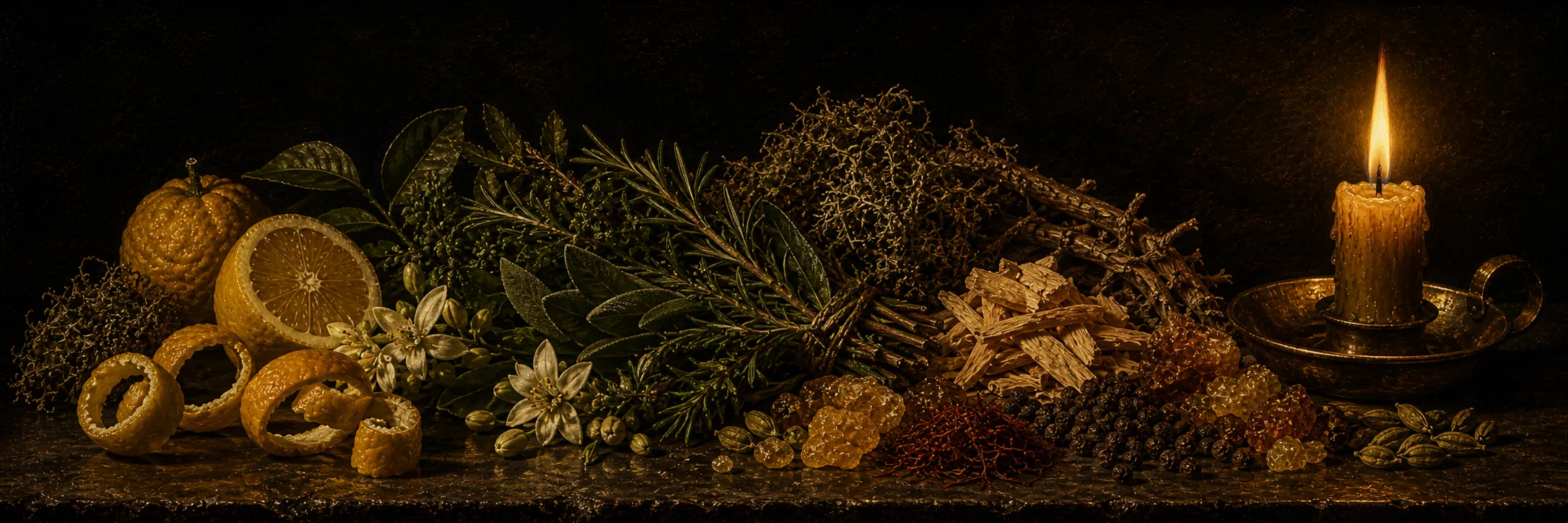
Essence
Pour Monsieur Concentree is Jacques Polge’s 1989 reworking of Chanel’s 1955 masculine debut - but it’s a fundamentally different animal from the original citrus chypre whose name it shares. Rather than a stronger Pour Monsieur, it’s a sweeter, rounder citrus-spice oriental: bright mandarin and a whisper of lavender up top, a cardamom-nutmeg spine, and a soft, powdery vanilla-and-moss drydown. Refined, restrained and distinctly “formal-wear,” it’s a quietly elegant office-and-occasion scent that has been somewhat orphaned by its confusing naming and its eventual rebranding as an EDP.
Scent Profile
The opening is a bright, juicy citrus, mandarin with a faint lemony edge, lifted by a small dose of lavender and the woody-green facet of petitgrain. It is a clean, summery, slightly sweet citrus rather than the bitter bergamot-and-moss blast of the original Pour Monsieur; several wearers note it reads almost like a lemon creamsicle in these first minutes. The citrus is loud but short-lived.
Within the first hour the spices step forward: cardamom and nutmeg form the heart, giving a soft, aromatic warmth that is the most characterful phase of the wear, the point at which comparisons to other Polge work and to woody-oriental Guerlains arise. The florals are minimal, with lavender the only real floral gesture and quick to fade, so as the citrus burns off the composition leans increasingly sweet and powdery.
The drydown is the fragrance’s defining and most divisive stretch: a soft, powdery vanilla over quiet oakmoss, opoponax and vetiver. The moss and opoponax are largely submerged, providing a faint chypre-ish backbone and a touch of dryness rather than a recognizable mossy character. What dominates is a milky, slightly coconutty-vanillic sweetness wrapped around the residual spice, leaving a fairly linear, sweet, powdery, spiced-vanilla skin scent. The signature accord is cardamom-nutmeg over powdery vanilla, restrained, silky and unmistakably Chanel in its polish.
Performance
Performance is the fragrance’s weak point and a near-universal point of agreement. Projection is light to moderate - a modest, close scent bubble for the first two to three hours that rarely extends much past arm’s length. Sillage is gentle and “office-appropriate,” never a room-filler. Longevity is the sticking point: many report roughly six to seven hours on skin with the opening collapsing to a skin scent within the first hour or two, though a minority on agreeable skin claim closer to ten. It lingers considerably longer on clothing - wearers report smelling it on a jacket days later. Conflicting reports exist: some find the Concentree notably better-performing than the thin original Pour Monsieur, others find it still under-powered. It suits cooler weather - spring, autumn and mild summer evenings - where the sweet-powdery base settles nicely; in real heat it can feel close and powdery. Best strategy from wearer advice: apply generously (it’s reportedly almost impossible to overdo) and spray on clothing to extend it.
Wearing Context
This is a “gentleman’s” formal scent - best in business, office, dressy and formal-occasion settings, and most flattering with a suit rather than jeans-and-tee, per repeated wearer framing. Best seasons are spring, autumn and cool summer evenings. Time of day is flexible but it leans daytime/professional. It shines as a refined, inoffensive, mature signature that “takes care of every aspect of a masculine cologne” without shouting. Where it falls flat: anyone wanting projection, longevity or a statement scent will be disappointed, and younger wearers seeking something bold will find it conservative or “old-school.” Social-perception skew is mature-masculine and classic - frequently pegged as best suited to wearers over 30.
Comparisons & DNA
The most-cited comparison is Tiffany for Men (also by Jacques Polge), which wearers describe as so similar as to be “almost identical” - essentially the same idea under a different house, with Pour Monsieur Concentree generally judged the more refined of the two. Polge’s later Chanel Allure Homme shares clear DNA - one reviewer calls the Concentree “much more refined and not cloying” by comparison. Beyond Chanel, it sits in the citrus-led powdery woody semi-oriental family alongside Guerlain Heritage (peppery), Jean-Paul Guerlain’s Habit Rouge (this is the dressier, more buttoned-up “Habit Noir” to Habit Rouge’s jauntier ride), de Nicolai New York (lavender-and-citrus opening), Creed Bois du Portugal, Versace L’Homme and Pierre Cardin Pour Monsieur - all variations on a citrus-spice-and-soft-moss theme. Caron’s Le 3e Homme is cited as texturally similar. It should be sharply distinguished from the 1955 Pour Monsieur EDT, a true dry citrus chypre by Henri Robert - a different composition entirely. No budget “clone” tradition exists for the Concentree specifically; it’s an under-the-radar designer scent rather than a hype fragrance, so cross-shop the genuine relatives above rather than dupes.
Reception
Coverage is deep among classic-fragrance devotees and split along a clear fault line. Wearer consensus praises it as classy, refined, elegant, “wholesome” and beautifully balanced - a sophisticated formal scent many call underrated and a sentimental favorite. The dominant criticisms are weak performance/longevity and the divisive sweet-powdery drydown, which some find veers “dangerously close to sport-scent territory” or too vanillic. The sharpest axis of polarization is the name itself: many feel being forced into comparison with the revered 1955 original unfairly damages its reputation, and argue it should be judged on its own terms. The most notable critical voice is Luca Turin, who strongly favored the original Pour Monsieur but judged the Concentree harshly - a verdict reviewers repeatedly call “baffling” and urge readers to ignore. Now Smell This’s Kevin reviewed it alongside the original, describing the Concentree as “simpler, sweeter,” with “less character,” “more like a flanker (with a ghost of its parent floating in the bottle).” Blind buy verdict: reasonably safe if you want a refined, inoffensive formal scent and accept modest performance - but sample first if longevity matters to you, and don’t expect the citrus-chypre original.
Versions & Reformulation
This is the crux of the entry. Pour Monsieur Concentree launched in 1989 (some sources cite 1988) as “Pour Monsieur Eau de Toilette Concentree,” developed by Jacques Polge - distinct from the 1955 Henri Robert original. Around 2014-2016, Chanel discontinued the Concentree and replaced it (without announcement) with “Pour Monsieur Eau de Parfum” (2016). Wearer consensus - including testers who compared samples side by side - is that the 2016 EDP is essentially the Concentree repackaged, very likely with an IFRA-driven reformulation; most find them very close (“not night and day”), with the EDP reading slightly rounder, softer and more modern, and the discontinued Concentree slightly denser with more “bite.” A vocal minority insists the EDP is a degraded “synthetic mess” and that the vintage Concentree is meaningfully better. Vintage Concentree bottles command rising prices, but the prevailing advice is not to overpay since the current EDP is a close substitute. Note: the separate Pour Monsieur EDT (the original line) was also discontinued in the US market, adding to the naming confusion.
Acquisition Notes
Designer pricing, on the affordable end for Chanel. The discontinued Concentree was sold in 75 ml; the replacement Pour Monsieur EDP is current and widely available through Chanel and authorized retailers (50/100 ml). A frequent buyer warning: the Concentree was almost always sold simply as “Pour Monsieur Eau de Toilette” without the word “Concentree” on the bottle, so online listings are easy to misidentify - check bottle photos and concentration carefully. Decant availability is decent for a classic Chanel, so a sample is an easy way to try it before committing.
Notable Facts & Lore
- Despite its name, the Concentree is a new oriental-leaning composition by Jacques Polge, not a concentrated version of the 1955 Henri Robert original.
- Chanel’s first masculine fragrance was variously sold as “Chanel for Men,” “A Gentleman’s Cologne” and “Pour Monsieur” across markets, which still confuses buyers decades later.
- Around 2016 Chanel quietly folded the Concentree into “Pour Monsieur Eau de Parfum” without public announcement.
- Many wearers attach strong nostalgic associations to it as a 1990s signature or a father’s scent.
- There is no documented statement from Polge about the Concentree’s creative intent, and no celebrity or viral association.
- It remains a connoisseur’s quiet classic rather than a hyped release.