Chanel — Chanel N°5 Parfum
Essence
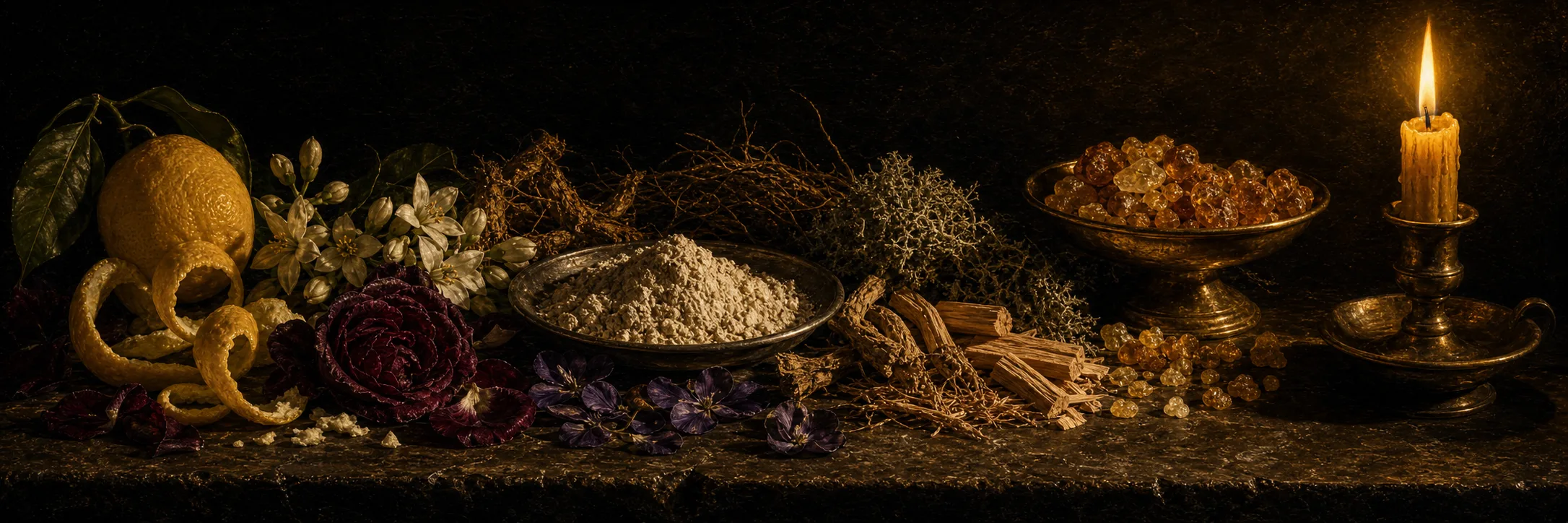
Chanel No. 5 Parfum is the original concentrated expression of the No. 5 idea: a slow, abstract aldehydic floral where bright sparkle, plush flowers, powder, woods, vanilla, moss, and civet fuse into one unmistakably classical aura.
Scent Profile
The opening is cold, airy, and faintly lemony, led by an aldehydic flash rather than modern juicy citrus. It quickly folds into jasmine, ylang-ylang, rose, iris, and lily-of-the-valley. The flowers are not presented one by one; they move through a satiny, blended texture that makes the parfum feel more like an atmosphere than a bouquet. The base is where the concentration becomes distinctive. Sandalwood, musk, vanilla, oakmoss, and civet create a creamy, powdery, warm foundation with a faintly feral edge. This is richer and more saturated than the EDP, with a softness that comes from concentration rather than a simplified structure. No. 5 Parfum lives in the tension between soap and sensuality. For some, it is warm skin, honeyed flowers, soft animalic texture, and regal powder. For others, the aldehydes and civet can read as detergent, sharp soap, or an aggressively vintage effect. That tension is central to the perfume rather than a flaw to be explained away.
Performance
The parfum is long-wearing and dense, but its strength is slow persistence rather than modern room-filling projection. A dab or small spray is usually enough. It can create a substantial aura in the first hours, particularly if overapplied, then continues as a close, textured presence long after a lighter No. 5 concentration would have softened.
Wearing Context
Cool weather, evening, formal plans, and moments that welcome a classical register are the natural settings. It can be surprisingly wearable when applied sparingly because the concentration feels rounded rather than abrasive. Treat it as a signature accent, not a casual overspray, and avoid it if powder, aldehydes, civet, or vintage floral structures are usually difficult for you.
Comparisons & DNA
The EDP is the essential internal contrast: it is generally brighter, more powdery, and less saturated, while the parfum is fuller and more floral-animalic. Eau Premiere gives a lighter, cleaner route into the same family, reducing the heavier civet-and-moss effect. No. 5 L’Eau is another, still fresher interpretation. Outside Chanel, the parfum belongs to the classical aldehydic-floral tradition rather than the modern white-floral or clean-musk category. It is most useful as a benchmark for that tradition, not as something to seek in a direct duplicate. The particular balance of icy aldehydes, soft flowers, powder, and animalic warmth is its own proposition.
Reception
No. 5 Parfum is iconic precisely because it divides people. Admirers find it rich, aristocratic, tactile, and monumental, with flowers that feel complete against creamy sandalwood and vanilla. Some who find the EDP too sharp or diffuse discover that the parfum makes the No. 5 architecture feel rounder and gentler. Critics can find it dated, harsh, detergent-like, or too civet-forward. The response is often decisive rather than neutral, and its historical style makes it a poor blind choice for anyone unfamiliar with aldehydes or powder. Sampling the parfum specifically is essential because it differs meaningfully from other bottles labeled No. 5.
Versions & Reformulation
The parfum is the 1921 reference concentration, with the EDP and EDT representing later expressions and Eau Premiere or L’Eau offering lighter reinterpretations. Vintage bottles are often described as more animalic, saturated, and civet-rich than current ones. Current parfum remains strongly tied to the classical No. 5 idea, even as material changes over time have shaped the family.
Acquisition Notes
No. 5 Parfum is often encountered in small extrait bottles for dabbing, alongside selected spray formats. Verify concentration carefully, since EDP, EDT, and parfum listings are often confused. Older flacons and miniatures are part of the collecting culture, but a clearly labeled current bottle is the simplest way to experience the intended concentration.
Notable Facts & Lore
- No. 5 Parfum is the original 1921 concentration.
- Its cultural history includes Marilyn Monroe’s enduring association with No. 5.
- Chanel’s Grasse jasmine supply has long been linked with the Mul family farm.
- The perfume is a benchmark of abstract aldehydic floral perfumery.